



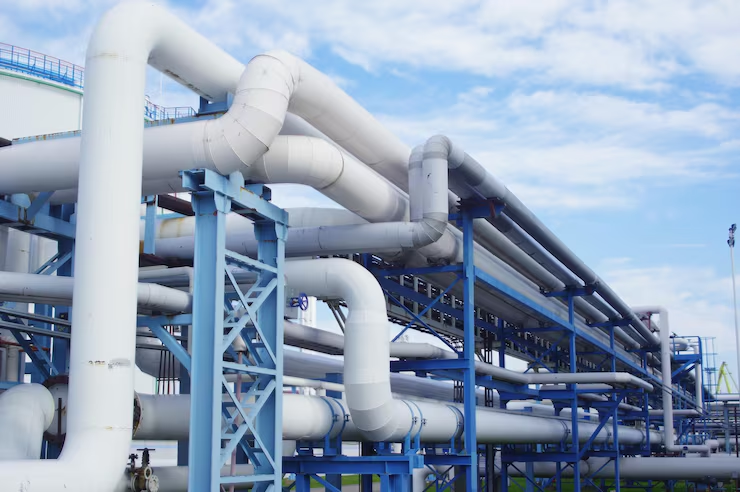
Africa has the potential to become a global green energy leader, and Ghana is well-positioned to play a key role through the new Nigeria-Morocco Gas Pipeline, Amina Benkhadra, head of Morocco’s Office of Hydrocarbons and Mining (ONHYM), said at a recent Stimson Center online event.
Benkhadra highlighted ONHYM’s dual approach: drilling for gas off Morocco’s coast while building hydrogen fuel factories, capturing carbon emissions, and converting phosphate rock into materials for electric vehicle batteries, including lithium iron phosphate.
She called 2026 a “make-or-break” year for the $25 billion pipeline. The project will run through 13 countries—including Senegal, Mauritania, Ghana, Côte d’Ivoire, and Liberia—and aims to deliver its first gas by 2031, once agreements are finalized next year.
ONHYM’s subsidiary, OMCo, is leading the project to supply both Europe and Africa. ONHYM’s strategy director confirmed the plan is moving full speed ahead.
Expert Peter Tutu called it a “political deal,” cautioning: “Africa shouldn’t just give away its gas—we need fair prices and rules.”
For Ghana, the pipeline could mean transit revenue, cheaper fuel for factories, and boosted trade under the AfCFTA.
Nigeria is seeking Ghana’s support, which aligns with the country’s own plans, including a new refinery capable of processing 300,000 barrels per day and 2023 regulations to process lithium, graphite, and manganese domestically.
Discover more from Energy News Africa
Subscribe to get the latest posts sent to your email.