



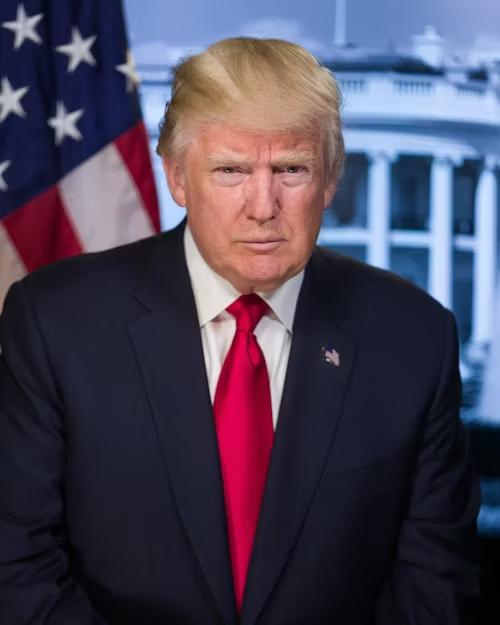
The U.S. government is scrambling to contain the economic and political fallout from the war with Iran, Reuters reported, citing three people familiar with White House discussions, as hopes for a quick resolution fade.
U.S. President Donald Trump this week backed suspending the federal gas tax, a step that would knock 18 cents a gallon off motor fuel prices, which are currently averaging more than $4.50 a gallon nationwide.
According to the Reuters report, there is a consensus among some White House officials that, with prices up 50% since the start of the war, Trump needs “a visible consumer relief move now.”
Historically, $4-per-gallon gasoline has been a level that triggers public backlash and economic anxiety.
That has been evident since the war began, as consumer sentiment recently dipped to a record low and U.S. consumer inflation surged to 3.8% in April, the highest level in nearly three years.

More than six in 10 Americans say their household finances have taken a hit from higher gas prices, according to a May Reuters/Ipsos poll that put Trump’s economic approval rating at just 30%, down several points since the beginning of the war.
Trump now faces mounting pressure from fellow Republicans who fear the economic pain caused by the war could spark voter backlash and cost the party control of the House of Representatives and possibly the Senate in November’s midterm elections.
Some White House officials have been poring over market data to gauge whether the national average gas price could climb to $5 a gallon.
OPEC Lowers 2026 Global Oil Demand Growth Forecast
Seven states have already surpassed that mark, according to AAA data.
“They feel like that’s their largest vulnerability right now: that specific cost — gas — not overall economic conditions,” said a political adviser to the White House. “The toughest thing, too, is that we made gas prices the Achilles’ heel for former President Joe Biden, and now it’s our own.”
White House spokeswoman Taylor Rogers said Trump and his energy team had anticipated the war’s disruptions to global energy markets and prepared a plan to mitigate the impact.
“The ability to supply both the United States and our allies with reliable, affordable, and secure energy has long been a key strategic objective of President Trump, and his successful efforts to unleash American oil and gas have achieved this objective,” Rogers said.
The administration’s concerns have deepened as U.S. oil and fuel exports have surged to record levels, driven by Asian and European buyers scrambling for supply.
That has drawn down U.S. inventories at a time when they typically rise, raising alarms among Wall Street analysts who warn the U.S. could face a crunch that sends gasoline, diesel, and jet fuel prices even higher this summer.
Energy prices have spiked since Iran cut off access to the Strait of Hormuz, a waterway that normally carries one-fifth of the world’s oil supplies.
Companies ranging from airlines to McDonald’s are seeing the effects, with the fast-food giant’s CEO saying last week that lower-income consumers were spending less.
U.S. airlines’ fuel expenses in March jumped 56% from February, according to Transportation Department data, squeezing carriers already operating on thin margins, including Spirit Airlines, the troubled budget carrier that shut down earlier in May.
Trump has called the increases “a small price to pay” for efforts to topple Iran’s regime and prevent Tehran from acquiring a nuclear weapon.
Discover more from Energy News Africa
Subscribe to get the latest posts sent to your email.