


Global Coal Demand Plateaus And May Decline Slightly By 2030, Says IEA

A new International Energy Agency (IEA) market report reveals increasing competition from other power sources, with developments in China’s electricity sector remaining key to coal’s prospects. Global coal demand is forecast to edge down through the end of this decade as competition intensifies with other power sources, including renewables, natural gas, and nuclear, according to the 2025 edition of the IEA’s annual market report. Coal 2025 explores current market dynamics and provides forecasts through 2030 for demand, supply, and trade at the global and regional levels. It also examines key trends in investment, costs, and pricing. The report finds that global coal demand is on course to rise by 0.5% in 2025, reaching a record 8.85 billion tonnes. In several major markets, consumption patterns diverged from recent trends. In India, an early and intense monsoon season resulted in a decline in annual coal use for only the third time in five decades. In the United States, higher natural gas prices and policy measures that slowed coal plant retirements lifted coal consumption, which had been on a downward trajectory for the previous 15 years. After two years of double-digit declines, coal demand in the European Union shrank only modestly. Meanwhile, in China, coal use remained broadly unchanged from its 2024 level. By 2030, global coal demand is expected to tick lower, returning to the same level as in 2023. This is largely driven by shifts in the power sector, which accounts for two-thirds of total coal consumption today. With renewable capacity surging, nuclear expanding steadily, and a huge wave of liquefied natural gas coming to market, coal-fired power generation is forecast to decline from 2026 onward. Coal demand from industry is expected to remain more resilient. In China, which currently accounts for more than half of global coal use, demand is expected to fall slightly by the end of the decade. “Despite uncharacteristic trends in several key coal markets in 2025, our forecast for the coming years has not changed substantially from a year ago: we expect global coal demand to plateau before edging down by 2030,” said IEA Director of Energy Markets and Security Keisuke Sadamori. The largest absolute increase in coal consumption to 2030 is expected to take place in India, where demand is set to rise by 3% per year on average, leading to an overall increase of over 200 million tonnes. Southeast Asia is forecast to see the fastest growth, with demand increasing by over 4% per year to 2030.

Nigeria: Two Top Petroleum Regulators Resign Amid Damning Claims By Aliko Dangote

Nigeria’s petroleum regulatory sector has been rocked by the resignation of two top officials, coming just days after Africa’s largest petroleum refinery founder, Aliko Dangote, made damning allegations against the Nigerian Midstream and Downstream Petroleum Regulatory Authority (NMDPRA).

Following the allegations, Dangote submitted a formal petition to the Independent Corrupt Practices and Other Related Offences Commission (ICPC), seeking an investigation into the Chief Executive Officer of the NMDPRA, Mr Farouk Ahmed, over alleged corruption.

Barely a day after the petition, the Nigerian Presidency, in a statement released by Mr. Bayo Onanuga, Special Adviser to President Bola Ahmed Tinubu on Information and Strategy, announced the resignation of the chief executives of the NMDPRA and the Nigerian Upstream Petroleum Regulatory Commission (NUPRC).

The statement did not assign specific reasons for their resignation, except to note that both officials were appointed in 2021 by former President Muhammadu Buhari to lead the two regulatory agencies established under the Petroleum Industry Act (PIA).

However, the statement revealed that President Tinubu has nominated Madam Oritsemeyiwa Amanorisewo Eyesan as Chief Executive Officer of the NUPRC and Engineer Saidu Aliyu Mohammed as Chief Executive Officer of the NMDPRA.

The President has written to the Senate, requesting expedited confirmation of the nominees.

Both nominees are seasoned professionals in the oil and gas industry.

Madam Eyesan, a graduate of Economics from the University of Benin, spent nearly 33 years with the Nigerian National Petroleum Corporation (NNPC) and its subsidiaries.

She retired as Executive Vice President, Upstream (2023–2024), and previously served as Group General Manager, Corporate Planning and Strategy at NNPC from 2019 to 2023.

Engineer Saidu Aliyu Mohammed, born in 1957 in Gombe State, graduated from Ahmadu Bello University in 1981 with a Bachelor’s degree in Chemical Engineering.

He was announced on Tuesday as an independent non-executive director at Seplat Energy.

His previous roles include Managing Director of Kaduna Refining and Petrochemical Company and the Nigerian Gas Company, as well as Chair of the Boards of the West African Gas Pipeline Company, Nigeria LNG subsidiaries, and NNPC Retail.

He also served as Group Executive Director/Chief Operating Officer, Gas and Power Directorate, where he provided strategic leadership for major gas projects and policy frameworks, including the Gas Master Plan, the Gas Network Code, and key contributions to the Petroleum Industry Act.

Engineer Mohammed played a pivotal role in delivering major projects such as the Escravos–Lagos Pipeline Expansion, the Ajaokuta–Kaduna–Kano (AKK) Gas Pipeline, and Nigeria LNG Train projects.

It remains unclear whether Mr Farouk Ahmed will respond to the allegations levelled against him following his resignation.


Togo: Nangbeto Hydro Dam Resumes Operations After CFA25.5bn Upgrade

The rehabilitated Nangbeto hydroelectric dam, which supplies electricity to Togo and Benin, has resumed operations following its official inauguration last week. The hydroelectric power dam was rehabilitated at a cost of CFA25.5 billion (€39 million). The rehabilitation project, which began in 2019, was financed by Germany through its development bank, KfW. The works included the design, supply, installation and commissioning of upgraded and new equipment, notably turbines, alternators, power transformers, spillway gates, the tailrace and the spillway. Mechanical and electrical installations were also modernised, along with high-voltage protection systems, lifting equipment, control systems, and water treatment and drinking water facilities. Officials said the upgrade would strengthen the reliability of electricity supply in both countries. “The rehabilitation of Nangbeto marks a major step in securing our shared energy production,” Kamirou Chabi Sika, Director -General of Electricity Community of Benin(CEB) said, adding that the upgraded facility would improve performance, resilience and availability to meet rising demand. Robert Eklo, deputy Minister for Energy of Togo described the dam as a symbol of bilateral cooperation and a key driver of energy stability. “This rehabilitation strengthens our national capacity and supports our ambition of universal access to electricity,” he said. With an installed capacity of 65 megawatts, Nangbeto has been one of the main hydroelectric plants supplying Togo and Benin for nearly four decades. The rehabilitation comes as Togo pursues several initiatives aimed at achieving universal electricity access by 2030.  

Ukraine Hits Slavyansky Oil Refinery And Rostov Depot In Overnight Deep Strikes

Ukrainian drones struck a major oil refinery in southern Russia and a fuel depot in the Rostov region overnight, Kyiv’s military confirmed via Telegram on Wednesday, continuing a relentless campaign to dismantle the energy infrastructure financing Moscow’s war effort. The latest barrage, which lit up the night sky over the Krasnodar region on December 17, targeted the Slavyansky Oil Refinery in Slavyansk-on-Kuban.  Ukrainian defense officials stated the refinery was being used to supply fuel to Russian occupation forces. While the full extent of the damage is still being assessed, the strike signals Kyiv’s refusal to let up on “deep strike” missions despite the onset of winter. Simultaneously, Ukrainian forces hit the “Nikolaevskaya” oil depot in the neighboring Rostov region. Preliminary reports indicate damage to a storage tank and a river vessel, the Captain Gibert, which was docked at the facility. A Second Front in the Caspian The overnight attacks come as Kyiv confirms it has effectively opened a new, distant front in the energy war: the Caspian Sea. In an operational update released Wednesday, Ukrainian officials confirmed that attack drones struck the “Grayfer” drilling rig in the Caspian Sea on December 14. The strike damaged the platform’s gas processing and pumping module, forcing a complete halt to all 14 wells at the site. The platform had been extracting roughly 3,500 tons of oil daily. This confirmation follows a separate, daring long-range strike just days earlier. On December 11, Ukraine’s Security Service (SBU) targeted the nearby Vladimir Filanovsky offshore field—a jewel in Lukoil’s portfolio, forcing the suspension of production at over 20 wells. Taken together, the attacks on the Grayfer and Filanovsky platforms represent a strategic shift.  By striking targets in the Caspian, hundreds of miles from the front lines, Ukraine is proving that even Russia’s most remote economic lifelines are no longer safe. Economic Pressure Mounting The Caspian region is a critical hub not just for Russian oil, but for Central Asian exports moving through the Caspian Pipeline Consortium (CPC). While the strikes have specifically targeted Russian-owned infrastructure, the violence introduces new volatility to a route that handles approximately 1% of the global oil supply. “The Caspian Sea is another reminder that every enterprise supporting Russia’s war effort is a legitimate target—no matter where it is located,” an SBU source said following the initial strikes last week. On the ground in occupied Ukraine, the pressure remains equally high. The Wednesday update also confirmed a strike on a field artillery depot belonging to Russia’s 101st Separate Logistics Brigade in the Luhansk region. Moscow has remained largely silent on the specific damage to its offshore assets, though the Russian Ministry of Defense claimed to have intercepted dozens of drones in recent days. However, the confirmed halts in production at both Slavyansky and the Caspian rigs suggest the physical toll on Russia’s energy sector is deepening as the war approaches its fourth year.

South Africa: Seven Foreign Firms Pre-Qualified For Independent Transmission Procurement Project

Seven international companies that submitted bids to participate in South Africa’s Independent Transmission Procurement (ITP) project have been pre-qualified, Minister of Electricity and Energy Dr Kgosientsho Ramokgopa has revealed. The companies, drawn from China, the Middle East, India, Portugal and France, were selected from a total of 17 firms that responded to the request for proposals. South Africa is seeking to expand its electricity transmission network through public-private sector investment as part of efforts to increase power access to households and industrial enclaves. Currently, more than 1.6 million South Africans lack access to electricity. Under the programme, the country plans to construct about 14,000 kilometres of power transmission lines through a public-private partnership framework. The project is estimated to cost R440 billion over a 10-year period. Dr Ramokgopa expressed optimism that local companies would qualify in subsequent phases of the procurement process. “We are happy to announce that of the 17 that responded, we have seven that are successful. It’s the Portuguese, the Indians, the Chinese and the French that are participating in this. All the pre-qualified bidders are international companies,” he said. The minister attributed the outcome to the stringent requirements of the request for proposals, noting that South African firms could still succeed in future bidding rounds. In a related development, Dr Ramokgopa also announced that four preferred bidders under Bid Window 7 of the Renewable Energy Independent Power Producer Procurement Programme (REIPPPP) have been appointed to deliver a combined 890 megawatts (MW) of solar photovoltaic capacity. He further disclosed that the Department of Energy is expected to announce a credit guarantee vehicle in March next year to safeguard private sector investors.

Nigeria: Gas Pipeline Attack Disrupts Electricity Supply Nationwide

The Nigerian Independent System Operator (NISO) has announced a significant drop in electricity generation on the National Grid, citing gas supply constraints arising from an incident of gas pipeline vandalism within the upstream gas supply network. The system operator, in a statement issued on Tuesday, noted that the incident affected gas availability to a number of power generation facilities. It added that the unfortunate incident caused several gas-fired power stations to record low output, resulting in reduced available generation capacity on the National Grid. NISO, however, said it promptly activated established contingency measures to maintain system stability and reliability. These measures included increased dispatch from available hydroelectric power stations, continuous generation re-dispatch, voltage control interventions, and other necessary operational actions to balance electricity supply with system demand. NISO assured Nigerians that it is closely monitoring the system and working with relevant stakeholders to mitigate the impact of the gas supply constraints. “We are closely monitoring grid conditions, including system frequency and voltage profiles, while working with relevant stakeholders to mitigate the impact of the gas supply constraints. “The situation highlights the importance of coordinated efforts to address gas supply disruptions, particularly as we approach the festive season, which is traditionally sensitive for grid operations,” the statement said. NISO further assured the public of its commitment to proactive grid management and the application of appropriate operational standards to ensure a secure, stable, and reliable electricity supply nationwide. The incident has reignited debate over whether Nigeria will soon see an end to pipeline vandalism and the destruction of transmission infrastructure. The country has continued to struggle with providing reliable and efficient electricity supply due to several factors, including pipeline vandalism and the destruction of transmission towers by saboteurs.

Zambia: Energy Minister Charges REA Board To Drive Rural Electrification And Strategic Growth

Zambia’s Minister for Energy, Makozo Chikote, has tasked the newly inducted Rural Electrification Authority (REA) Board, chaired by Mr. Charles Matomola Mboma, to demonstrate decisive yet strategic leadership by accelerating energy access, strengthening governance, and positioning rural electrification as a key driver of economic growth. He delivered the charge during the Board’s induction ceremony in Lusaka today. Mr. Chikote congratulated members on their appointment and thanked them for accepting to serve the nation. He emphasised that the Board’s mandate lies at the heart of Zambia’s national development agenda and must translate into tangible outcomes that deliver reliable, affordable, and sustainable electricity to rural communities throughout their tenure. The Minister observed that the Board assumes office at a defining moment for the energy sector, as the Government implements far-reaching reforms aimed at repositioning the private sector as the engine of economic growth. In this context, he stressed that rural electrification should no longer be viewed solely as a social intervention, but as a catalyst for productive enterprise, value addition, job creation, and inclusive development. He urged the Board, under the leadership of Mr. Mboma, to provide strategic direction that actively supports private sector participation, innovative financing models, and partnerships to accelerate energy access in rural and peri-urban areas. Mr. Chikote advised Board members to familiarise themselves with the REA Act, describing it as their principal guide in engagements with management. He further emphasised that the Authority, like other public institutions, has ambitious targets, and that Board members will be required to sign performance contracts against which their performance will be assessed over their tenure. The Minister identified the strengthening of procurement and project delivery systems as a critical priority for the Board’s term of office. He stated that expeditious procurement processes, timely implementation, cost reflectivity, and uncompromising quality standards are imperative. He warned that delays and cost overruns undermine public confidence and constrain the country’s ability to scale up rural electrification, urging the Board to exercise firm oversight to ensure projects are delivered efficiently, transparently, and in a manner that maximises value for money. He further informed the Board that REA has several pending activities requiring approval, including the launch of the Rural Electrification Master Plan and the Rural Electrification Fund operating guidelines. Mr. Chikote also directed the Board to begin preparations for the development of a new strategic plan, noting that the current plan will expire in 2026 and that continuity across Board tenures is essential. The newly appointed REA Board brings together expertise and representation from key professional bodies and public institutions, including the Economic Association of Zambia, the Engineering Institute of Zambia, local government, the Attorney General’s Office, non-governmental organisations (NGOs), the Ministry of Energy, as well as sector experts—a composition expected to enhance balanced decision-making and strengthen institutional oversight.    

Trump Orders ‘Blockade’ Of Sanctioned Oil Tankers Leaving, Entering Venezuela
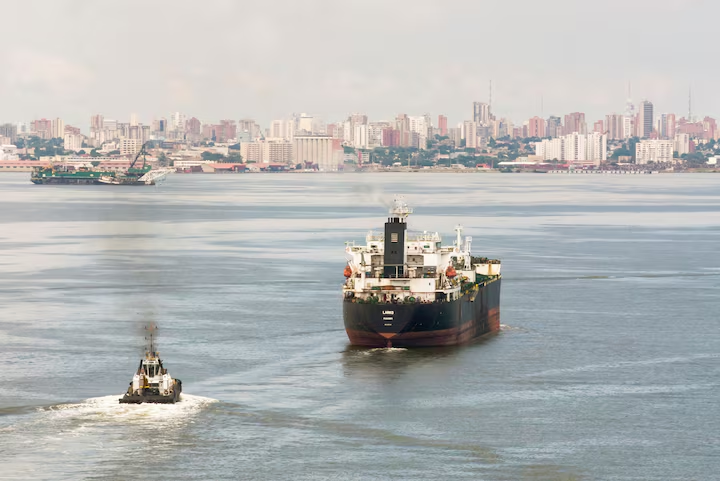
U.S. President Donald Trump ordered on Tuesday a “blockade” of all sanctioned oil tankers entering and leaving Venezuela, in Washington’s latest move to increase pressure on Nicolas Maduro’s government, targeting its main source of income. It is unclear how Trump will impose the move against the sanctioned vessels, and whether he will turn to the Coast Guard to interdict vessels like he did last week. The administration has moved thousands of troops and nearly a dozen warships – including an aircraft carrier – to the region. “For the theft of our Assets, and many other reasons, including Terrorism, Drug Smuggling, and Human Trafficking, the Venezuelan Regime has been designated a foreign terrorist organization,” Trump wrote on Truth Social. “Therefore, today, I am ordering a total and complete blockade of all sanctioned oil tankers going into, and out of, Venezuela.” In a statement, Venezuela’s government said it rejected Trump’s “grotesque threat.” Oil prices rose more than 1% in Asian trade on Wednesday. Brent crude futures LCOc1 were up 70 cents, or 1.2%, at $59.62 a barrel at 0245 GMT, while U.S. West Texas Intermediate crude CLc1 rose 73 cents, or 1.3%, to $56.00 a barrel. U.S. crude futures climbed over 1% to $55.96 a barrel in Asian trading after Trump’s announcement. Oil prices settled at $55.27 a barrel on Tuesday, the lowest close since February 2021. Oil market participants said prices were rising in anticipation of a potential reduction in Venezuelan exports, although they were still waiting to see how Trump’s blockade would be enforced and whether it would extend to include non-sanctioned vessels. American presidents have broad discretion to deploy U.S. forces abroad, but Trump’s asserted blockade marks a new test of presidential authority, said international law scholar Elena Chachko of UC Berkeley Law School. Blockades have traditionally been treated as permissible “instruments of war,” but only under strict conditions, Chachko said. “There are serious questions on both the domestic law front and international law front,” she added. U.S. Representative Joaquin Castro, a Texas Democrat, called the blockade “unquestionably an act of war.” “A war that the Congress never authorized and the American people do not want,” Castro added on X. There has been an effective embargo in place after the U.S. seized a sanctioned oil tanker off the coast of Venezuela last week, with loaded vessels carrying millions of barrels of oil staying in Venezuelan waters rather than risk seizure. Since the seizure, Venezuelan crude exports have fallen sharply, a situation worsened by a cyberattack that knocked down state-run PDVSA’s administrative systems this week. While many vessels picking up oil in Venezuela are under sanctions, others transporting the country’s oil and crude from Iran and Russia have not been sanctioned, and some companies, particularly the U.S.’ Chevron (CVX.N), transport Venezuelan oil in their own authorized ships.  

Nigeria: Aliko Dangote Petitions Anti-Graft Agency To Probe Petroleum Midstream And Downstream Regulator Over Alleged Corruption

The founder of Africa’s largest petroleum refinery, Aliko Dangote, has escalated a high-profile dispute within Nigeria’s petroleum sector by submitting a formal petition to the Independent Corrupt Practices and Other Related Offences Commission (ICPC), seeking an investigation into the Chief Executive Officer of the Nigerian Midstream and Downstream Petroleum Regulatory Authority (NMDPRA), Mr Farouk Ahmed, over alleged corruption. The petition accuses the regulator of corruption, financial impropriety, and abuse of office. The petition, filed on Tuesday, December 16, 2025, through Dangote’s lawyer, Mr. Ogwu James Onoja (SAN), was formally received by the ICPC Chairman, Dr. Musa Adamu Aliyu (SAN). It called for the immediate arrest, investigation, and prosecution of Mr. Ahmed. Dangote alleged that the NMDPRA boss has been living far beyond his legitimate earnings as a public servant, citing alleged expenditures exceeding $5 million paid upfront for the six-year education of his four children at elite secondary schools in Switzerland. According to the petition, the children and their respective schools were named to enable verification by the ICPC. Dangote contends that Mr. Ahmed’s cumulative public sector earnings could not reasonably support such spending, accusing him of embezzlement and diversion of public funds through his position at the NMDPRA for personal benefit. The petition further claims that the alleged actions have fuelled public discontent, sparked protests, and undermined confidence in the downstream petroleum sector. Dangote has indicated his willingness to appear in person before the ICPC to present evidence in support of his claims of corrupt enrichment, abuse of office, and impunity. He argued that swift action by the anti-graft agency would promote accountability and protect the integrity of President Bola Tinubu’s administration. The petition follows Dangote’s public allegations made during a press briefing at the Dangote Refinery in Lagos on December 14, where he claimed that Mr. Ahmed spent between $5 million and $7 million on his children’s secondary education abroad—an amount he described as inconsistent with the earnings of a public officer. Similar allegations surfaced earlier in 2025, triggering protests and calls for investigations by civil society groups, including the Socio-Economic Rights and Accountability Project (SERAP). As of the time of filing this report, neither the ICPC nor the NMDPRA had issued an official response to the petition. Mr. Ahmed has previously dismissed related allegations as baseless and described them as smear campaigns. The dispute has also attracted parliamentary attention, with the House of Representatives summoning both parties to address wider regulatory tensions within Nigeria’s oil and gas sector.

Ghana: Energy Ministry Unveils Guiding Framework For Private Sector Participation In Electricity Distribution Sector

Ghana’s Ministry of Energy and Green Transition on Monday unveiled the Guiding Framework for Private Sector Participation (PSP) in the operations of the Electricity Company of Ghana (ECG) and the Northern Electricity Distribution Company (NEDCo). Addressing sections of the media at the Ministry on behalf of the sector minister, the Chief Director of the Ministry, Mr. Solomon Adjetey Sowah, noted that the Guiding Framework sets out the processes, roles, and responsibilities that will guide the work of the Technical Advisor and the PSP Implementation Unit, in close collaboration with ECG, NEDCo, and relevant regulatory institutions. “Today’s occasion marks a significant milestone in our collective efforts to strengthen electricity service delivery, improve operational efficiency, and secure a resilient and sustainable energy future for our country,” he stressed. He added that the Guiding Framework reflects the Government’s firm resolve to transform the electricity distribution landscape through innovation, strategic collaboration, and responsible engagement with the private sector in the national interest. While acknowledging Ghana’s notable progress in expanding electricity access, increasing generation capacity, and strengthening transmission reliability, Mr. Sowah indicated that longstanding challenges within the distribution subsector—including technical and commercial losses, inadequate investment, revenue shortfalls, and operational inefficiencies—continue to undermine overall sector performance and must be addressed decisively. He explained that it is against this backdrop that Government initiated a structured process to explore and design a viable PSP arrangement for ECG and NEDCo. “The objective is clear: to attract technical expertise, operational efficiency, and capital investment, while safeguarding the national interest and ensuring value for money,” he added. Mr. Sowah revealed that Government established a PSP Steering Committee, supported by Financial, Technical, and Communications sub-groups, to lead a transparent and evidence-driven process following Cabinet’s approval on April 17, 2025, for the reintroduction of Private Sector Participation in electricity distribution across the country. “Since then, the Committee has undertaken extensive work, including:
  • detailed diagnostic assessments of ECG and NEDCo;
  • evaluation of global PSP models and lessons from comparable utilities;
  • benchmarking from international study tours to Nigeria, Côte d’Ivoire, India, and the United States;
  • financial modelling and legal analysis of potential partnership structures; and
  • the design of a Ghana-specific approach that reflects our unique context, needs, and constraints,” Mr. Sowah stated.
He noted that these efforts culminated in the development of the Guiding Framework, a document shaped by data, consultation, and collaboration. For his part, the Chairman of the Steering Committee, Engineer Jabesh Amissah-Arthur, who presented highlights of the Guiding Framework, said it outlines the overall objectives, the PSP model, scope of work, and asset ownership arrangements. Other key components include zoning and tariffs, the remuneration system, governance and oversight, as well as regulatory and social safeguards. He emphasised that the PSP Framework is a strategic tool designed not to privatise the utility companies, but to enhance performance, build resilience, and unlock the full potential of the electricity distribution sector.    

Ghana: Ackah, Gatete’s New Book Energy Regulation In Africa Unveiled In Accra

Former Chief Executive Officer of the Ghana Grid Company LTD. and Board Chairman of the Electricity Company of Ghana (ECG), Ing. Dr. William Amuna, has officially unveiled a new book examining the evolving landscape of energy regulation across Africa. The book was authored by Dr. Ishmael Ackah, a Ghanaian and former Executive Secretary of the Public Utilities Regulatory Commission (PURC), and Dr. Charly Gatete, an energy economist from Burkina Faso. Titled Energy Regulation in Africa: Dynamics, Challenges and Opportunities, the book was launched at the British Council in Accra and attracted key industry stakeholders, including Hon. Richard Gyan-Mensah, Deputy Minister for Energy and Green Transition; Mrs. Eunice Biritwum, Acting Executive Secretary of the Energy Commission; Mr. Benjamin Boakye, Executive Director of the Africa Centre for Energy Policy (ACEP); Dr. Mohammed Amin Adam, former Minister for Finance; and Dr. Matthew Opoku Prempeh, former Minister for Energy. The publication features contributions from 71 experts across 40 African countries, making it one of the most comprehensive works on energy regulation on the continent. Speaking at the launch, Dr. Amuna noted that Ghana’s installed power generation capacity has exceeded 5,000 megawatts, underscoring the need for robust regulation within the power sector. He described the book as an excellent publication and urged energy professionals and policymakers to acquire and study it. Former Energy Minister Dr. Matthew Opoku Prempeh, in his remarks, emphasised the importance of a clearer understanding of regulatory independence. He cautioned that public expectations of independence must be balanced with accountability. “We often call for independent regulators. That is right, but independence is not autonomy,” he said. “Autonomy suggests acting without accountability. Independence is more demanding—requiring fairness, consistency, and the courage to stand firm in the face of competing pressures.” He stressed that while regulators should engage stakeholders, they must avoid regulatory capture and ensure their mandate serves the public interest. He added that governments must provide clear mandates, stable financing, and respect for due process to enable regulators to function effectively. Dr. Prempeh also warned against transplanting foreign regulatory models wholesale into African systems, arguing that the continent’s unique economic and infrastructural realities require tailored solutions. “Africa does not have the luxury of copying and pasting foreign regulatory models,” he said. “We need innovative regulators who embrace digital tools, regional power markets, off-grid solutions, and technologies that support the transition to cleaner energy.” Lead author Dr. Ishmael Ackah said the book seeks to bridge the gap between research and policy by documenting both progress and persistent challenges in energy regulation across Africa. While acknowledging improvements since the 1990s, he highlighted ongoing concerns around political autonomy, tariff setting, and balancing investor interests with consumer protection. “We are doing better than in the 90s, but we are still not there yet,” he said. “The book documents successes but also highlights challenges—especially the relationship between regulation and politics, and how to balance competing interests to ensure utilities recover costs while protecting consumers.” Dr. Ackah added that the publication offers comparative lessons drawn from multiple countries, moving beyond earlier works that focused narrowly on individual national systems. Energy Regulation in Africa examines policy reforms, institutional development, governance, and regulatory practice, providing a valuable resource for policymakers, regulators, researchers, and investors seeking evidence-based guidance to strengthen energy governance across the continent.   

Nigeria: Aliko Dangote Questions NMDPRA CEO Over Source Of $5 Million Spent On Children’s Education In Switzerland

Billionaire industrialist and founder of Africa’s largest refinery, Aliko Dangote, has questioned the source of an estimated $5 million allegedly spent by the Chief Executive Officer (CEO) of the Nigerian Midstream and Downstream Petroleum Regulatory Authority (NMDPRA), Engr. Farouk Ahmed, on his children’s secondary education in Switzerland. Dangote claimed that the amount was paid for the education of four of Ahmed’s children over a six-year period. On Monday, Dangote alleged that Ahmed “paid $5 million” to Swiss secondary schools for his children’s education, describing the expenditure as “economic sabotage and corruption.” In a newspaper advertisement detailing his allegations, Dangote listed the children as Faisal Farouk, Farouk Jr., Ashraf Farouk, and Farhana Farouk. He named the schools they reportedly attended over the six-year period as Montreux School, Aiglon College, Institut Le Rosey, and La Garenne International School. Dangote also presented estimated annual tuition fees, living expenses, air travel, and upkeep, calculated across four children and several years of study. He claimed that the annual cost of tuition, airfare, and upkeep per child amounted to about $200,000, bringing the total to approximately $800,000 per year for all four children. According to him, total living expenses and air travel per child over six years amounted to about $1.2 million, or $4.8 million for the four children combined. Overall, Dangote estimated that the total cost of tuition and upkeep reached $5 million. He further listed alleged tertiary education expenses for the children, stating that tuition, upkeep, airfare, and related costs average approximately $125,000 per year over a four-year period. This, he claimed, amounts to $500,000 per child and a total of $2 million for all four. “Faisal just finished a 2025 Harvard MBA at $150,000, with an additional $60,000 for upkeep, tickets, and other incidentals. Total expenditure for Faisal’s MBA in 2025 was $210,000,” Dangote added. Dangote said Nigerians deserve to know the source of funds allegedly paid by a public officer, especially at a time when, according to him, many parents in Ahmed’s home state of Sokoto struggle to afford school fees as low as ₦10,000 for their children and wards.

Kenya: KETRACO Signs Sh40.4bn Deal With Consortium To Expand And Modernise Power Transmission Network

The Kenya Electricity Transmission Company Limited (KETRACO) on Monday signed a Sh40.4 billion (US$311 million) Public-Private Partnership (PPP) agreement with a consortium comprising Africa50 and Power Grid Corporation of India to expand and modernise Kenya’s power transmission network, local media outlets have reported. The project will be fully financed, implemented, operated, and maintained by the private sector, with no public funds committed. It covers the design, construction, financing, operation, and maintenance of two high-voltage transmission lines and associated substations aimed at improving grid reliability, integrating renewable energy, and strengthening power supply across Western and Northern Kenya. The consortium brings together Africa50, a pan-African infrastructure investment platform backed by 33 African governments, the African Development Bank Group, and other institutions, and Power Grid Corporation of India, one of the world’s largest transmission utilities, responsible for transmitting about 50 per cent of India’s electricity. The project was initiated as a Privately Initiated Proposal (PIP) and approved under Section 61 of the PPP Act, 2021. The PPP covers two major transmission lines. The 400kV Lessos–Loosuk line will pass through Nandi, Elgeyo Marakwet, Baringo, and Samburu counties, providing an alternative evacuation route for up to 300MW of geothermal power from the Baringo–Silali fields. The 220kV Kibos–Kakamega–Musaga line will serve Kisumu, Vihiga, and Kakamega counties, extending the high-voltage grid into Western Kenya for the first time and reducing voltage instability and technical losses. “This partnership demonstrates the strength of Kenya’s investment environment and the confidence of global partners in our energy agenda. We are accelerating access to reliable and affordable electricity while laying the foundation for industrialisation, job creation, and inclusive economic growth,” Energy Cabinet Secretary Opiyo Wandayi said during the signing ceremony. National Treasury Cabinet Secretary John Mbadi said the project reflects strong fiscal discipline, noting that the full cost will be borne by the private partner. He added that cost recovery will be through an availability-based tariff payable only after independent certification of completed works, with the concession period capped at 30 years. Under the agreement, Africa50 and Power Grid will establish a project company to manage the infrastructure over the concession period. KETRACO will make performance-based availability payments, while an independent expert jointly appointed by both parties will oversee project delivery. At the end of the concession period, all assets will revert to KETRACO in good condition and free of encumbrances. KETRACO Acting Managing Director, Eng. Kipkemoi Kibias, said the company plans to develop an additional 8,000 kilometres of transmission lines over the next 20 years, requiring about US$5 billion in investment. However, limited public funding has necessitated increased private sector participation. “This PPP reflects our commitment to innovative financing solutions to bridge the transmission financing gap and deliver critical infrastructure,” he said. The project aligns with Kenya’s Least Cost Power Development Plan and KETRACO’s Transmission Master Plan, and will support the integration of geothermal and wind power, including from the Baringo–Silali fields and the Lake Turkana Wind Power Project, helping to reduce reliance on costly thermal generation. Africa50 Chief Executive Officer, Alain Ebobisse, said the deal represents an Africa-first Independent Power Transmission model that can be replicated across the continent, while Power Grid Corporation of India Chairman and Managing Director, Dr. R.K. Tyagi, said the partnership combines global technical expertise with innovative project structuring to unlock Africa’s energy potential.

U.S. Treasury Blocks Bid For Lukoil’s Foreign Assets

The U.S. Treasury Department has rejected a bid by a group of companies led by investment bank Xtellus Partners to buy the foreign assets of Russia’s Lukoil, Reuters has reported, citing several unnamed sources. The assets, valued at some $22 billion, were put on the market after the United States imposed sanctions on Lukoil and Rosneft. The first bidder was Swiss commodity major Gunvor, which President Trump called a Russian “puppet”. Since then, Chevron, Exxon, Hungarian MOL, Emirati International Holding Company, and private equity major Carlyle have come forward as potential suitors for Lukoil’s foreign business, among others. According to the Reuters sources, the Russian energy major had liked the Xtellus bid, which involved a stipulation that the proceeds from the sale would be used to compensate U.S. investors in the Russian company that lost their money after the stock freeze following the Ukraine war. Essentially, the deal was going to be a cashless sale back to Lukoil securities held by U.S. investors in exchange for the company’s global assets. The deal, as proposed, however, had been seen as too difficult to execute, Reuters said, citing its sources. The Treasury Department had reportedly rejected the deal because the buyers’ group had no permission to use sanctioned securities in a transaction. The group is not giving up, however, planning to go higher in the Treasury Department and get the initial decision reversed. Lukoil has faced escalating restrictions on its global operations since the onset of Western sanctions following Russia’s invasion of Ukraine. The company holds a range of international upstream and downstream assets across Europe, the Middle East, and Africa, including refineries in Italy and the Netherlands, and upstream stakes in Iraq, Uzbekistan, and West Africa. The company operates a network of more than 2,000 fuel stations across the world.