


 for the Baleine Phase 3)
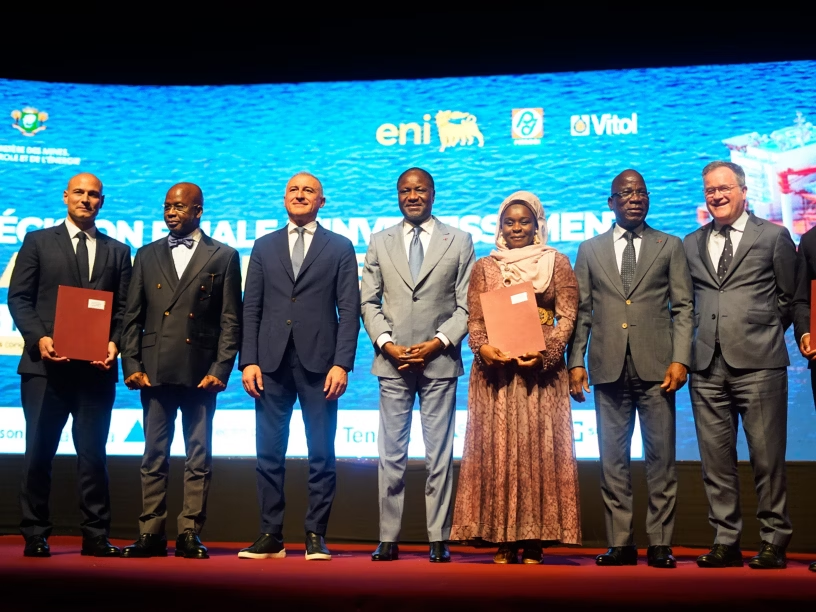
Eni, Italian oil and gas giant, and its partners Petroci and Vitol have approved the final investment decision (FID) for the Baleine Phase 3 project, marking a significant milestone in the development of the largest hydrocarbon discovery ever made in the country.
The Phase 3 development is expected to increase oil production from 60,000 to 150,000 barrels per day and gas output from 80 million to 200 million cubic feet per day.
The approval ceremony, held on Monday in Abidjan, was witnessed by the Minister of Mines, Petroleum and Energy of Côte d’Ivoire, Mamadou Sangafowa-Coulibaly.
The project includes the development of a new floating production, storage and offloading (FPSO) unit, designed to ensure high standards of operational efficiency and safety while reducing environmental impact.
It builds on the phased and fast-track development model already implemented in Baleine’s first two phases, enabling early production while optimising costs and leveraging existing infrastructure.
All gas produced will be allocated to the domestic market, contributing to Côte d’Ivoire’s energy needs, expanding electricity generation and supporting the country’s industrial development.
Commenting on the development, Chief Executive Officer of Eni, Claudio Descalzi, stated:“Baleine is a testament to Eni’s exploration and production model, built on excellence in exploration activities, the ability to develop projects through a fast-track and phased approach, and a consistent commitment to sustainability, in continuous dialogue with the host country.
“This project reflects our commitment to strengthening energy security, supporting local economic development and advancing a lower-carbon energy future.”
Eni has been present in Côte d’Ivoire since 2015, where it made the Baleine and Calao discoveries.
These discoveries have contributed to increasing interest in the Ivorian offshore sector, confirming the country’s potential as one of the most promising energy frontiers in West Africa.
The company is also committed to promoting sustainable development through initiatives in education, training, healthcare, economic diversification and the development of local entrepreneurial capacity.
Discover more from Energy News Africa
Subscribe to get the latest posts sent to your email.