


GNPC, SONATRACH Sign MoU To Deepen Regional Energy Cooperation

The Ghana National Petroleum Corporation (GNPC) and Algeria’s National Society for Hydrocarbon Research, Production, Transport, Transformation and Commercialization (SONATRACH) have signed a Memorandum of Understanding (MoU) to formalize a strategic partnership aimed at sharing technical expertise and strengthening regional cooperation across the petroleum value chain.
The MoU was signed on Tuesday, January 6, 2026, in Brazzaville, Republic of the Congo, under the auspices of the African Petroleum Producers Organization (APPO).
The signing ceremony was led by GNPC’s Director of Commerce and Investments, Dr. Krasi Eyiah Kwesi, and a representative of SONATRACH, Mr. Mustapha Benamara. It was witnessed by APPO Secretary-General, Farid Ghezali, underscoring the continental significance of the partnership.
The agreement outlines guidelines for cooperation in technological research, development, and innovation, as well as the joint development of oil and gas laboratory activities and the exchange of best practices in advanced industry techniques.
The collaboration is designed to foster a robust exchange of expertise and support the comprehensive development of Africa’s oil and gas capabilities. By leveraging their collective strengths, GNPC and SONATRACH intend to harmonize efforts in research and development, technological innovation, and the joint management of oil and gas laboratory operations.
This technical alignment spans both upstream and downstream sectors, ensuring that both organizations remain at the forefront of industry best practices and operational efficiency.
According to GNPC, the partnership is a critical component of its broader vision to maximize the value of Africa’s petroleum resources through innovation and regional cooperation. Central to this effort is GNPC’s Research and Technology Centre, which will serve as a key driver of the collaboration.
“By utilizing this hub for applied research and data-driven studies, GNPC aims to accelerate its exploration and production targets while advancing its long-term energy transition ambitions,” the Corporation said.
The agreement marks a pivotal step in GNPC’s commitment to strengthening its operatorship and deepening high-value partnerships with leading National Oil Companies across the continent, reinforcing Ghana’s role in the evolving African energy landscape.
White House Invites Vitol, Trafigura For Venezuelan Oil Talks

U.S. President Donald Trump has invited heads of commodity trading firms, Vitol and Trafigura, to the White House for talks on Friday regarding the marketing of Venezuelan oil, Reuters has reported.
Whereas the Trump administration has tapped U.S. oil majors to play a leading role in extracting and selling crude from Venezuela, the giant European firms are some of the largest oil traders in the world, and undoubtedly have the requisite expertise to market oil from Venezuela.
Vitol delivered an average of 7.2 million barrels per day (bpd) of crude oil and products in 2024, while Trafigura handled approximately 4.3 million barrels of oil equivalent per day, representing more than 10% of global daily consumption.
Both firms have expanded their operations and diversified their portfolios, investing in infrastructure like refineries and storage facilities, as well as moving into metals and renewable energy as market dynamics evolve.
They are also key buyers of fuels from major new facilities like the Dangote oil refinery in Nigeria.
Unlike their European peers, such as Shell (NYSE:SHEL) and BP Plc. (NYSE:BP), U.S. oil majors such as ExxonMobil (NYSE:XOM) and Chevron (NYSE:CVX) do not have large trading desks, preferring to focus more on their core business of exploration and production (E&P).
Despite holding the world’s largest proven oil reserves at more than 300 billion barrels, Venezuela produces relatively modest volumes of crude, averaging around 900,000 to 1 million barrels per day (bpd), a significant drop from its peak of over 3 million bpd, thanks to sanctions by Western nations coupled with years of underinvestment, mismanagement, and systemic corruption.
The Orinoco Belt, located in the eastern part of Venezuela, contains the majority of the country’s crude reserves.
The oil is extra-heavy and sour (high sulfur content), with a low API gravity.
This makes it more challenging and expensive to extract and refine compared to lighter, conventional crudes. It also requires blending with diluents (like naphtha) for transport and processing in specialized upgraders or refineries.
China Starts Construction Of Two New Nuclear Power Plant Units

China has poured first concrete for Unit 1 of the Bailong Nuclear Power Plant in the Guangxi Zhuang Autonomous Region and Unit 2 of the Lufeng Nuclear Power Plant in Guangdong Province, marking the official start of construction of two CAP1000 nuclear reactors.
The construction of Phase I (Units 1 and 2) of the Bailong plant was among approvals for 11 new reactors granted by China’s State Council in August 2024.
According to World Nuclear News, the two units—estimated to cost about CNY40 billion (USD5.6 billion)—are expected to take 56 months to construct.
SPIC subsidiary Shanghai Nuclear Engineering Research & Design Institute (SNERDI), a joint general contractor for the project, announced that it poured first concrete on 22 December for the nuclear island basemat of Bailong Unit 1.
The company said a total of 6,662 cubic metres of concrete was poured during a process lasting just over 64 hours.
Located on the Jiangshan Peninsula in Fangchenggang City, Guangxi Province, the Bailong plant is planned to have six units, with a total installed capacity of 8.62 GWe and a total investment of approximately CNY120 billion. The first phase of the project adopts the CAP1000 design, with each unit having a capacity of 1.25 million kilowatts.
Four CAP1400 reactors are also proposed for the site in later phases. The location is about 24 kilometres from the border with Vietnam and about 30 kilometres southwest of China General Nuclear’s Fangchenggang Nuclear Power Plant.
Once the first phase is completed and operational, the plant is expected to generate about 20 billion kilowatt-hours of electricity annually. This is equivalent to reducing standard coal consumption by about 6 million tonnes and cutting carbon dioxide emissions by approximately 16 million tonnes per year.
“It will play a positive role in optimising Guangxi’s energy structure, promoting energy conservation and emission reduction, and providing stable and reliable clean energy support as Guangxi accelerates the construction of a national comprehensive energy security zone and advances high-quality development in ethnic minority areas,” SPIC said.
SNERDI also poured first concrete for the nuclear island basemat of Lufeng Unit 2 on 22 December.
The proposed construction of four 1,250-MWe CAP1000 reactors (Units 1–4) at the Lufeng site was approved by China’s National Development and Reform Commission in September 2014. However, construction of Units 1 and 2 did not receive State Council approval until August 2024. Approval for Units 3 and 4 is still pending. First concrete for Unit 1 was poured in February last year.
Contractor China Nuclear Construction Corporation 22 (CNI22) said about 6,635 cubic metres of concrete was poured over approximately 68 hours to form the foundation of Unit 2’s nuclear island, which measures about 89 metres long and 49 metres at its widest point.
The Lufeng plant—located in Jieshi Town, Lufeng City, Guangdong Province—is planned to eventually house six 1,000-megawatt pressurised water reactor units.
In April 2022, the State Council approved construction of two HPR1000 (Hualong One) units at Lufeng as Units 5 and 6. First concrete was poured for Unit 5 on 8 September 2022 and for Unit 6 on 26 August 2023.
“Upon completion, the plant will further optimise the regional energy structure, alleviate power supply pressure, and provide a continuous and stable supply of clean energy for the economic development of the Greater Bay Area,” CNI22 said.
Nigeria: Ex-NMDPRA Boss Farouk Ahmed Still Under Probe Despite Withdrawal Of Petition By Dangote — ICPC Says

Nigeria’s anti-corruption agency, the Independent Corrupt Practices and Other Related Offences Commission (ICPC), has said it will proceed with its investigation into allegations against the immediate past Chief Executive Officer of the Nigerian Midstream and Downstream Petroleum Regulatory Authority (NMDPRA), Mr. Farouk Ahmed, despite the withdrawal of a petition by business mogul Aliko Dangote.
Mr. Dangote, founder of Dangote Refinery—Africa’s largest petroleum refinery—had earlier raised questions over the alleged spending of $5 million by Mr. Ahmed on his children’s overseas education, a claim that sparked widespread public debate across Nigeria.
Following the allegations, Mr. Dangote formally petitioned the ICPC, calling for a probe into the former regulator.
The Commission subsequently invited Mr. Dangote in December to appear before its panel of investigators to adopt the petition, in line with legal requirements.
However, in a statement issued on Wednesday, the ICPC disclosed that Mr. Dangote has withdrawn the petition.
“The Independent Corrupt Practices and Other Related Offences Commission (ICPC) is in receipt of a letter dated January 5, 2025, titled ‘Notice of Withdrawal of Petition against Engineer Farouk Ahmed,’ submitted by Dr. O. J. Onoja, SAN & Associates, legal counsel to Alhaji Aliko Dangote,” the statement said.
According to the Commission, the letter stated that the petitioner had withdrawn the petition dated December 16, 2025, against Engineer Farouk Ahmed, the immediate past ACE/CEO of the NMDPRA, in its entirety, noting that another law-enforcement agency had taken over the matter.
Despite the withdrawal, the ICPC stressed that investigations would continue.
“The ICPC wishes to state categorically that, in line with the provisions of Sections 3(14) and 27(3) of its enabling Act, investigations in the interest of the Nigerian people and the Nigerian state have already commenced and are presently ongoing,” the statement said.
“The Commission will therefore continue to investigate this matter in accordance with its statutory mandate, in the interest of transparency, accountability, and the fight against corruption, for the benefit of Nigeria.”
US Seizes Russian-Flagged Oil Tanker In Atlantic Ocean After Two-Week Pursuit

The United States has seized a Russian-flagged oil tanker in the Atlantic Ocean in a high-stakes operation that could risk confrontation with the Kremlin, after Moscow reportedly dispatched a submarine to safeguard the vessel, The Guardian has reported.
US European Command said on Wednesday that it boarded the tanker, Marinera, over alleged sanctions violations, bringing to an end a dramatic two-week pursuit that began in the Caribbean and concluded in the Atlantic.
Earlier, Russian state-controlled broadcaster RT published two grainy photographs showing a helicopter approaching the Marinera, saying an operation was under way.
The seizure — the first known US military seizure of a Russian-flagged vessel in recent history — marks the latest demonstration of US military reach.
Separately, the US Coast Guard said it intercepted another sanctioned “dark-fleet” tanker, the M Sophia, in a pre-dawn operation in the Caribbean.
Commenting on the twin operations, the White House signalled it would continue seizing Venezuela-linked oil vessels after President Donald Trump last month imposed what he described as a “complete blockade” on ships transporting oil for Caracas.
“The US will enforce all sanctions,” White House Press Secretary Karoline Leavitt told reporters.
Asked whether the seizure of a Russian-flagged tanker in the Atlantic risked escalating tensions with Moscow, Leavitt did not respond directly, saying the vessel’s crew could be transferred to the US for prosecution “if necessary”.
Russia’s foreign ministry has demanded that the US ensure the humane and dignified treatment of Russian citizens onboard the Marinera and guarantee their swift return to Russia.
Leavitt said: “The president has very good, open relationships with both President Putin and President Xi. He has spoken with them numerous times … and I believe those personal relationships are going to continue.”
Ship-tracking data from MarineTraffic showed the Marinera navigating in the Atlantic between Iceland and the United Kingdom.
The Wall Street Journal reported that several helicopters and at least one US Coast Guard vessel were used to take control of the tanker.
Britain provided support to the operation, the UK Ministry of Defence said in a statement.
The Kremlin’s immediate reaction to the seizure has been notably muted, with Moscow appearing keen to improve ties with Washington under Trump in hopes of securing favourable terms in talks over Ukraine.
Russia’s transport ministry said US forces boarded the vessel outside the territorial waters of any state and that contact with it had been lost. The ministry cited the 1982 UN Convention on the Law of the Sea, which states that “no state has the right to use force against vessels duly registered in the jurisdictions of other states”.
US aircraft were also reported to be monitoring a tanker off Ireland that allegedly attempted to evade the Venezuelan oil blockade.
US Defence Secretary Pete Hegseth wrote on X: “The blockade of sanctioned and illicit Venezuelan oil remains in FULL EFFECT — anywhere in the world.”
The pursuit of the Marinera reportedly began after the tanker turned back into the Atlantic while travelling from Iran to Venezuela, having attempted to evade a US blockade targeting sanction-hit oil tankers operating near Venezuelan waters.
The operation is expected to strain relations with President Vladimir Putin, coming at a sensitive moment as negotiations over a potential peace deal in Ukraine continue, and following the US capture of Venezuela’s President Nicolás Maduro, a longstanding Kremlin ally.
Ukraine’s Foreign Minister, Andrii Sybiha, welcomed the seizure, describing it as an example of decisive action against Moscow and praising what he called President Trump’s resolute leadership.
“We welcome such an approach to dealing with Russia: act, not fear. This is also relevant to the peace process and bringing a lasting peace closer,” Sybiha wrote on X.
Trump Confirms Venezuela Will Export 30–50 Million Barrels Of Crude Oil To US Refineries

United States President Donald Trump on Tuesday night confirmed that Venezuela will export between 30 million and 50 million barrels of crude oil to the United States, to be sold at market value, with the proceeds controlled by the U.S. government.
The move signals a major shift away from China, which had been a key destination for Venezuelan crude prior to the recent U.S. military intervention and the abduction of President Nicolás Maduro last Saturday.
“Interim Authorities in Venezuela will be turning over between 30 and 50 MILLION barrels of high-quality, ‘sanctioned oil’ to the United States of America,” Trump said in a post on Truth Social.
According to Trump, the proceeds from the sale will be used “to benefit the people of Venezuela and the United States.”
He added that Energy Secretary Chris Wright has been directed to “execute this plan immediately,” noting that the oil “will be taken by storage ships and brought directly to unloading docks in the United States.”
A CNN report, quoting an unnamed senior U.S. administration official, said the oil has already been produced and stored.
“The majority of it is currently on boats and will now go to U.S. facilities in the Gulf to be refined,” the official said.
Although 30 to 50 million barrels of oil is a significant volume, the United States consumed just over 20 million barrels of oil per day over the past month.
As a result, the supply may have only a limited impact on fuel prices.
Former President Joe Biden released about 180 million barrels—roughly four to six times that amount—from the U.S. Strategic Petroleum Reserve in 2022, which lowered gasoline prices by between 13 and 31 cents per gallon over four months, according to a U.S. Treasury Department analysis.
U.S. oil prices fell by about $1 per barrel, or just under 2 percent, to $56 immediately after Trump made the announcement on Truth Social.
At current prices, selling up to 50 million barrels could generate substantial revenue.
Venezuelan crude is trading at approximately $55 per barrel, meaning total proceeds could range between $1.65 billion and $2.75 billion, assuming buyers pay market prices.
Venezuela has accumulated significant crude stockpiles since the United States imposed its oil embargo late last year.
However, handing over such a large volume of oil could substantially deplete the country’s reserves.
It remains unclear over what period the oil will be transferred.
The senior administration official said the process would be swift, noting that Venezuela’s crude is extremely heavy and cannot be stored for extended periods.
U.S. Department Of Energy Awards $2.7 Billion Worth Of Orders To Boost Uranium Enrichment

The United States Department of Energy (DOE) has awarded contracts worth a combined $2.7 billion to three companies to strengthen domestic uranium enrichment services for low-enriched uranium (LEU) and high-assay low-enriched uranium (HALEU) over the next 10 years.
The contracts were awarded to American Centrifuge Operating Company ($900 million), General Matter ($900 million), and Orano Federal Services ($900 million).
The three companies are expected to expand U.S. domestic LEU enrichment capacity and establish domestic HALEU enrichment capability, supporting President Donald Trump’s commitment to enhance energy security and reduce reliance on foreign suppliers.
The DOE also awarded an additional $28 million to Global Laser Enrichment to continue advancing next-generation uranium enrichment technology for the nuclear fuel cycle.
“President Trump is catalysing a resurgence in the nation’s nuclear energy sector to strengthen American security and prosperity,” said U.S. Secretary of Energy, Chris Wright.
“Today’s awards demonstrate that this Administration is committed to restoring a secure domestic nuclear fuel supply chain capable of producing the nuclear fuels needed to power today’s reactors and the advanced reactors of tomorrow,” he added.
Last year, the DOE signed contracts with six companies for LEU and HALEU enrichment, allowing them to bid for future work.
The task order awards to the three companies will help transition the United States away from foreign sources of uranium and diversify the nation’s domestic nuclear fuel supply.
Developing new domestic production capacity for LEU and HALEU will ensure an adequate fuel supply to maintain operations at the nation’s 94 commercial nuclear reactors, while also building a strong foundation to support the deployment of advanced nuclear reactors.
To ensure accountability, the awards will be distributed to the companies under a strict milestone-based approach.
Ghana: Energy Ministry Announces Planned Outage In Cape Coast And Other Towns On Thursday To Replace Higher-Capacity Transformer

Ghana’s Ministry of Energy and Green Transition has announced a planned interruption in power supply in parts of the Central Region, particularly Cape Coast and its surrounding communities, on Thursday, 8 January 2026, from 6:00 a.m. to 10:00 p.m.
In a statement issued by the Ministry’s Spokesperson and Head of Communication, Richmond Rockson, the outage is intended to allow engineers from the Ghana Grid Company (GRIDCo) to replace the existing 33MVA transformer at the Cape Coast Substation with a new 66MVA transformer of higher capacity.
According to the Ministry, the critical upgrade forms part of the government’s broader agenda—being implemented through the Ministry and its agencies—to strengthen and expand the national power transmission infrastructure.
The transformer replacement is expected to significantly enhance the substation’s capacity, enable more households and businesses in Cape Coast and its environs to connect to the national grid, and improve the quality, reliability, and stability of power supply.
“GRIDCo engineers, under the strict supervision of the Ministry, have put in place all necessary measures to ensure that the work is completed efficiently and within the scheduled timeframe, in order to restore power supply as quickly as possible,” the statement said.
The Ministry and GRIDCO apologised to residents and businesses for any inconvenience the outage may cause and assured the public of their continued commitment to delivering reliable and improved electricity supply in support of national development.
Venezuela, Washington In Talks To Export Venezuelan Oil To US

Government officials in Caracas and Washington are discussing exporting Venezuelan crude to refiners in the United States, five government, industry and shipping sources told Reuters on Tuesday, a deal that could divert supplies away from China while helping state company PDVSA avoid deeper output cuts.
Venezuela has millions of barrels of oil loaded on tankers and in storage tanks that it has been unable to ship due to a blockade on exports imposed by U.S. President Donald Trump since mid-December.
The blockade was part of rising U.S. pressure on the government of Venezuelan President Nicolas Maduro that culminated in U.S. forces capturing him this weekend.
A potential deal to sell the trapped crude to the U.S. could initially require reallocating cargoes originally bound for China, two sources said.
The Asian country has been Venezuela’s top buyer in the last decade and especially since the United States imposed sanctions on companies involved in oil trade with Venezuela in 2020.
The supply would increase the volume of Venezuelan oil exported to the U.S., a flow that is currently controlled entirely by Chevron (CVX.N), PDVSA’s main joint venture partner, under a U.S. authorization.
Chevron, which has been exporting between 100,000 and 150,000 barrels per day (bpd) of Venezuelan oil to the U.S., has emerged in recent weeks as the only company fluidly loading and shipping crude from the South American country amid the blockade.
PDVSA has already had to cut production due to the embargo, because it is running out of storage for the oil. If PDVSA does not find a way to export oil soon, it would have to cut production more, one of the sources said.
The White House, Venezuelan government officials and PDVSA did not immediately comment.
Venezuela’s oil ministry has said the U.S. wants to steal the country’s oil reserves and denounced Maduro’s capture as a kidnapping.
U.S. refineries on the Gulf Coast can process Venezuela’s heavy crude grades and were importing some 500,000 barrels per day (bpd) before Washington first imposed energy sanctions on Venezuela.
It was not immediately clear how sanctioned PDVSA would obtain proceeds from the oil sales.
The officials have been in talks this week about possible sale mechanisms, including auctions to allow interested U.S. buyers to participate in cargo offers, and the issuance of U.S. licenses to PDVSA’s business partners that could lead to supply contracts, two sources said.
The parties have also discussed if the Venezuelan crude can refill the U.S. Strategic Petroleum Reserve in the future, one of the sources said.
Ghana: GOIL Makes Major Reduction In Fuel Prices In Line With Affordability And National Vision

Ghana’s indigenous oil marketing company, GOIL PLC, has reduced the prices of its petroleum products with effect from Tuesday, January 6, 2026, reaffirming its commitment to providing high-quality petroleum products at prices that remain affordable to the Ghanaian public.
Under the new pricing regime, Regular Fuel (Super XP) is now selling at GH¢10.99 per litre, reflecting a reduction of GH¢1.00.
GOIL’s premium product, Super XP 95, has been reduced to GH¢13.97 per litre, down from GH¢14.95 in the previous pricing window.
Diesel XP has also recorded a reduction of 98 pesewas, now selling at GH¢11.96 per litre, compared to GH¢12.94 previously.
The price adjustments were contained in a statement issued by the company on Tuesday, January 6, 2026.
According to GOIL, the downward revision was driven by the appreciation of the Ghana cedi against major international currencies—particularly the US dollar—as well as a general decline in international prices of finished petroleum products.
Commenting on the development, the Group Chief Executive Officer and Managing Director of GOIL PLC, Mr. Edward Abambire Bawa, said the reductions go beyond market movements and reflect a deliberate corporate strategy to ensure that efficiency gains and favourable macroeconomic conditions are passed directly on to consumers.
“At GOIL, our strategy is not only to guarantee the consistent supply of high-quality petroleum products, but also to make them affordable to the average Ghanaian. This approach aligns fully with the vision of His Excellency President John Dramani Mahama, which places strong emphasis on easing the cost of living, strengthening domestic purchasing power, and ensuring that national institutions play their part in delivering tangible economic relief to citizens,” he said.
Mr. Bawa further emphasised that GOIL remains committed to operating as a nationally responsive energy company, balancing commercial sustainability with its broader responsibility to support economic stability and national development.
GOIL PLC expressed appreciation to customers and stakeholders for their continued trust and patronage, and reaffirmed its resolve to remain a reliable partner in Ghana’s energy value chain.
Egypt Looks To Qatar For Supply Of Liquefied Natural Gas
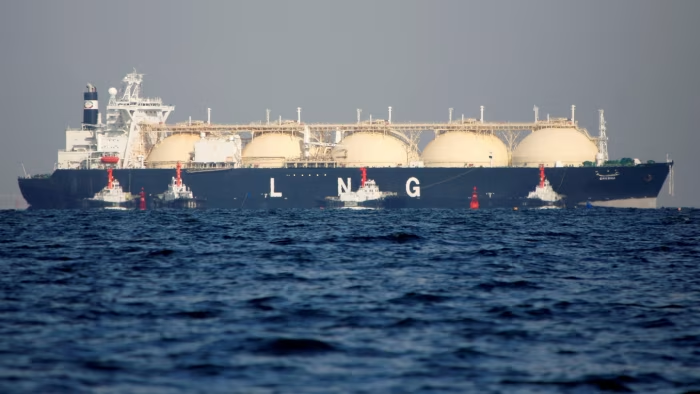
The Egyptian Natural Gas Company (EGAS) has signed an agreement with Qatar Energy for the supply of up to 24 shipments of liquefied natural gas (LNG) during the summer of 2026.
The agreement aims to strengthen cooperation in the energy sector, particularly regarding the supply of LNG from Qatar to Egypt.
The agreement was signed by H.E. Eng. Saad bin Sharida Al-Kaabi, Minister of State for Energy, Designate Member and Executive Chairman of Qatar Energy, and H.E. Mr. Karim Badawi, Minister of Petroleum and Minerals of the Arab Republic of Egypt, in a special ceremony held at the President Building of Qatar Energy in Doha.
Speaking on the occasion, H.E. Minister Al-Kaabi said: “We are pleased to enhance our fruitful cooperation in the field of energy with the Arab Republic of Egypt. This agreement builds on our successful partnerships in Egypt, particularly regarding the supply of LNG produced by Qatar.”
He added: “This MoU strengthens our bilateral relationship, enabling us to provide additional LNG supplies from Qatar to meet Egypt’s growing energy demand, support its long-term economic and industrial growth, and ensure reliable energy for the country.”
“We look forward to further cooperation with the Egyptian Ministry of Petroleum and Minerals and all our partners in Egypt, to deepen collaboration and meet Egypt’s future LNG needs,” Minister Al-Kaabi concluded.
Eni, Repsol Chase $6 Billion Debt From Venezuela
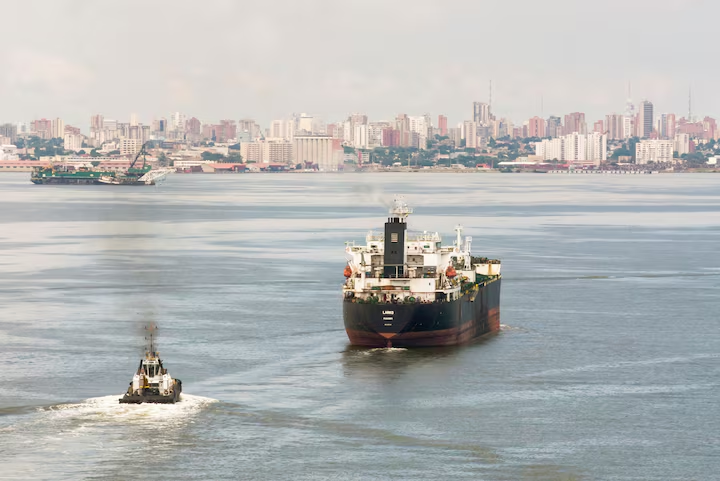
Italian oil and gas giant Eni and Spain’s Repsol, two of the largest European energy companies, are struggling to recover about $6 billion from Venezuela for the gas and naphtha they have supplied to the South American country, the Financial Times reported on Tuesday, citing sources with knowledge of the matter.
Eni and Repsol jointly own the Perla gas field offshore Venezuela. For years, the two European oil and gas majors had supplied gas and naphtha to Venezuela’s state oil firm PDVSA, to use as diluents to make the extra heavy crude easier to transport.
In exchange, PDVSA was paying to Eni and Repsol with crude.
However, the Trump Administration in March 2025 ended the licenses of all foreign firms to operate in Venezuela as the United States renewed its pressure on the country holding about 17% of the world’s proven oil reserves.
Eni and Repsol, and all others foreign firms, including oilfield services operators and U.S. supermajor Chevron, had their licenses yanked, before the Trump Administration exempted Chevron and allowed it in July to operate in Venezuela and export the crude oil to the United States.
The European majors are not authorized to return to Venezuela, yet.
Barred from receiving crude from PDVSA for nearly a year, Eni and Repsol are now looking to recoup $6 billion worth of the gas they had supplied to Venezuela.
Apart from struggling to recoup the value of the deliveries, the European firms have also faced indifference from the U.S. Administration regarding efforts to recover the debt owed, according to FT’s sources.
Meanwhile, billions of barrels of Venezuela’s oil claimed by major energy companies under current deals are now in doubt following the capture of Nicolas Maduro, according to investment bank Morgan Stanley.
China’s Sinopec and CNPC, Russia’s Roszarubezhneft, Chevron, Eni, and Repsol, among others, have about 10 billion of barrels of reserves in Venezuela under current agreements.
Ghana: NPA CEO Urges Sentuo Refinery To Maintain Operational Excellence

Ghana’s petroleum downstream regulator, the National Petroleum Authority (NPA), has commended Sentuo Oil Refinery for its contributions to the country’s downstream petroleum sector and urged the company to maintain operational excellence.
The Chief Executive Officer of the NPA, Mr. Godwin Kudzo Tameklo Esq., gave the commendation during a working visit to the refinery on Monday, January 5, 2026.
“The decision by Sentuo to establish a refinery for me is a game changer. For a long time—over 60 years—we have relied on one major refinery. The work Sentuo has done over the last six months speaks for itself. What it means for us at the NPA is how we support your activities while ensuring that our regulatory oversight is never compromised.
“As a regulator, we must first ensure that we help protect your investment. Your decision to invest in Ghana requires that we safeguard that investment, and that is very important to us,” Mr. Tameklo said.
 The visit formed part of a familiarisation tour of petroleum installations across the country, aimed at strengthening regulatory engagement and supporting growth in the downstream sector.
Sentuo Oil Refinery, a billion-dollar Chinese investment in Ghana, currently supplies the local market with 53,000 tonnes of Premium Motor Spirit (PMS), popularly known as petrol; 64,000 tonnes of Automotive Gas Oil (AGO), commonly referred to as diesel; and 8,000 metric tonnes of Liquefied Petroleum Gas (LPG) on a monthly basis.
Additionally, the refinery supplies about 7,000 metric tonnes of Heavy Fuel Oil (HFO) to the market each month.
Mr. Tameklo further emphasised the importance of strict regulatory compliance, particularly in areas related to health, safety, and environmental protection.
“Protecting that investment also means we do not compromise on regulatory oversight. What is important to us is ensuring that your facility meets international standards. Issues of health, environment, and safety must be given top priority.
“You have invested heavily, and we will ensure that the investment is worthwhile. However, you must also support us as regulators by ensuring full compliance. These are matters we cannot afford to compromise,” he stated.
On his part, the Group Chairman of Sentuo Oil Refinery, Mr. Ninqguan Xu, expressed appreciation to the NPA for the visit and reaffirmed the company’s commitment to operating within Ghana’s regulatory framework.
“Sentuo Oil Refinery remains fully committed to complying with all labour laws in Ghana and adhering strictly to international health, safety, and environmental standards. We will continue to provide proper working conditions for our staff to enhance efficiency and productivity,” Mr. Xu said.
He further highlighted the company’s focus on local content and capacity building, noting that Sentuo has successfully integrated local staff into its steel operations and plans to replicate the same approach at the refinery.
“We are deliberately integrating and training local staff, including positioning them as intermediaries to address language barriers and ensure that all documentation and processes meet regulatory requirements,” he explained.
Mr. Xu also disclosed plans to partner with relevant institutions to establish a scholarship scheme aimed at training university students to acquire skills in the petroleum sector, as part of Sentuo’s long-term commitment to human capital development.
The working visit underscores the National Petroleum Authority’s commitment to overseeing a well-regulated, competitive, and sustainable downstream petroleum sector by engaging industry players, providing regulatory support, and enforcing compliance to ensure safe operations, investment protection, and long-term growth of Ghana’s petroleum industry.
The visit formed part of a familiarisation tour of petroleum installations across the country, aimed at strengthening regulatory engagement and supporting growth in the downstream sector.
Sentuo Oil Refinery, a billion-dollar Chinese investment in Ghana, currently supplies the local market with 53,000 tonnes of Premium Motor Spirit (PMS), popularly known as petrol; 64,000 tonnes of Automotive Gas Oil (AGO), commonly referred to as diesel; and 8,000 metric tonnes of Liquefied Petroleum Gas (LPG) on a monthly basis.
Additionally, the refinery supplies about 7,000 metric tonnes of Heavy Fuel Oil (HFO) to the market each month.
Mr. Tameklo further emphasised the importance of strict regulatory compliance, particularly in areas related to health, safety, and environmental protection.
“Protecting that investment also means we do not compromise on regulatory oversight. What is important to us is ensuring that your facility meets international standards. Issues of health, environment, and safety must be given top priority.
“You have invested heavily, and we will ensure that the investment is worthwhile. However, you must also support us as regulators by ensuring full compliance. These are matters we cannot afford to compromise,” he stated.
On his part, the Group Chairman of Sentuo Oil Refinery, Mr. Ninqguan Xu, expressed appreciation to the NPA for the visit and reaffirmed the company’s commitment to operating within Ghana’s regulatory framework.
“Sentuo Oil Refinery remains fully committed to complying with all labour laws in Ghana and adhering strictly to international health, safety, and environmental standards. We will continue to provide proper working conditions for our staff to enhance efficiency and productivity,” Mr. Xu said.
He further highlighted the company’s focus on local content and capacity building, noting that Sentuo has successfully integrated local staff into its steel operations and plans to replicate the same approach at the refinery.
“We are deliberately integrating and training local staff, including positioning them as intermediaries to address language barriers and ensure that all documentation and processes meet regulatory requirements,” he explained.
Mr. Xu also disclosed plans to partner with relevant institutions to establish a scholarship scheme aimed at training university students to acquire skills in the petroleum sector, as part of Sentuo’s long-term commitment to human capital development.
The working visit underscores the National Petroleum Authority’s commitment to overseeing a well-regulated, competitive, and sustainable downstream petroleum sector by engaging industry players, providing regulatory support, and enforcing compliance to ensure safe operations, investment protection, and long-term growth of Ghana’s petroleum industry.
The visit formed part of a familiarisation tour of petroleum installations across the country, aimed at strengthening regulatory engagement and supporting growth in the downstream sector.
Sentuo Oil Refinery, a billion-dollar Chinese investment in Ghana, currently supplies the local market with 53,000 tonnes of Premium Motor Spirit (PMS), popularly known as petrol; 64,000 tonnes of Automotive Gas Oil (AGO), commonly referred to as diesel; and 8,000 metric tonnes of Liquefied Petroleum Gas (LPG) on a monthly basis.
Additionally, the refinery supplies about 7,000 metric tonnes of Heavy Fuel Oil (HFO) to the market each month.
Mr. Tameklo further emphasised the importance of strict regulatory compliance, particularly in areas related to health, safety, and environmental protection.
“Protecting that investment also means we do not compromise on regulatory oversight. What is important to us is ensuring that your facility meets international standards. Issues of health, environment, and safety must be given top priority.
“You have invested heavily, and we will ensure that the investment is worthwhile. However, you must also support us as regulators by ensuring full compliance. These are matters we cannot afford to compromise,” he stated.
On his part, the Group Chairman of Sentuo Oil Refinery, Mr. Ninqguan Xu, expressed appreciation to the NPA for the visit and reaffirmed the company’s commitment to operating within Ghana’s regulatory framework.
“Sentuo Oil Refinery remains fully committed to complying with all labour laws in Ghana and adhering strictly to international health, safety, and environmental standards. We will continue to provide proper working conditions for our staff to enhance efficiency and productivity,” Mr. Xu said.
He further highlighted the company’s focus on local content and capacity building, noting that Sentuo has successfully integrated local staff into its steel operations and plans to replicate the same approach at the refinery.
“We are deliberately integrating and training local staff, including positioning them as intermediaries to address language barriers and ensure that all documentation and processes meet regulatory requirements,” he explained.
Mr. Xu also disclosed plans to partner with relevant institutions to establish a scholarship scheme aimed at training university students to acquire skills in the petroleum sector, as part of Sentuo’s long-term commitment to human capital development.
The working visit underscores the National Petroleum Authority’s commitment to overseeing a well-regulated, competitive, and sustainable downstream petroleum sector by engaging industry players, providing regulatory support, and enforcing compliance to ensure safe operations, investment protection, and long-term growth of Ghana’s petroleum industry. Nigeria: KEDCO Promotes 1,500 Staff To Boost Performance in 2026 And Beyond

Kano Electricity Distribution Company (KEDCO), one of Nigeria’s power distribution companies, has approved the merit-based promotion of 1,500 staff as part of its ongoing commitment to staff welfare, motivation, and the development of a performance-driven workforce.
A statement issued by the company’s spokesperson, Sani Bala Sani, described the promotion exercise as significant in KEDCO’s history, underscoring the company’s renewed commitment to human capital development as a critical pillar of its transformation agenda under its core investor, Future Energies Africa (FEA), and current management.
The exercise followed a comprehensive performance appraisal process and aligns with best practices in corporate governance, fairness, and transparency.
It was designed to recognise deserving staff who met the eligibility criteria in line with the company’s conditions of service and demonstrated dedication, competence, and resilience in supporting KEDCO’s operational turnaround and improved service delivery.
Speaking on the development, KEDCO’s Managing Director and Chief Executive Officer, Dr. Abubakar Shuaibu Jimeta, described the move as a strategic investment in people, noting that workers remain the company’s greatest asset.
“This promotion exercise is not just a reward for hard work; it is a statement of intent. At KEDCO, we are building a culture where performance is recognised, excellence is encouraged, and our people are empowered to deliver value to our customers and stakeholders,” the MD/CEO said.
The development forms part of broader workforce reforms aimed at boosting productivity, enhancing customer experience, and positioning KEDCO to meet the evolving demands of the power sector.
It also reflects the company’s resolve to foster industrial harmony and sustain a motivated workforce capable of driving operational efficiency.
KEDCO reaffirmed its commitment to continuous staff development, capacity building, and improved welfare, stressing that a motivated workforce remains central to achieving reliable, efficient, and customer-focused electricity distribution across its franchise area.