



The world’s biggest oil tanker owners have raised the spectre of a market crash only weeks after the closure of the Strait of Hormuz helped power the industry to a quarter of record profits.
Owners are braced for a steep drop in the rates they can charge to charter tankers in the event that the US and Iran reach a deal to reopen the contested waterway, through which a fifth of global oil supplies typically pass.
Iran’s stranglehold on the strait since the war started in February has delivered a windfall for the industry, with profits surging to $36bn in the first quarter, according to Clarksons, one of the world’s biggest shipping brokers.
The previous quarterly record of $26bn was set in 2022.
The risk of a sharp downturn has been heightened after owners ploughed some of their profits into orders for new ships, stoking fears of another boom-and-bust cycle that has been a hallmark of the shipping industry for decades.
The number of the largest oil carriers ordered this year has already surpassed the total for any full year on record, according to maritime data company AXSMarine.
“There is a certainty that it crashes at one point,” said Alexander Saverys, chief executive of CMB Tech, one of the biggest listed shipping companies.
“The market has ordered, in my book, way too many ships. Now that will come and bite us eventually.”
The daily rates tanker owners can command have already eased back from the peaks hit in the early weeks of the conflict, when the average cost of hiring a tanker hit $162,992.
For the largest vessels, which can carry about 2 million barrels of oil a day, the daily rate soared to $386,685.
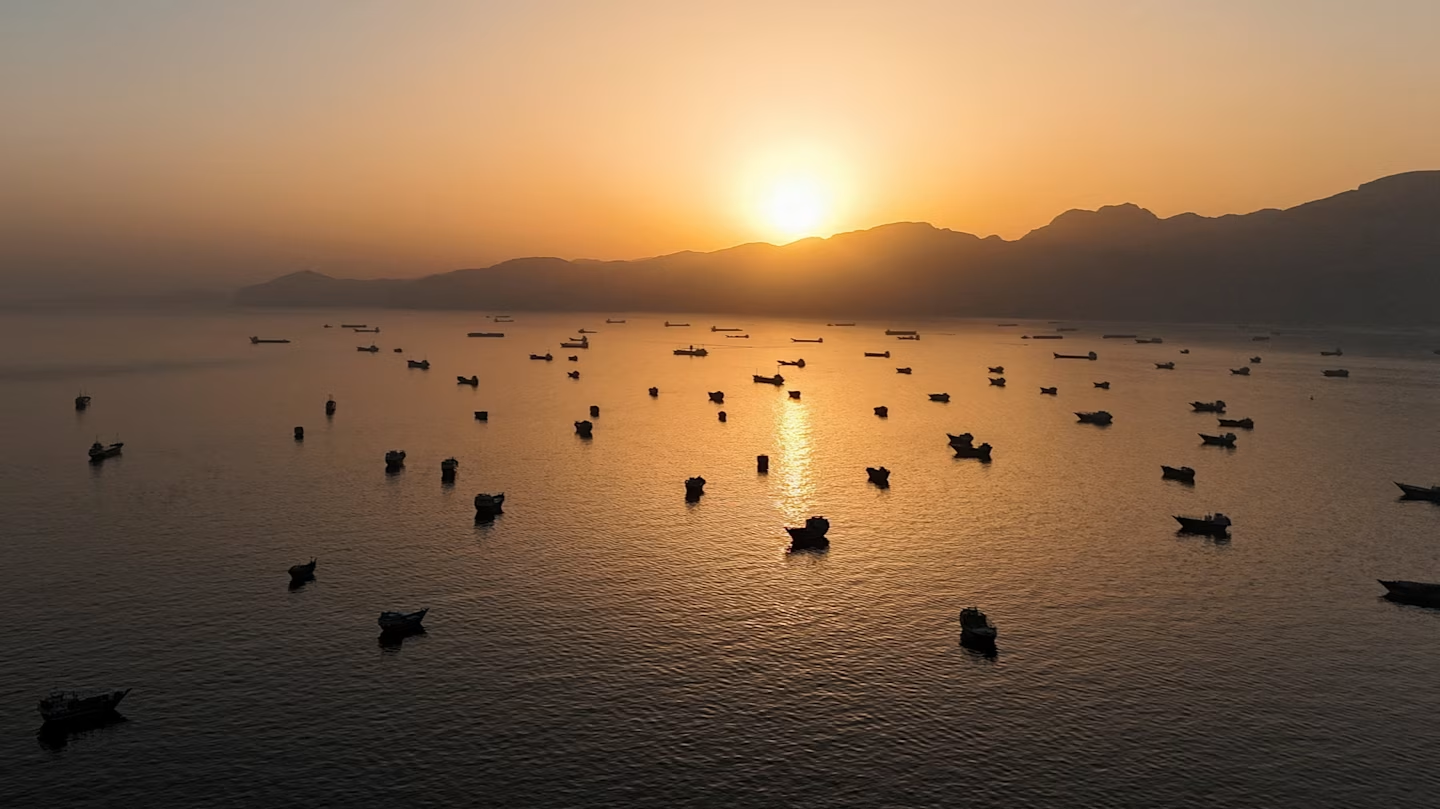
The effective closure of the strait has left more than 160 oil tankers stranded in the Gulf, limiting the supply of vessels and driving up shipping rates across the world.
A move by owners to route vessels around the Cape of Good Hope to avoid the Red Sea and potential attacks from Houthi rebels has also driven up rates.
Despite traffic through the strait remaining at a near-standstill, the daily average overall rates for tankers have dropped to between $55,000 and $95,000 for the larger vessels in recent weeks in anticipation of a reopening of the strait.
The range is still above the average in recent years of $30,000 to $40,000.
“We need to be very careful,” said Harry Vafias, a major owner of gas and oil tankers, referring to the potential risks facing the industry.
“There has been a lot of investment in second-hand and new building [of ships].”
Tanker orders this year are on track to match 2024, which was the third-busiest year since 2000, according to AXS.
The tanker industry would be one of the few industries to lose out if the volumes of shipping traffic through the strait returned to prewar levels.
The closure of the vital waterway has sent energy prices surging, hurting multiple industries.
The oil tanker industry is dominated by Greek shipowners, with a working fleet valued at $66.4bn, $26bn more than China, according to shipping technology company Veson Nautical.
While the industry is accustomed to boom-and-bust cycles, a string of global shocks this decade, including the coronavirus pandemic and US President Donald Trump’s trade war, has injected more volatility into shipping rates.
But some executives cautioned that the risk of an industry downturn was overblown, saying that this year’s burst of orders for new ships followed a period of undersupply.
Maria Angelicoussis, chief executive of Angelicoussis Group, a privately owned shipping company, said: “When I look at the tanker market, for example, yes, there’s been an uptick in new building orders in the recent past,” but it comes after a period in which there was a lack of vessels.
It was a view echoed by Capital Maritime Group, which is owned by Greek tycoon Evangelos Marinakis and has placed a large order for new ships.
Others argued that the war would lead to lasting changes in how oil was shipped around the world, supporting the fees tanker owners could charge.
The changes include using routes that were less exposed to the threat of conflict.
Angeliki Frangou, chief executive of Navios Partners, a Greek shipping company, told the FT that “excessive newbuilding orders” would push shipping rates lower but the impact would be reduced “by national security considerations of securing reliable energy supply chains”.
Discover more from Energy News Africa
Subscribe to get the latest posts sent to your email.