


Ghana, Nigeria & Angola Commit US$120.8 Million Towards Operationalisation Of African Energy Bank

Three oil-producing African nations—Ghana, Nigeria, and Angola—who are members of the African Petroleum Producers’ Organization (APPO), have committed a total of US$120.8 million towards the operationalisation of the African Energy Bank, this portal can confirm.
Of this amount, Nigeria, which will host the African Energy Bank, has contributed US$91.4 million, while Ghana has contributed US$20.4 million and Angola US$10 million.
The contributions so far fall short of the US$500 million required to begin operating the bank. With only three countries having made payments, it means the remaining 15 APPO member states have not contributed any portion of the US$83.33 million each member is expected to pay.
While in Angola recently, APPO Secretary-General Dr. Omar Farouk Ibrahim disclosed that the official launch date of the Energy Bank will be decided at the next ministerial meeting. However, this platform cannot confirm whether APPO will proceed with the launch since the minimum required amount has not yet been raised.
The idea of establishing the African Energy Bank was first proposed in 2022 during the 8th African Petroleum Congress and Exhibition in Luanda, Angola. It followed a decision by several international banks to withdraw funding for oil and gas projects as part of the ongoing global energy transition.
APPO, in partnership with the African Export-Import Bank (Afreximbank), projected raising US$5 billion as the base capital for the bank. Each of the 18 member countries agreed to contribute US$83.33 million, totaling approximately US$1.5 billion as the initial capital.
Currently, the continent’s energy finance gap is estimated to measure between $31 billion and $50 billion, and the global energy transition has seen financing – specifically for fossil fuel projects – reduced even further.
Concurrently, despite promises of receiving billions in climate financing from the global north, Africa receives less than 3% of global energy investment, highlighting a fundamental challenge given that over 600 million people are living without access to electricity across the continent.
Source: https://energynewsafrica.com
Ghana: APPO Delegation Tours Sentuo Oil Refinery Ahead Of CEOs Forum In Accra

A high-level delegation from the African Petroleum Producers’ Organization (APPO), comprising CEOs and representatives of National Oil Companies (NOCs), visited the Sentuo Oil Refinery in Accra on Sunday as part of activities leading into the 7th APPO NOC CEOs Forum on Monday, 15th September 2025.
The delegation, led by the Acting CEO of GNPC and current Chair of the Forum, Mr. Kwame Ntow Amoah, alongside the Secretary General of APPO, Dr. Omar Farouk Ibrahim, was warmly welcomed by the management of Sentuo Oil Refinery.
In his remarks, Mr. Kwame Ntow Amoah highlighted the purpose of the visit, stressing how the Forum and engagements such as the refinery tour underscore Africa’s efforts to build self-sufficiency across the energy value chain.
 “Sentuo is a shining example of how Ghana is leveraging local infrastructure and capacity to meet growing energy needs. The facility represents the kind of partnerships and investments we need across Africa to translate our resources into sustainable growth,” Mr. Amoah stated.
Welcoming the delegation, Mr. Eric Lin, General Manager of Sentuo Oil Refinery, expressed appreciation for the visit and reaffirmed the company’s openness to collaboration.
“It is an honor to host APPO CEOs and delegations here. This visit offers us an opportunity to engage, explore, and access areas of cooperation that can strengthen our role within Ghana and across the continent,” he said.
Providing a technical overview, Sentuo’s Corporate Affairs Director, Mr. Ben Cobblah, and Technical Advisor, Mr. George Andoh, briefed the delegation on the company’s operations.
The refinery currently processes 40,000 barrels of oil per day with an investment value of about US$980 million, employing 420+ locals to boost the local economy. Plans are underway to expand capacity by an additional 3 million metric tonnes under Phase Two of its operations.
Mr. Andoh emphasized the role of GNPC’s strategic partnerships in Sentuo’s growth journey.
“Without GNPC’s gas supply at the onset, our operationalization would have been impacted. This demonstrates how collaboration is critical in driving Ghana’s refining ambitions,” he noted.
“Sentuo is a shining example of how Ghana is leveraging local infrastructure and capacity to meet growing energy needs. The facility represents the kind of partnerships and investments we need across Africa to translate our resources into sustainable growth,” Mr. Amoah stated.
Welcoming the delegation, Mr. Eric Lin, General Manager of Sentuo Oil Refinery, expressed appreciation for the visit and reaffirmed the company’s openness to collaboration.
“It is an honor to host APPO CEOs and delegations here. This visit offers us an opportunity to engage, explore, and access areas of cooperation that can strengthen our role within Ghana and across the continent,” he said.
Providing a technical overview, Sentuo’s Corporate Affairs Director, Mr. Ben Cobblah, and Technical Advisor, Mr. George Andoh, briefed the delegation on the company’s operations.
The refinery currently processes 40,000 barrels of oil per day with an investment value of about US$980 million, employing 420+ locals to boost the local economy. Plans are underway to expand capacity by an additional 3 million metric tonnes under Phase Two of its operations.
Mr. Andoh emphasized the role of GNPC’s strategic partnerships in Sentuo’s growth journey.
“Without GNPC’s gas supply at the onset, our operationalization would have been impacted. This demonstrates how collaboration is critical in driving Ghana’s refining ambitions,” he noted.
 Following the briefing, the APPO CEOs and representatives were led on a guided technical tour of Sentuo’s facility and production units, gaining first-hand insights into the refinery’s processes and prospects.
The visit laid the foundation for further dialogue on regional collaboration in refining and downstream capacity, complementing the agenda of the 7th APPO NOC CEOs Forum in Accra.
Source: https://energynewsafrica.com
Following the briefing, the APPO CEOs and representatives were led on a guided technical tour of Sentuo’s facility and production units, gaining first-hand insights into the refinery’s processes and prospects.
The visit laid the foundation for further dialogue on regional collaboration in refining and downstream capacity, complementing the agenda of the 7th APPO NOC CEOs Forum in Accra.
Source: https://energynewsafrica.com
“Sentuo is a shining example of how Ghana is leveraging local infrastructure and capacity to meet growing energy needs. The facility represents the kind of partnerships and investments we need across Africa to translate our resources into sustainable growth,” Mr. Amoah stated.
Welcoming the delegation, Mr. Eric Lin, General Manager of Sentuo Oil Refinery, expressed appreciation for the visit and reaffirmed the company’s openness to collaboration.
“It is an honor to host APPO CEOs and delegations here. This visit offers us an opportunity to engage, explore, and access areas of cooperation that can strengthen our role within Ghana and across the continent,” he said.
Providing a technical overview, Sentuo’s Corporate Affairs Director, Mr. Ben Cobblah, and Technical Advisor, Mr. George Andoh, briefed the delegation on the company’s operations.
The refinery currently processes 40,000 barrels of oil per day with an investment value of about US$980 million, employing 420+ locals to boost the local economy. Plans are underway to expand capacity by an additional 3 million metric tonnes under Phase Two of its operations.
Mr. Andoh emphasized the role of GNPC’s strategic partnerships in Sentuo’s growth journey.
“Without GNPC’s gas supply at the onset, our operationalization would have been impacted. This demonstrates how collaboration is critical in driving Ghana’s refining ambitions,” he noted.
Following the briefing, the APPO CEOs and representatives were led on a guided technical tour of Sentuo’s facility and production units, gaining first-hand insights into the refinery’s processes and prospects.
The visit laid the foundation for further dialogue on regional collaboration in refining and downstream capacity, complementing the agenda of the 7th APPO NOC CEOs Forum in Accra.
Source: https://energynewsafrica.com Trump Urges NATO Countries Stop Buying Russian Oil Before US Sanctions
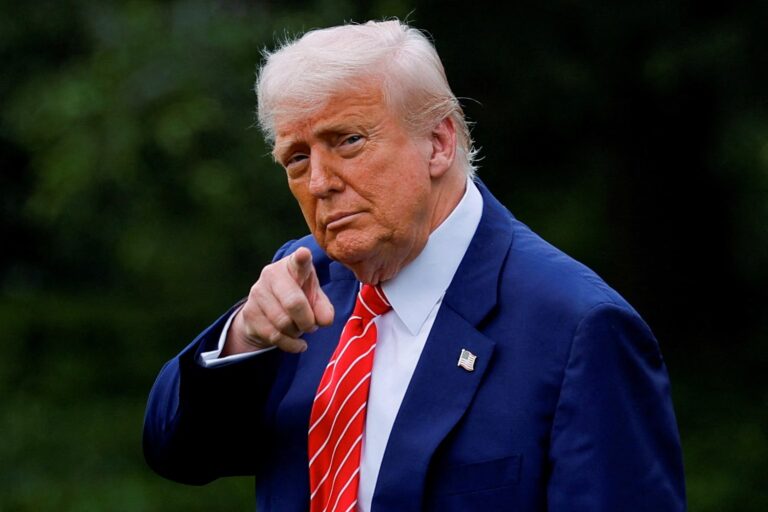
United States President Donald Trump has said he is ready to sanction Russia, but only if all NATO allies agree to completely halt buying oil from Moscow and impose their own sanctions on Russia to pressure it to end its more than three-year war in Ukraine.
“I am ready to do major Sanctions on Russia when all NATO Nations have agreed, and started, to do the same thing, and when all NATO Nations STOP BUYING OIL FROM RUSSIA,” Trump said in a post on his Truth Social platform on Saturday, which he described as a letter to all NATO nations and the world.
Trump proposed that NATO, as a group, place 50-100 percent tariffs on China to weaken its economic grip over Russia.
Trump also wrote that NATO’s commitment “to WIN” the war “has been far less than 100%” and that it was “shocking” that some members of the alliance continued to buy Russian oil.
As if speaking to them, he said, “It greatly weakens your negotiating position, and bargaining power, over Russia.”
NATO member Turkiye has been the third-largest buyer of Russian oil, after China and India.
Other members of the 32-state alliance involved in buying Russian oil include Hungary and Slovakia, according to the Centre for Research on Energy and Clean Air.
If NATO “does as I say, the WAR will end quickly”, Trump wrote. “If not, you are just wasting my time.”
As he struggles to deliver on promises to end the war quickly, Trump has repeatedly threatened to increase pressure on Russia. Last month, he slapped a 50 percent tariff on India over its continued buying of Russian oil, though he has not yet taken similar actions against China.
Trump’s social media post comes days after Polish and NATO forces shot down drones violating Polish airspace during Russia’s biggest-ever aerial barrage against Ukraine.
Polish airspace has been violated many times since Russia launched its full-scale invasion of Ukraine in 2022, but never on this scale anywhere in NATO territory.
On Saturday, Poland said its NATO allies had deployed helicopters and aircraft as Russian drones struck Ukraine, not far from its border.
Poland’s military command said on X that “ground-based air defence and radar reconnaissance systems have reached their highest level of alert”, adding that the actions were “preventative”.
Also on Saturday, Romania’s Ministry of National Defence said that the country’s airspace had been breached by a drone during a Russian attack on infrastructure in neighbouring Ukraine.
The country scrambled two F-16 fighter jets to monitor the situation, tracking the drone until it disappeared from the radar” near the Romanian village of Chilia Veche, said the ministry in a statement.
Ukrainian President Volodymyr Zelenskyy has welcomed the prospect of penalties on states still doing business with Moscow.
In an interview with the US media outlet ABC News last week, Zelenskyy said, “I’m very thankful to all the partners, but some of them, I mean, they continue [to] buy oil and Russian gas, and this is not fair… I think the idea to put tariffs on the countries that continue to make deals with Russia, I think this is the right idea.”
Last month, the US president hosted Russian President Vladimir Putin in Anchorage, Alaska, to discuss an end to the war, in their first face-to-face meeting since Trump’s return to the White House.
Shortly afterwards, he hosted Zelenskyy and European leaders in Washington, DC, for discussions on a settlement.
Despite the diplomatic blitz, there has been little progress towards a peace deal, with Moscow and Kyiv remaining far apart on key issues and Russia persisting in its bombardment of Ukrainian cities.
Russia on Saturday said it had captured a new village in Ukraine’s central Dnipropetrovsk region, which Moscow’s forces say they reached at the beginning of July.
The Russian Ministry of Defence said its troops had seized the village of Novomykolaivka near the border with the Donetsk region – the epicentre of fighting on the front. The AFP news agency was unable to confirm this claim.
Source: Aljazeera
CNNC, Rosatom Sign MoU To Develop Skills And Training Cooperation

China National Nuclear Corporation and Russia’s state atomic energy corporation, Rosatom, have signed a memorandum of understanding to develop joint projects and partnerships, as well as cooperation in skills and training of personnel in their respective countries.
The MoU was signed by Tatiana Terentieva, Deputy Director General for Human Resources for Rosatom and by Li Changyu, Acting head of Human Resources for China National Nuclear Corporation (CNNC).
The two sides said that the agreement would see coordination in “developing a human-centred approach to training and development” including “cooperation between the youth and women’s industry communities of the two countries”
Terentieva said: “We are always open to dialog and interested in developing partnership with China National Nuclear Corporation in the personnel area, including in the multilateral format that we have established within the framework of the BRICS Nuclear Energy Platform.
“We are convinced that the agreement and roadmap signed today will clearly define the stages, goals, and areas of responsibility, which will certainly increase the effectiveness of our joint work. We hope to strengthen bilateral cooperation in the development of the high-tech labour market and personnel potential.”
The memorandum was signed during the CNNC’s delegation’s visit to Russia which also involved visiting the Rosatom Technical Academy in Obninsk and Rosatom Corporate Academy in Moscow
Source: https://energynewsafrica.com
South Africa: Eskom Unveils First 20 Electric Vehicles Boosting E-Mobility

South Africa’s power utility company – Eskom – has launched the first fleet of electric vehicles (EVS), marking a major milestone in the company’s journey towards sustainable transport and a cleaner energy future for all South Africans.
This follows Eskom’s successful installation of 10 charging stations across five sites to support the growing adoption of electric transportation in August 2025.
To date, Eskom has received 20 EVs, ranging from light delivery vehicles to light trucks, with another 100 planned in the near future.
According to Eskom, these vehicles will be deployed primarily in the Distribution and Generation Divisions, supporting operations while demonstrating the practicality and benefits of e-mobility in South Africa.
Acting Eskom’s Group Executive for Distribution, Agnes Mlambo, who hailed the initiative, commented: “Eskom is taking steps to transform how South Africans move in a world where climate change is no longer a distant threat but an urgent reality. The launch of these vehicles is not only about mobility, it is also about reimagining the energy landscape, reducing carbon emissions, and ensuring every community benefits from the transition to sustainable transport.”
Eskom’s vision for e-mobility extends beyond vehicles. The organisation has committed to gradually transition its entire fleet to EVs, with the Distribution Division, which has the largest vehicle footprint, targeting full electrification by 2035.
To enable this shift, Eskom will expand charging infrastructure across its sites and roll out 55 public EV charging stations over the next two years, creating opportunities for broader adoption.
“Eskom is driving South Africa’s shift to a cleaner, low-carbon future. Through e-mobility, we are cutting emissions, boosting innovation, and showing how sustainable energy solutions can create real benefits for communities and the economy. We see ourselves as more than just an electricity provider – we are enablers of progress,” said Eskom Group Chief Executive, Dan Marokane.
The organisation is also prioritising grid readiness for e-mobility. EV load forecasting is integrated into long-term planning to ensure that increased electricity demand is managed effectively. Smart charging systems and time-of-use tariffs are being developed to optimise energy use, making EV ownership more affordable and sustainable for the public.
Since 2021, Eskom has engaged with government, automotive manufacturers, petroleum companies, and research institutions to build a strong and integrated e-mobility framework for South Africa.
Through e-mobility, Eskom is not only reducing emissions but also driving innovation, creating jobs, and contributing to a cleaner, healthier future for all South Africans.
By embracing electric mobility, we are delivering tangible benefits to communities and the economy, while also pivoting into new revenue streams by this offering for our customers.
Source: https://energynewsafrica.com
Ghana: Fire Service Personnel Avert Gas Leakage Disaster In Obuasi

The timely intervention of personnel of Ghana National Fire Service (GNFS) in Obuasi Municipal and AngloGold Ashanti prevented what would have been a major gas explosion disaster on Saturday morning, September 13, 2025.
According to a report by the Information Service Department, a tanker vehicle loaded with LPG was on its way to apparently discharge the load at the Agyemang Gas Filling Station, Nyameso, along the Obuasi–Dunkwa highway.
Unfortunately, the tanker developed a fault while turning into the station, causing the cylinder to detach from the tanker head and collided with a parked tricycle.
This led to heavy leakage, with gas fumes spreading up to two kilometres and posing potential danger to residents of Nyameso, Kunka and the surrounding communities.
 The report said personnel of the Obuasi Municipal Fire Service, supported by the AngloGold Ashanti Fire Service, responded immediately and successfully contained the situation.
“No casualties were recorded, and security and safety officers remain at the scene to monitor and avert any further risk,” ISD’s report said.
As a precautionary measure, the road from Nyameso to Kunka was temporarily closed to traffic.
Motorists travelling from Kumasi to Dunkwa have been advised to use the Obuasi township road through either Anyinam or Mensakrom, and vice versa.
The Obuasi Municipal Assembly assured the public that the situation is under control and urges all residents and commuters to adhere strictly to the diversion routes and cooperate with security personnel for their safety.
Source: https://energynewsafrica.com
The report said personnel of the Obuasi Municipal Fire Service, supported by the AngloGold Ashanti Fire Service, responded immediately and successfully contained the situation.
“No casualties were recorded, and security and safety officers remain at the scene to monitor and avert any further risk,” ISD’s report said.
As a precautionary measure, the road from Nyameso to Kunka was temporarily closed to traffic.
Motorists travelling from Kumasi to Dunkwa have been advised to use the Obuasi township road through either Anyinam or Mensakrom, and vice versa.
The Obuasi Municipal Assembly assured the public that the situation is under control and urges all residents and commuters to adhere strictly to the diversion routes and cooperate with security personnel for their safety.
Source: https://energynewsafrica.com
The report said personnel of the Obuasi Municipal Fire Service, supported by the AngloGold Ashanti Fire Service, responded immediately and successfully contained the situation.
“No casualties were recorded, and security and safety officers remain at the scene to monitor and avert any further risk,” ISD’s report said.
As a precautionary measure, the road from Nyameso to Kunka was temporarily closed to traffic.
Motorists travelling from Kumasi to Dunkwa have been advised to use the Obuasi township road through either Anyinam or Mensakrom, and vice versa.
The Obuasi Municipal Assembly assured the public that the situation is under control and urges all residents and commuters to adhere strictly to the diversion routes and cooperate with security personnel for their safety.
Source: https://energynewsafrica.com Ghana: NEDCo Proposes Removal Of Lifeline Tariff…Calls For Introduction Of Streetlight Tariff

The Northern Electricity Distribution Company (NEDCo) has called for reforms to Ghana’s electricity tariff structure, including the scrapping of the lifeline tariff and the introduction of a dedicated streetlight tariff.
While NEDCo is pushing for the removal of the lifeline tariff, the Electricity Company of Ghana (ECG), which is responsible for power distribution in the southern part of the country, is also proposing two tariff bands for residential customers and one for non-residential customers.
ECG argues that this new structure will simplify billing and improve customer understanding of electricity bills.
The company has also proposed the introduction of a dedicated streetlight tariff.
It would be recalled that, previously, lifeline consumers were those who consumed between 0–50 kWh of electricity.
However, this tariff band was reduced to 0–30 kWh following NEDCo’s proposal during the 2022–2025 Multi-Year Tariff Review.
Speaking at the PURC stakeholder engagement on the 2025–2029 Multi-Year Tariff Review, Mr. Hashim Iddrisu, NEDCo’s Director for Commercial Services, argued that the lifeline tariff—which provides subsidised electricity to low-consumption households—has become unsustainable and is causing the company to incur “huge losses.”
The utility company proposed that a uniform tariff system be applied to all residential customers, where bills are determined solely by consumption volumes, rather than differentiated unit prices.
According to NEDCo, this approach would align with pricing practices in other sectors such as fuel, where higher usage directly results in higher costs.
“We’re proposing that the current lifeline tariff be discontinued. We’re also recommending that a streetlight tariff be provided for residential customers so that they are no longer included in existing brackets.
“We further propose the introduction of a streetlight tariff to recover the costs associated with the provision of public lighting,” Mr. Iddrisu stated.
NEDCo further recommended that tariffs reflect the company’s actual capital expenditure (CAPEX), operational expenditure (OPEX), and return on investment to ensure financial sustainability.
The utility also urged the adoption of non-discriminatory tariffs, arguing that the cost of electricity production and distribution is largely uniform across customer groups.
On projected tariff adjustments, NEDCo outlined marginal increases over the review period—2% in 2026, 5% in 2027, 3% in 2028, and 0.04% in 2029—following a recorded reduction in 2023. These projections, the company noted, are based on the assumption of a 174% adjustment in the current year.
Source: https://energynewsafrica.com
Nigeria: NISO Explains Why Part Of Nigeria Is Experiencing Power Outage

The Nigerian Independent System Operator (NISO) has explained why part of Africa’s most populous nation is experiencing a power outage.
According to the system operator, the country’s national grid experienced a system disturbance at 11:20 hours on Wednesday, September 10, 2025.
NISO revealed that the disturbance was caused by the tripping of a generation company (GenCo), resulting in a significant load drop. This drop cascaded to other GenCos, ultimately leading to a system-wide disturbance.
In a statement, NISO noted that it immediately commenced restoration of the grid at 11:45 hours, beginning with the supply to Abuja from the Shiroro power plant. Substantial restoration has since been achieved across the country.
The grid operator revealed that an investigation is currently underway to establish the actual cause.
“A full investigation into the immediate and remote causes is underway.
“The outcome(s) of the investigation report will determine the remedial and proactive actions to be taken to forestall future occurrences,” NISO said.
Source: https://energynewsafrica.com
Ghana: PURC Begins Public Hearings On Utility Tariff Proposals

Ghana’s Public Utilities Regulatory Commission (PURC), the regulator for electricity and water utilities, has begun a nationwide public hearing on proposals submitted by utility companies as part of the 2025–2029 Multi-Year Tariff Review.
The public hearings, which began on Monday, September 8, 2025, in Accra, have already featured representation from Civil Society Organizations (CSOs) and the media. Utility companies, notably Electricity Company of Ghana (ECG), Enclave Power Company Limited, Volta River Authority (VRA), Northern Electricity Distribution Company Limited (NEDCo), Ghana Grid Company Limited (GRIDCo), Ghana National Gas Company Limited, and Ghana Water Company Limited, took their turn to present and defend their proposals.
Speaking at the stakeholder engagement on Monday, the Executive Secretary of the PURC, Dr. Shafic Suleman, stated that the aim of the public hearings is to enhance the relationship between utilities and consumers and to promote transparency, inclusiveness, and accountability in the tariff-setting process. Dr. Suleman noted that the hearings would provide a platform for utilities to explain and justify their tariff proposals to the public.
“The PURC will also be undertaking public hearings across the country to bring the utilities closer to the Ghanaian consumer as they explain and justify their proposals,” he said. “The goal of creating this platform is to promote transparency, inclusiveness, and accountability in tariff setting, while ensuring that the Commission’s decisions strike a balance between economic realities and social considerations.”
“This stakeholder engagement and the upcoming regional public hearings will help ensure that the outcome of the major tariff review is credible, sustainable, and in the best interest of our country,” he added.
Chairperson of the Stakeholder Committee at PURC, Nana Yaa Jantuah, emphasized that the tariff proposals from utility providers are key to setting the 2025–2030 tariff structure to support the delivery of quality services.
“The last major tariff review was conducted in 2022. The utilities made their submissions, and the PURC approved tariffs accordingly. Today, they are expected to account for how those funds were utilized, how it benefited the system and consumers, and how they plan to use any new tariffs that may be approved,” she said.
Source: https://energynewsafrica.com
Ghana: GNPC To Host 7th APPO NOC CEOs Meeting In Accra

The Ghana National Petroleum Corporation (GNPC), will host the 7th edition of the African Petroleum Producers’ Organization (APPO) National Oil Companies (NOCs) CEOs Meeting in Accra from 14th to 15th September 2025.
This flagship APPO platform will bring together CEOs and senior executives from 19 African oil-producing nations to engage in strategic dialogue on regional collaboration, innovation, and sustainability in Africa’s petroleum sector.
Mr. Kwame Ntow Amoah, Acting Chief Executive Officer of GNPC and current Chair of the APPO NOC CEOs Forum, will preside over the meeting.
His leadership affirms Ghana’s growing influence in Africa’s energy space and GNPC’s role as a driver of regional partnerships.
“This summit highlights Ghana’s stature in Africa’s petroleum industry and GNPC’s commitment to advancing cooperation and innovation for the continent’s shared progress,” Mr. Amoah said.
Taking place on the margins of Africa Oil Week (AOW) 2025, the forum further positions Ghana at the center of Africa’s energy conversation.
The two-day summit aims to deliver actionable outcomes on shared infrastructure, local content, innovation, and investment opportunities across APPO member states, strengthening intra-African energy cooperation.
Source: https://energynewsafrica.com
Egypt: Bp Signs MoU To Drill 5 Oil Wells In The Mediterranean

UK’s multinational oil company bp has signed a Memorandum of Understanding (MoU) to drill five oil wells in the Mediterranean Sea. The MoU was signed during the visit of H.E. Karim Badawi, Minister of Petroleum and Mineral Resources; H.E. Ashraf Swelam, Egypt’s Ambassador to the UK; and Dr. Geo Samir Raslan, Undersecretary for Exploration and Agreements at the Ministry of Petroleum and Mineral Resources, to bp’s headquarters in London.
The delegation met with Murray Auchincloss, bp’s Chief Executive Officer; William Lin, Executive Vice President for Gas and Low Carbon Energy; Nader Zaki, Regional President, Middle East and North Africa; and Wail Shaheen, President of bp Egypt.
According to bp, the MoU underscores the strength of the long-standing partnership between bp and the Egyptian government.
Nader Zaki, Regional President for the Middle East and North Africa, added: “We are proud of our longstanding partnership with the Egyptian government. This memorandum represents a strategic step in our investments in Egypt’s energy sector during this decade, enabling us to develop additional gas resources in the West Nile Delta and bring them onstream as quickly as possible to meet the needs of the local market.”
The agreement comes as bp plans to increase production to 2.3-2.5 million barrels of oil equivalent a day in 2030, with the capacity to increase production out to 2035. It follows a successful exploration campaign in the first half of 2025, in which bp made 10 discoveries, including two in Egypt, where it completed drilling activity at the Fayoum-5 gas discovery well and El King-2 exploration well, both part of the West Nile Delta development.
bp has been operating in Egypt for more than 60 years. Through strategic partnerships and sustained investments, the company continues to play a pivotal role in developing the country’s energy resources.
Source: https://energynewsafrica.com
Nigeria: Buhari Threatened To Sack Me For Recommending Subsidy Removal — Kachikwu

Nigeria’s former Minister of State for Petroleum Resources, Ibe Kachikwu, has recalled how the country’s former President, the late Muhammadu Buhari, threatened to sack him after he recommended the removal of fuel subsidy and an increase in the petrol pump price.
Mr Kachikwu, who served as the Minister of State for Petroleum Resources from 2016 to 2019, disclosed this during a business mentorship lecture series organized by the Nigerian Content Development and Monitoring Board.
He revealed that his greatest challenge when he assumed office as Group Managing Director of the Nigerian National Petroleum Company in 2015 was the persistent fuel queues that grounded economic activities nationwide.
Mr Kachikwu recalled that despite sleepless nights and efforts to ease the crisis, much of the subsidized petrol imported into Nigeria was being smuggled across the borders, making scarcity inevitable.
“The greatest challenge that I had when I resumed as GMD was the issue of long queues at petrol stations.
“Very few Nigerians realize how much of a traumatic experience it is for a minister or a GMD, who’s committed, to get up in the morning and find out the whole country is grounded.
“Of course, I’ll go to filling stations, try to help them fill, and try to make sure there are no unnecessary traffic obstructions. At the end of the day, every time that happened, I had no sleep.
“When I then did my investigation, it was clear that a lot of the products we were bringing were crossing the border at subsidized rates.
“No matter how much I tried to work with customs, work with the ministry, or work with everybody, it just never happened. It just kept going because the position didn’t have the political or security resources to police Nigeria’s borders.”
Recounting his ordeal, the former minister said he repeatedly approached Mr Buhari to allow a review of pump prices to end the losses.
He, however, said the President, who he said held a populist ideology, resisted the suggestion.
“I went to the President very many times, and I said, ‘Look, I need to move up on price. He resisted that very much because of his populist-type position. Eventually, he said, ‘Okay, you know what? I’ll leave you to take the risk. If you take the risk and it works, fine. If it doesn’t work, I fire you.’ That’s all well and good for me. And I did,” he recalled.
The former minister explained that he introduced what he termed ‘price modulation’, a policy that allowed petrol prices to reflect international market realities.
He further disclosed that the slight adjustment not only removed the subsidy but also cleared fuel queues across the country within 48 hours.
“That singular price adjustment removed the subsidy. There was no more subsidy. And within 48 hours, magically, every queue in the country stopped. It never happened again until I left. So, that was how I could, at least, sleep better, and the government was willing to make more money,” he added.
Mr Kachikwu also narrated how he declined to pay billions of Naira in outstanding subsidy arrears he inherited.
“We didn’t pay the arrears of subsidy because my position was that I could not audit the transparency of the subsidy claims. So, I preferred not to deal with those issues,” he said.
Source: Dailynigeria.com
Nigeria: NUPENG Suspends Two-Day Strike

The Nigeria Union of Petroleum and Natural Gas Workers (NUPENG) has suspended its two-day strike following a meeting with officials of the Federal Government and the Dangote Group.
The industrial action, which lasted two days, disrupted fuel supply in parts of the country.
According to reports, attendees at the meeting included representatives of the Dangote Group led by Sayyu Dantata, officials of the Nigerian Midstream and Downstream Petroleum Regulatory Authority (NMDPRA), and other stakeholders.
The meeting concluded with the signing of an agreement in which the Dangote Refinery committed to unionising its truck drivers.
“Following the threat to embark on industrial action by the Nigeria Union of Petroleum and Natural Gas Workers over the refusal of the management of the Dangote Refinery and Petrochemicals Limited to allow their employees to be unionised by registered labour unions, a conciliation meeting was held at the instance of the Minister of Labour and Employment. It was revealed in the course of the meeting that:
“The management agreed with this fact and responded that they are not averse to the unionisation of their employees by labour unions in line with the provisions of the extant labour laws. After exhaustive deliberations, the following resolutions were reached by both parties:
“That since workers’ unionisation is a right in line with the provisions of the law, the management of Dangote Refinery and Petrochemicals agreed to the unionisation of employees of Dangote Refinery and Petrochemicals who are willing to unionise.
“That the process of unionisation shall commence immediately and be completed within two weeks (9–22 September 2025), and it was agreed that the employer will not establish any alternative union.
“Arising from the strike notice, no worker or employee of Dangote Refinery and Petrochemicals will be victimised,” the agreement read.
The parties also agreed to report back to the Minister of Labour a week after the conclusion of the process. Based on the memorandum of understanding (MoU), NUPENG suspended the industrial action with immediate effect.
The MoU was signed by Dangote Group’s Sayyu Dantata; NUPENG President Williams Akporeha and General Secretary Afolabi Olawale; NMDPRA official O.K. Ukoha; Labour Ministry Director Amos Falonipe; and representatives of the Nigeria Labour Congress (NLC) and Trade Union Congress (TUC).
Source: https://energynewsafrica.com
Ghana: Energy Media Group Opens Nominations For 9th Ghana Energy Awards, Closes October 31

The Energy Media Group, organisers of the Ghana Energy Awards, has opened nominations for this year’s edition following a successful launch at the Airport View Hotel in Accra, Ghana’s capital, on September 9, 2025.
Nominations are open until October 31, 2025.
The official unveiling brought together several key players in the energy industry from both government and the private sector.
The prestigious awards, which will be held under the theme “Repositioning the Energy Sector as a Pillar of National Development,” will feature 26 competitive and six honorary categories.
Key awards include Energy Personality of the Year, CEO of the Year, and Energy Company of the Year. New categories include Energy Sector Reformer of the Year, Upstream Company of the Year, Downstream Company of the Year, Energy Sector Operational Resilience Award, and Emerging Female Leader in Energy.
Organisers and government officials used the occasion to stress the importance of the theme, urging stakeholders to recognise energy not just as an enabler of growth but as the foundation of Ghana’s socio-economic transformation.
Since its inception in 2017, the annual awards—endorsed by the Ministry of Energy and Green Transition and the World Energy Council–Ghana—have recognised individuals and institutions for exemplary contributions to Ghana’s energy sector.
In a speech read on his behalf by Deputy Minister Hon. Richard Gyan-Mensah, the Minister for Energy and Green Transition, Hon. John Abdulai Jinapor, described the awards as a “beacon of excellence, innovation, and leadership” in the energy landscape.
He added: “It not only celebrates outstanding achievements but also inspires continued commitment to building a resilient, inclusive, and sustainable energy future for our nation.”
Hon. Jinapor also underscored the importance of energy access to Ghana’s development:
“For a country like Ghana, whose socio-economic growth is intimately tied to energy access and reliability, the energy sector is not a mere enabler of development; it is its foundation.”
Event Director and CEO of the Energy Media Group, Ing. Henry Teinor, explained that this year’s launch was moved from its usual May/June period to allow for wider stakeholder engagement. Courtesy calls were conducted with sector leaders to introduce the scheme, gather feedback from last year’s edition, and align with evolving policy priorities.
“This proactive outreach underscores our dedication to inclusivity and deeper sectoral engagement,” Ing. Teinor stated, adding that further engagements will continue after the launch.
Beyond the annual celebration, organisers emphasised that the Ghana Energy Awards aim to create a lasting impact on society. Ing. Teinor highlighted the Energy Personalities Outreach Programme (EPOP)—a STEM initiative where the Energy Personalities of the Year (Male and Female) engage with senior high school students to inspire and nurture the next generation of energy leaders. So far, the programme has reached more than 15,000 students nationwide.
The organisers also announced a new endorsement from the Chamber of Oil Marketing Companies (COMAC), joining existing endorsements from the Ministry of Energy and Green Transition, the World Energy Council–Ghana, and independent validators Forvis Mazars and Casely Brooke Law Firm.
Ing. Teinor further revealed that a redesigned awards website is nearing completion, with new provisions for virtual courtesy calls and site visits to broaden participation. These innovations, he said, will “enhance accessibility and allow for broader participation from across the country.”
Chairman of the Awarding Panel, Kwame Jantuah, Esq., said this year’s theme reflects the critical role of energy in Ghana’s future.
“Energy is not just an enabler of development; it is the very engine that powers industry, education, healthcare, digital transformation, and job creation,” he noted.
The panel, which held its first sitting in July, includes experts from academia, policy, law, and industry. It reviewed feedback from stakeholders and refined the award categories to ensure their continued relevance.
“Our focus is not only on rewarding success but on setting meaningful benchmarks for excellence,” Mr. Jantuah added.
Nominations are open until October 31, 2025 via https://ghanaenergyawards.com/nomination-category.


 Source: https://energynewsafrica.com
Source: https://energynewsafrica.com