


 Source: https://energynewsafrica.com
 Ghana: Jubilee Field FPSO Experiences Technical Fault, Disrupting Gas Supply to Atuabo Gas Processing Plant

Ghana’s Jubilee oilfield Floating Production Storage and Offloading (FPSO) vessel, also known as the Kwame Nkrumah FPSO, experienced a technical fault on Saturday, resulting in the disruption of gas export to the Atuabo Gas Processing Plant.
A joint statement issued by Ghana’s national oil company, GNPC, and Ghana National Gas Company confirmed that the incident happened on May 10, 2025, at approximately 4:30 PM.
The statement assured that the operator is making every effort to identify the root cause of the problem, implement the necessary corrective measures, and restore gas supply to the Atuabo Gas Processing Plant as quickly and safely as possible.
“Our technical teams are working with the operator to resolve the issue,” the statement said.
Meanwhile, the Ghana National Petroleum Corporation and Ghana Gas assured the public that oil production on the FPSO remains unaffected and continues to operate steadily.
Source: https://energynewsafrica.com
Source: https://energynewsafrica.com Tanzania: Gov’t Unveils Second-Largest CNG Station To Boost Use Of Clean Energy

Tanzania has commissioned one of the largest Compressed Natural Gas (CNG) refuelling stations on the continent, a move officials hailed as a landmark step towards reducing urban emissions and modernising the country’s public transport infrastructure.
The state-of-the-art CNG facility constructed along the bustling Dar es Salaam Rapid Transit (UDART) corridor, boasts a daily production capacity of 4.2 million cubic metres of gas and can refuel up to 1,200 vehicles per day, according to the Ministry of Energy.
During the inauguration, Tanzania also introduced first-ever public bus powered by natural gas—a prototype expected to form part of a new fleet in coming years.
Speaking at the inauguration ceremony, Deputy Minister of Energy, Ms Judith Kapinga, on behalf of Deputy Prime Minister and Minister of Energy Dr Doto Biteko, said the station is now the second-largest of its kind in Africa and the largest in the East African Community (EAC) region.
With the capacity to refuel up to 1,200 vehicles per day and operate 24 hours continuously, the station is a strategic milestone in Tanzania’s natural gas value chain and part of wider efforts to scale sustainable, cost-effective energy solutions.
Deputy Minister Kapinga credited President Samia Suluhu Hassan’s leadership for transforming energy sector challenges into tangible solutions, citing the new station as evidence of a government delivering on its commitments.
She also praised the board and management of the Tanzania Petroleum Development Corporation (TPDC) for executing the project with efficiency and foresight.
Addressing concerns over previous congestion at existing CNG refuelling stations, Ms Kapinga noted that the new facility—equipped with eight nozzles and capable of servicing eight vehicles simultaneously—directly addresses public complaints and exemplifies service delivery in action.
She emphasised the station’s role in decongesting facilities like Ubungo Maziwa and expanding clean energy access for industries, schools, hotels, and households.
Ms Kapinga instructed TPDC to maintain high safety and service standards at the new facility and to accelerate the rollout of similar stations in other regions, including Lindi and Mtwara.
She further urged continued public-private collaboration to grow CNG investments nationally and encouraged citizens to adopt gas-powered vehicle systems, citing cost savings of up to 40 per cent compared to petrol.
The CNG Mother Station boasts a daily capacity of 4.2 million cubic feet (equivalent to 120,000 kg) and is fitted with four pumps, each with dual nozzles, along with three specialized pumps to fill transport vehicles that deliver CNG to satellite stations, industries, and households.
TPDC has also initiated procurement for five mobile CNG stations to be deployed in Dar es Salaam, Morogoro, and Dodoma—an indication of the state utility’s intent to expand access to cleaner energy technologies nationwide.
TPDC acting Managing Director Francis Mwakapalila reaffirmed the corporation’s commitment to driving natural gas usage in transportation and reducing reliance on conventional fuels.
For his part, TPDC Board Chairman Ambassador Ombeni Sefue, pledged to end long queues and ensure steady availability of gas across user categories.
Dr James Mataragio, Deputy Permanent Secretary at the Ministry of Energy, underscored the national significance of the project, stating that the station not only sets a new operational standard in the region but also demonstrates Tanzania’s readiness to lead in energy diversification and decarbonization efforts.
Parliamentary Energy and Minerals Committee Vice Chairperson, Mr Kilumbe Ng’enda, expressed satisfaction with the government’s pace in gas sector development.
He pointed to affordability as a key advantage—highlighting that gas-powered transport delivers up to 40 per cent in operating cost savings compared to fuel-based alternatives.
The Ubungo District Commissioner, Albert Msando, reaffirmed the government’s commitment to protecting strategic energy infrastructure and ensuring seamless service delivery to citizens.
As Tanzania seeks to position itself as a regional clean energy hub, the commissioning of this landmark station marks a strategic inflection point in its natural gas strategy.
Source: https://energynewsafrica.com
Sudan: Port Sudan Fuel Depot Fire Sparks Humanitarian Crisis And Fuel Shortage

A devastating fire at strategic fuel depots in Port Sudan entered its second day on Friday, with plumes of smoke still rising over the city.
Although sources indicate the flames have not spread to the fifth warehouse, the impact has already triggered a severe fuel crisis.
The black market price of petrol has surged to SDG 70,000 per gallon, with long queues of vehicles forming outside fuel stations.
According to a report by Radio Dabanga, public transport in Port Sudan has almost completely collapsed due to the ongoing fuel crisis, with residents struggling to find alternative means of transportation.
Similar fuel shortages have hit Kassala and River Nile states, where people are waiting for hours at petrol stations.
The Ministry of Energy has sought to calm fears, claiming fuel supplies remain stable and available.
However, former Undersecretary of Energy, Suleiman Hamed, has warned of long-term consequences, citing the destruction of one of only two strategic fuel warehouses in Port Sudan.
The Sudan Doctors Network reports 17 injuries, including nine cases of suffocation due to toxic fumes.
Hospitals across Port Sudan have been placed on emergency footing, and authorities have been urged to issue a public health alert.
Meanwhile, merchants are reportedly exploiting the crisis, and government oversight is weak.
The situation in Port Sudan remains dire, with residents facing power outages, high food prices, and a lack of clean drinking water.
The Red Sea State Security Committee issued emergency measures banning cafes, mobile vendors, and freelance tradespeople from operating in sensitive areas.
“These are potential hotspots for gatherings that could jeopardise public security,” the Committee said in a statement, pledging strict enforcement in coordination with other authorities.
The Committee added that the restrictions were temporary and intended to “contain the current situation and strengthen security in the Red Sea.”
It urged citizens to cooperate with security forces to ensure stability.
Source:https://energynewsafrica.com
Togo: AfDB Group Approves €26.5 Million For 62MW Solar Power Plant

The African Development Bank Group has approved a financing package totaling €26.5 million to support the development of a 62 megawatt-peak greenfield solar photovoltaic power plant in Sokodé, Togo.
The financing includes a loan of up to €18.5 million from the African Development Bank and a concessional loan of up to €8 million from the Bank-managed Sustainable Energy Fund for Africa (SEFA).
PROPACO, the French development finance agency focused on private sector growth in emerging markets, will provide additional co-financing, positioning the €61 million project as a model of effective public-private collaboration.
This project is critical for achieving Togo’s target of installing 200 MWp of renewable energy capacity by 2030.
It will pave the way for the country’s energy transition away from costly and polluting thermal generation, enhancing energy security and reliability, and accelerating the path to universal access by 2030.
Developed by French multinational power utility company Électricité de France, the project entails the design, construction, and operation of the greenfield solar plant and an 11 km transmission line in Sokodé.
Once operational, the plant is expected to generate 87 gigawatt-hours of electricity annually, delivering clean, reliable, and affordable power to communities while addressing energy deficits.
It will also help reduce annual CO₂ emissions by approximately 13.6 thousand tons, contributing to Togo’s climate commitments under the Paris Agreement.
SEFA’s support for the Sokodé Solar PV Project underscores the viability of renewable energy and catalyzes further clean energy investments in the region.
The project also supports Togo’s M300 energy compact by driving least-cost power generation through competitive bidding and boosting private sector involvement.
It aligns with the African Development Bank Group’s “Light Up and Power Africa” goal to advance sustainable, inclusive energy solutions across the continent.
Commenting on the project, Kevin Kariuki, Vice President for Power, Energy, Climate, and Green Growth at the African Development Bank, said, “The Sokodé solar project is a landmark achievement that highlights Togo’s strong commitment to the transition to renewable energy in line with the Togo M300 energy compact under preparation, and the Bank’s long-standing commitment to supporting clean energy projects across the continent.”
He noted that the project not only supports Togo’s efforts to access energy through renewables but also stimulates local economic growth and enhances the country’s energy security and reliability.
Source:https://energynewsafrica.com
Ghana: Alhaji Mustapha Abubakar Appointed Deputy TOR MD

President John Dramani Mahama has appointed Mustapha Abubakar Batalima as the Deputy Managing Director of the Tema Oil Refinery (TOR).
This follows the elevation of Edmond Kombat, former Deputy Managing Director, to the position of acting Managing Director.
Mustapha Abubakar served as the Deputy Chief Executive Officer for Microfinance and Small Loans Centre (MASLOC) during the first term of President Mahama.
Tema Oil Refinery (TOR) Ltd. is the nation’s first value-added investment after the Akosombo dam and was commissioned in September 1963.
Source: https://energynewsafrica.com
Zambia: Minister Chikote Breaks Ground For Construction Of 50MW Cooma Solar Project

Zambia has commenced the construction of a 50-megawatt Solar Plant in Choma District.
The country’s Minister for Energy, Makozo Chikote, performed a groundbreaking ceremony for the project’s commencement on Friday, May 9, 2025.
The solar power plant, which includes a 20-megawatt battery energy storage system, forms part of a broader 100-megawatt project aimed at contributing to Zambia’s energy security and low-carbon development. The project aligns with President Hakainde Hichilema’s goal of delivering an additional 1,000 megawatts of electricity to the national grid by December 2025.
The project is being developed by a joint venture comprising Turkish firm YEO Teknoloji Enerji ve Endustri AS (YEO) and Zambian independent power producer GEI Power Limited.
Power generated will be supplied to the national utility, ZESCO Limited, under a long-term Power Purchase Agreement (PPA).
“This project is a strategic response to our country’s electricity deficit,” said Mr. Chikote.
“Let me be clear: technocrats must not hinder this government’s development agenda with unnecessary delays. We must deliver results, not excuses,” he added.
Mr. Chikote reaffirmed the government’s full institutional backing and directed that all employment opportunities—150 direct and 1,500 indirect jobs during the construction phase—be reserved for local people, in line with the administration’s commitment to inclusive growth.
Also present at the ceremony was Speaker of the National Assembly, Ms. Nelly Mutti, whose presence underscored the national importance of the project. Choma Central Member of Parliament Cornelius Mweetwa, who is also Southern Province Minister, echoed Mr. Chikote’s sentiments and urged residents to take ownership of the project.
“This plant is your asset. Do not allow anyone to destroy what is meant to uplift our communities. Let’s guard it as a legacy for future generations,” Mr. Mweetwa said.
His Royal Highness Chief Cooma expressed gratitude for the government’s decision to locate the project in his chiefdom and offered additional land for future expansions.
He also made a passionate appeal to his subjects to safeguard the facility.
“We thank the government for this milestone. I am prepared to offer more land if needed. But this development must be protected—it is ours, and it must serve our people well,” said Chief Cooma.
In a mark of international partnership, Mr. Huseyin Barbaros Dicle, Turkish Ambassador to Zambia, reaffirmed Turkey’s commitment to supporting Zambia’s energy goals through cooperation and investment.
Once operational, the Cooma Solar Plant is expected to strengthen Zambia’s power supply, generate employment, and contribute significantly to national and regional development.
Source:https://energynewsafrica.com
Gambia: NAWEC Announces Emergency Shutdown Of Bijilo Primary Substation

The Gambia’s National Water and Electricity Company (NAWEC) has shut down the Bijilo Primary Substation to fix a defective underground cable.
In a statement, the company said the current power outage resulting from the repair has been extended until 7:00 PM today.
“This will allow our team to safely and completely repair the defective cable,” NAWEC said.
NAWEC apologised for any inconvenience this may cause and requested the public’s patience and understanding as it works to resolve the issue as swiftly and safely as possible.
Source:https://energynewsafrica.com
South Africa: Interim NTCSA CEO Scheppers Returns To Eskom

The Interim Chief Executive Officer of the National Transmission Company South Africa (NTCSA), Segomoco Scheppers, is returning to Eskom Holdings, South Africa’s power utility, after concluding his secondment.
Mr. Scheppers was seconded to lead the transition and operationalize the NTCSA business in July 2024 due to his extensive experience in the Transmission Division, having joined Eskom in 1993.
He served at the NTCSA while the executive search process was underway to appoint a permanent Chief Executive Officer (CEO) for the subsidiary.
In a statement, NTCSA said Scheppers was shortlisted for the permanent role, but the Board has not yet identified the candidate to lead the business into its next phase.
The NTCSA Board praised Scheppers for his leadership at the NTCSA.
“We owe Segomoco a huge debt of thanks for the skills he brought to bear to take the transmission business to a point of separation and creating the NTCSA as a wholly owned subsidiary of Eskom Holdings,” said Priscillah Mabelane, NTCSA Board Chairperson.
“The NTCSA serves as an important catalyst in the country’s evolving energy supply industry and ending the vertical integration business model for the benefit of consumers.”
“He played a critical role in delivering the NTCSA that is designed to provide the benefits of the Electricity Regulation Amendment Act (ERAA), that paves the way for the necessary reforms in South Africa’s electricity sector, including the establishment of a competitive electricity market that will contribute meaningfully to South Africa’s energy security and inclusive economic development,” concluded Mabelane.
The statement said a formal announcement will be made in due course regarding the appointment of an Interim Chief Executive Officer (ICEO) of NTCSA to maintain the continued execution of the strategy, including bringing an accelerated Transmission Development Plan (TDP), ongoing operational unbundling activities as required by legislation, and establishing a fair, competitive market for electricity.
Source:https://energynewsafrica.com
Nigeria Sets Higher Oil Production Target

Nigeria’s government has set a new, significantly higher, production target for the national oil company, aiming for 2.5 million barrels daily by the end of this year.
“When the new NNPC management visited me, I increased their oil production target to 2.5 million bpd from the initial two million barrels given to them by the President,” Nigeria’s petroleum resources minister, Heineken Lokpobiri told the Sun on the sidelines of the Oil Technology Conference Africa Energy Forum. Lokpobiri believes the new target would be easy to hit based on the fact that Nigeria reached the same level of production during the pandemic despite the lack of any targeted investments in oil production growth. “The 2.5 million bpd oil production is easily realisable because all the bottlenecks against our oil production are being addressed,” the official said.
Production data shows Nigeria has not produced oil at a rate of 2 million bpd in the past decade, with the peak at close to that figure back in 2016. Since then, production has been in a more or less gradual decline.
Pipeline vandalism and oil theft are two reasons for this, as they discourage additional investments that are much needed for a reversal in production trends. Another reason has been Big Oil strategy that has seen the supermajors curb their presence in Nigeria in favor of other locations with better prospects.
However, Exxon just made a decision to invest $1.5 billion in deepwater oil development in Nigeria. The investment will be made between 2025 and 2027 to revitalize production in the Usan deepwater oilfield, Nigeria’s Upstream Petroleum Regulatory Commission said this week.
According to Lokpobiri, the problems of pipeline vandalism and oil theft in the Niger Delta are also being addressed, which should facilitate production growth. This just leaves one problem: OPEC+ production control commitments. In this, Nigeria is in luck as Saudi Arabia recently reversed its course, switching from production control to growth.
Zimbabwe: Court Jails Unemployed Man For 10 Years For Stealing Electrical Cables

Zimbabwean court has sentenced Rothman Changara, a 36-year-old unemployed man from Ruvimbo Phase 2 in Chinhoyi, to 10 years in prison for stealing and burning ZESA electrical cables.
The convict’s actions disrupted power supply and endangered critical infrastructure.
According to the state, the incident occurred on February 8, 2025, at around 03:00 hours in Cold Stream, Chinhoyi.
The complainant, a 53-year-old self-employed man, was awoken by the sound of something falling outside his house. Shortly after, the electricity went out.
When he stepped outside to investigate, he discovered that a 30-meter weather deck cable used to transmit power from a ZESA line to his meter box had been cut and stolen.
In a quick response, the complainant and a neighbor observed a distinct shoe print at the scene and decided to track it.
Their search led them to Gadzema Rank, where they noticed a large fire.
Upon approaching, they found the offender actively tending to the flames, which were being used to burn the outer insulation of electricity cables, a common method used to extract copper for resale.
When questioned, the offender failed to give a satisfactory explanation for the origin of the cables.
The shoe print at the fire site matched the one from the crime scene, linking him directly to the theft.
He was arrested on the spot, and the burnt copper wires were seized as evidence.
The wires, weighing approximately 5kg, were weighed at Zimpost and matched the description and value of the stolen cable.
The court found that he acted unlawfully and intentionally caused damage to ZESA infrastructure.
Source:https://energynewsafrica.com
Zambia: ZESCO To Commission 100MW Solar Power Plant In Chisamba By End Of May

The Republic of Zambia is set to commission the Chisamba 100-megawatt (MW) solar photovoltaic (PV) project, executed by ZESCO Limited, at the end of May, this portal can report.
The project, which commenced in 2024, marks a significant shift from depending on hydropower.
Ahead of the project’s commissioning, ZESCO Limited’s Managing Director, Justin Loongo, toured the site alongside the media to enable them to appreciate the company’s efforts in addressing power outages in the country occasioned by prolonged drought.
 “We have told Power China [the contractor] that this project was initially 200MW, signed by ZESCO in 2020 and novated to Kariba North Bank Expansion Corporation to do the first phase, which is 100MW. We have, therefore, told Power China that they must continue with the project so that by next year, we can have 200MW of electricity injected into the national grid,” he said.
The Chisamba 100MW solar PV project is part of the government’s strategic direction towards reducing overdependence on climate-risky hydroelectric power.
The Managing Director further disclosed that ZESCO is simultaneously implementing various solar projects across the country.
“We are replicating this solution in many places across the country. From here, our next stop is Serenje, where we have 25MW. The first 25MW will be commissioned this year in June, and an additional 25MW in September,” Eng. Loongo said.
“In Mansa, we are doing another 50MW. We hope this will be brought online by December this year. In Mumbwa, we have another project with the contractor already mobilized. We hope a 50MW will also be injected into the grid in Mumbwa. So, this year, we are implementing many solar solutions to ensure that load shedding is minimized,” he concluded.
Source:https://energynewsafrica.com
“We have told Power China [the contractor] that this project was initially 200MW, signed by ZESCO in 2020 and novated to Kariba North Bank Expansion Corporation to do the first phase, which is 100MW. We have, therefore, told Power China that they must continue with the project so that by next year, we can have 200MW of electricity injected into the national grid,” he said.
The Chisamba 100MW solar PV project is part of the government’s strategic direction towards reducing overdependence on climate-risky hydroelectric power.
The Managing Director further disclosed that ZESCO is simultaneously implementing various solar projects across the country.
“We are replicating this solution in many places across the country. From here, our next stop is Serenje, where we have 25MW. The first 25MW will be commissioned this year in June, and an additional 25MW in September,” Eng. Loongo said.
“In Mansa, we are doing another 50MW. We hope this will be brought online by December this year. In Mumbwa, we have another project with the contractor already mobilized. We hope a 50MW will also be injected into the grid in Mumbwa. So, this year, we are implementing many solar solutions to ensure that load shedding is minimized,” he concluded.
Source:https://energynewsafrica.com
“We have told Power China [the contractor] that this project was initially 200MW, signed by ZESCO in 2020 and novated to Kariba North Bank Expansion Corporation to do the first phase, which is 100MW. We have, therefore, told Power China that they must continue with the project so that by next year, we can have 200MW of electricity injected into the national grid,” he said.
The Chisamba 100MW solar PV project is part of the government’s strategic direction towards reducing overdependence on climate-risky hydroelectric power.
The Managing Director further disclosed that ZESCO is simultaneously implementing various solar projects across the country.
“We are replicating this solution in many places across the country. From here, our next stop is Serenje, where we have 25MW. The first 25MW will be commissioned this year in June, and an additional 25MW in September,” Eng. Loongo said.
“In Mansa, we are doing another 50MW. We hope this will be brought online by December this year. In Mumbwa, we have another project with the contractor already mobilized. We hope a 50MW will also be injected into the grid in Mumbwa. So, this year, we are implementing many solar solutions to ensure that load shedding is minimized,” he concluded.
Source:https://energynewsafrica.com Ghana: Rainstorm Causes Power Outage In Parts Of Tamale

The Northern Electricity Distribution Company Limited (NEDCo) says a storm on the evening of May 7, 2025, has cut power supply to parts of Tamale township. The storm affected several feeders, thereby cutting power supply to parts of Tamale.
A release issued by the Corporate Communications outfit of NEDCo on May 7, 2025, mentioned that the affected areas include Gemani, Gbanyamni, Tuunaayili, Gurugu, Vittin, Yendi Road, Salaga Road, TTH, Kukuo, SSNIT Flats, Koblimahagu, Adubilyill, and their environs.
NEDCo apologized for the inconvenience caused to its cherished customers and assured that relentless efforts by the company were underway to overcome the challenges and restore power as soon as practicable.
Source:https://energynewsafrica.com
Ghana: I’ll Sack You If Future Dam Spillage Causes Flooding – Mahama Tells VRA CEO, Deputies

Ghana’s President John Dramani Mahama has issued a stern warning to the current leadership of the Volta River Authority (VRA) to ensure that any future Akosombo Dam spillage does not cause flooding as witnessed in 2023.
According to President Mahama, if the catastrophic Akosombo Dam spillage recurs, the Chief Executive Officer (CEO) of the Volta River Authority and deputies will be dismissed or forced to resign.
Addressing the nation on Wednesday, May 7, to mark his first 120 days in office, President Mahama emphasised that lessons had been learnt and firm steps were being taken to prevent another disaster.
Energy Minister John Abdulai Jinapor recently inaugurated a technical committee, headed by former VRA Chief Executive Ing. Kirk Koffi, to investigate the causes of the previous flooding and propose sustainable solutions.
President Mahama said the committee, under Ing. Koffi’s leadership, had proposed key measures, including a controlled spill flood plan and new engineering interventions downstream to better manage flood risks.
He stressed that implementing these recommendations would be immediate and mandatory.
“I’ve instructed that these strategies be executed without delay,” he stressed.
Highlighting the seriousness of the issue, President Mahama made it clear that the current VRA leadership would be held fully accountable for any failure to act effectively.
“I’ve made it clear that if these measures are not carried out properly and we face another damaging flood due to VRA negligence, the CEO and top deputies will be required to resign or will be removed from office,” he warned.
The Akosombo Dam spillage in 2023 had disastrous effects, displacing thousands and drawing harsh public criticisms over the VRA’s lack of preparedness.
With this firm stance, President Mahama has signalled a new era of accountability and proactive disaster management in the face of growing climate challenges.
Source:https://energynewsafrica.com
Methane Data And Transparency Continue To Improve, But Emissions Remain Far Too High
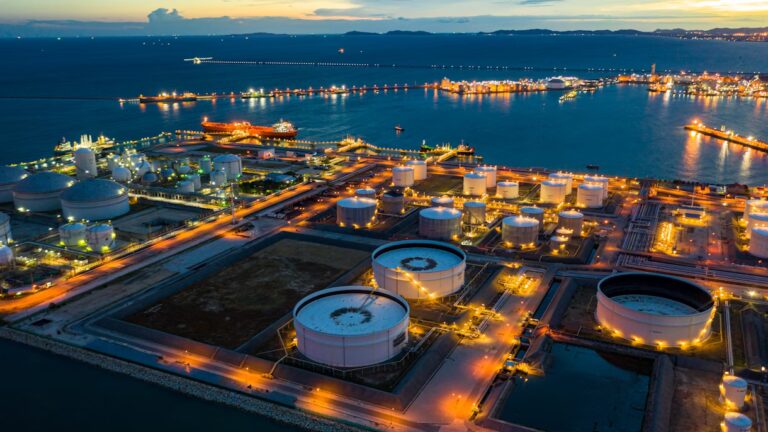
Methane emissions from fossil fuels remain at stubbornly high levels, according to the IEA’s latest global tracking update, which notes that efforts to bolster data collection and monitor methane leaks are making progress.
The Global Methane Tracker 2025, out today, presents the IEA’s latest sector-wide emissions estimates, based on the most recent data from satellites and measurement campaigns, and examines different abatement options along with their associated costs.
Methane abatement is a crucial opportunity to reduce near-term global warming at a time when temperatures worldwide have set record highs for two years in a row.
“Tackling methane leaks and flaring offers a double dividend: it alleviates pressure on tight gas markets in many parts of the world, enhancing energy security – and lowers emissions at the same time,” said IEA Executive Director Fatih Birol. “However, the latest data indicates that implementation on methane has continued to fall short of ambitions.
The IEA is working to ensure that governments and industry have the tools and knowledge they need to deliver on pledges and achieve the goals they have set.”
The 2025 update of the Global Methane Tracker adds several new elements, including country-level historical emissions data; an interactive tool to explore international methane initiatives; and estimates of emissions from abandoned fossil fuel facilities.
The report also features a fully open-access model for exploring methane abatement pathways in the oil and gas industry.
The fossil fuel sector accounts for nearly one-third of global methane emissions from human activity today. According to the report, record global production of oil, gas and coal – along with limited mitigation efforts to date – have kept methane emissions from the energy sector worldwide above 120 million tonnes annually.
The IEA estimate is considerably higher than the levels implied by official reporting, but data transparency is improving. There are now more than 25 satellites in orbit that can provide vital insights. Very large leaks from oil and gas facilities detected by satellites rose to a record high in 2024.
New analysis in this year’s Tracker also found that abandoned oil and gas wells and coal mines together contributed around 8 million tonnes to global methane emissions last year. Taken together, these sources would be the world’s fourth-largest emitter of fossil fuel methane.
According to the report, around 70% of annual methane emissions from the energy sector could be avoided with existing technologies. Meanwhile, a significant share of abatement measures could pay for themselves within a year, since the gas that is captured can be resold.
The analysis finds a huge range in methane emissions intensities across different countries and companies, with the best outperforming the worst by a factor of 100. Raising awareness and spreading readily available best practices are essential to narrow this gap, it notes.
According to new analysis published in the Tracker update, current methane pledges by companies and countries cover 80% of global oil and gas production.
At the moment, however, only around 5% of global oil and gas output demonstrably meets a near-zero methane emissions standard.
The Tracker finds that addressing methane emissions and flaring would improve energy security by creating additional natural gas supply.
Methane abatement could have made around 100 billion cubic metres of natural gas available to markets in 2024, on par with Norway’s total gas exports.
A further 150 billion cubic metres of natural gas is flared globally each year, the majority of which is part of routine practices and can be avoided.
Based on today’s policies, deploying targeted methane mitigation solutions in the fossil fuel sector would prevent a roughly 0.1 °C rise in global temperatures by 2050. This is comparable to eliminating all the carbon dioxide emissions from heavy industry worldwide.
Source: IEA