


Trending Now
[/tdc_zone]
LATEST ARTICLES
Ghana’s petroleum downstream regulator, the National Petroleum Authority (NPA), has reaffirmed its commitment to expanding access to Liquefied Petroleum Gas (LPG) and improving safety in its usage as the Authority on Monday joined other stakeholders around the world to commemorate World LPG Day 2026.
The Authority brought together stakeholders from government and the energy sector, including representatives from the Ministry of Energy and Green Transition, the Petroleum Commission, the Chamber of Oil Marketing Companies (COMAC), the Chamber of Bulk Oil Distributors (CBOD), the Ghana LPG Industry Players Association (GLIPGOA), GOIL and other industry players, to reinforce the strategic importance of LPG as a cleaner energy alternative, with emphasis on access expansion, safety compliance and sustained public education.
In his welcome address, the Chief Executive of the NPA, Mr. Godwin Kudzo Tameklo, Esq., noted that accelerating LPG adoption requires an integrated approach anchored on regulation, education and shared responsibility across the value chain.
He further emphasised that safety outcomes depend on both industry compliance and responsible consumer behaviour, urging stakeholders to consistently “pass it forward” by promoting safe usage and correcting unsafe practices within their communities.
Moreover, he reaffirmed government’s target of achieving 50 percent LPG access by 2030 and indicated that the Authority would support these efforts by intensifying nationwide sensitisation, stakeholder engagement and public education initiatives to strengthen safety culture and expand adoption.
Delivering the keynote address, Minister for Energy and Green Transition, Hon. Dr. John Abdulai Jinapor, reiterated government’s commitment to expanding local LPG production and scaling up clean cooking interventions, including the use of LPG in secondary schools through the Renewable Energy Fund.
He stressed that achieving national energy goals requires sustained collaboration among government, industry and consumers to ensure access to safe and affordable energy.
Industry stakeholders also called for coordinated interventions to support LPG penetration, citing affordability, investment, public awareness and regulatory collaboration as critical enablers.
While the Chairman of the Chamber of Oil Marketing Companies (COMAC), Mr. Gabriel Kumi, advocated measures to improve affordability and expand infrastructure, the Chief Executive Officer of COMAC, Dr. Riverson Oppong, underscored the need to accelerate awareness creation and speed up the transition from traditional fuels to cleaner alternatives.
Additionally, the Chief Executive Officer of the Chamber of Bulk Oil Distributors (CBOD), Dr. Patrick Ofori, pledged private investor support and highlighted the importance of policy consistency to create an enabling investment environment, while the Chairman of the Ghana LPG Industry Players Association (GLIPGOA), Mr. Ralph Bedi, called for strengthened collaboration between regulators and industry actors to improve efficiency across the value chain.
For her part, the Director of Gas at the NPA, Mrs. Ntiwaa Kwakye, reaffirmed the Authority’s central role in convening government institutions, regulators and industry stakeholders to drive a coordinated LPG agenda, strengthen safety advocacy and advance Ghana’s clean energy transition.
World’s 65 Biggest Banks Pumped $906 Billion Into Fossil Fuels In 2025

The biggest banks in the world increased financing for fossil fuels by 8% in 2025 from a year earlier, committing a total of $906 billion to fossil fuel companies amid climate policy rollbacks, especially at U.S. and Japanese banks.
Since the Paris Agreement of 2015, the world’s 65 largest banks have financed oil, natural gas, and coal operations with a combined $8.7 trillion, showed the annual Banking on Climate Chaos report from campaigners coordinated by Rainforest Action Network.
Last year was the second consecutive year in which the biggest banks in the world raised financing for fossil fuel companies, after declines in 2022 and 2023 amid increased focus on ESG policies and climate commitments in the early part of the decade.
But following a backlash against net-zero policies, especially in the United States, banks raised fossil fuel funding to $869 billion in 2024, up by $162 billion from 2023, the 16th edition of the report showed last year.
Now the 17th edition of the report, which uses open-source datasets, found that banks boosted funding for oil, gas, and coal for the second year in a row, with U.S. giants JPMorgan Chase and Bank of America leading the pack, ahead of Japan’s Mitsubishi UFJ Financial Group (MUFG).
JPMorgan Chase remains the world’s number-one fossil fuel financier, committing $58.2 billion in 2025 alone, a 12.5% increase from 2024, the latest report found.
Bank of America ranks second at $47 billion, and Japan’s Mitsubishi UFJ Financial Group (MUFG) was third at $47 billion, with a 21% increase in a single year.
The top ten of the banks lending the most to fossil fuel companies includes Japan’s Mizuho Financial and SMBC Group, Citigroup, Wells Fargo, and Morgan Stanley of the U.S., Royal Bank of Canada, and the UK’s Barclays.
US banks’ share of all global bank fossil fuel financing increased to 32% last year from 28% in 2021, and represents the single largest source of fossil capital in the world. By contrast, European banks have reduced their share of financing. But while BNP Paribas reduced fossil deals by 28%, UBS by 36%, and La Caixa by 34%, Standard Chartered increased its fossil fuel financing by 28%, Deutsche Bank by 20%, and HSBC by 16%.
“The scale of finance still flowing to fossil fuels — especially fossil fuel expansion — shows how deeply major banks remain tied to a climate-wrecking business model,” said Lucie Pinson, director and founder at Reclaim Finance and co-author of the report.
Nigeria Power Minister Urges Patience Over Immediate Sector Turnaround

Nigeria’s new Minister for Power, Joseph Tegbe, has urged Nigerians to temper expectations of an immediate turnaround in electricity supply, citing decades-old challenges in the sector.
According to the minister, the generation, transmission and distribution challenges facing the country’s power sector cannot be resolved within months.
He, however, assured that there would be gradual but significant improvements in power supply as the government continues to implement reforms in the sector.
“The challenges that have kept this sector below its potential were decades in the making. They will not be fully reversed in weeks or months,” Tegbe said after being sworn in by President Bola Ahmed Tinubu on Monday in Abuja.
“I will not promise what I cannot deliver, but I promise visible improvement as you have been seeing, and I will continue to communicate honestly with you every step of the way.”
Tegbe said his team had engaged key agencies and operators across the power sector since his Senate confirmation and developed a reform strategy focused on execution, accountability and measurable outcomes.
“We have also held productive discussions with international development organisations and funding partners who have expressed willingness to provide liquidity support to the power sector. This is a significant vote of confidence in the direction of our reforms.”
The minister also highlighted early progress, including the revival of the 450-megawatt Alaoji Open Cycle Power Plant in Abia State by the Niger Delta Power Holding Company (NDPHC).
According to Tegbe, up to 375 megawatts (MW) from the facility are now available for dispatch to the national grid after the plant remained inactive for three years.
He further said the Transmission Company of Nigeria (TCN) had energised new transmission assets in Abuja, Oyo and Ogun states to strengthen grid capacity and improve reliability.
The minister cited the recent restoration of electricity supply in parts of Abuja within 24 hours after the failure of a 100MVA transformer as evidence of improved responsiveness within the sector.
Tegbe also referenced a recent directive by the Nigerian Electricity Regulatory Commission (NERC) requiring distribution companies to compensate eligible Band A customers affected by supply shortfalls earlier in the year.
According to him, the move demonstrates the government’s commitment to consumer protection and accountability across the electricity value chain.
Tegbe said the administration remains focused on delivering reliable and affordable electricity but urged Nigerians to be patient as reforms take effect.
“I will not promise what I cannot deliver, but I promise visible improvement as you have been seeing, and I will continue to communicate honestly with you every step of the way. You will see the progress as it happens,” the minister added.
“The destination is clear — reliable and affordable electricity for every Nigerian home, business and industry, around the clock. That journey is a long one. But under President Tinubu’s Renewed Hope Agenda, we are firmly headed in the right direction. We will keep moving. We will keep delivering. And the improvements will keep coming,” he concluded.
Ghana: Bui Power Authority Engages Downstream Communities Around Bui Dam Ahead Of Heavy Rains

The Bui Power Authority (BPA), the second-largest state-owned power generation company, has successfully completed its 2026 Annual Community Sensitisation Exercise across 59 downstream communities in six districts and municipalities, namely Banda, Wenchi, Kintampo South, Kintampo North, Central Gonja and Bole, from June 1 to June 5, 2026.
The exercise was a collaborative effort among various departments and units, including the Engineering Services Department (ESD), the Community Relations Unit, the Public Relations Unit, the Transport Unit, as well as security personnel from the Ghana Armed Forces.
The engagement focused on educating residents about dam operations, flood preparedness and the risks associated with living within designated buffer and safety zones.
 Community members were assured that while BPA continues to take measures to prevent any spillage, timely communication would be provided should operational conditions necessitate a controlled release.
The exercise also strengthened communication between BPA and key stakeholders, including district authorities, chiefs, opinion leaders and community representatives, through the verification and updating of emergency contact information.
Residents actively participated in discussions, raising concerns about compensation, fishing activities and potential future spillages.
BPA addressed these concerns and reaffirmed its commitment to transparency, safety and continuous stakeholder engagement.
The sensitisation exercise concluded in Buipe on June 5, with community leaders expressing appreciation for BPA’s ongoing efforts to promote awareness, preparedness and the protection of lives and property ahead of the rainy season.
According to BPA, it will in the coming weeks commence a similar sensitisation exercise in upstream communities as part of its broader stakeholder engagement and safety awareness programme.
Community members were assured that while BPA continues to take measures to prevent any spillage, timely communication would be provided should operational conditions necessitate a controlled release.
The exercise also strengthened communication between BPA and key stakeholders, including district authorities, chiefs, opinion leaders and community representatives, through the verification and updating of emergency contact information.
Residents actively participated in discussions, raising concerns about compensation, fishing activities and potential future spillages.
BPA addressed these concerns and reaffirmed its commitment to transparency, safety and continuous stakeholder engagement.
The sensitisation exercise concluded in Buipe on June 5, with community leaders expressing appreciation for BPA’s ongoing efforts to promote awareness, preparedness and the protection of lives and property ahead of the rainy season.
According to BPA, it will in the coming weeks commence a similar sensitisation exercise in upstream communities as part of its broader stakeholder engagement and safety awareness programme.

Community members were assured that while BPA continues to take measures to prevent any spillage, timely communication would be provided should operational conditions necessitate a controlled release.
The exercise also strengthened communication between BPA and key stakeholders, including district authorities, chiefs, opinion leaders and community representatives, through the verification and updating of emergency contact information.
Residents actively participated in discussions, raising concerns about compensation, fishing activities and potential future spillages.
BPA addressed these concerns and reaffirmed its commitment to transparency, safety and continuous stakeholder engagement.
The sensitisation exercise concluded in Buipe on June 5, with community leaders expressing appreciation for BPA’s ongoing efforts to promote awareness, preparedness and the protection of lives and property ahead of the rainy season.
According to BPA, it will in the coming weeks commence a similar sensitisation exercise in upstream communities as part of its broader stakeholder engagement and safety awareness programme.
Ghana Begins Local Refining Of Jubilee Crude As Sentuo Receives First 1 Million Barrels

Ghana has taken a strategic and bold decision to refine crude oil from the Jubilee Field locally.
This marks a defining moment for the West African nation, which has long exported crude oil while spending over $400 million monthly on imported refined petroleum products.
The country began commercial oil production in 2010, with daily output from the three producing fields hovering around 218,000 barrels in June 2019. However, production has since declined to an average of about 115,000 barrels per day.
Tema Oil Refinery, Ghana’s only state-owned petroleum refinery, was previously burdened with debt and unable to refine crude due to faulty equipment. It has now returned to operation following major rehabilitation works undertaken by current management.
The revamping of the refinery has boosted Ghana’s crude refining capacity.
On Monday, June 8, Sentuo Refinery, a Chinese-owned private refinery, took delivery of 1 million barrels of crude oil from Ghana’s Jubilee Field for processing in a colourful ceremony in Tema.
Speaking at the ceremony, Executive Chairman of Sentuo Refinery, Ningquan Xu, described the development as a historic milestone in Ghana’s industrial transformation agenda.
 He said the arrival of Jubilee crude at Sentuo Refinery represents the beginning of a new chapter in which Ghana retains more value from its natural resources, strengthens its energy security, and builds a more resilient and globally competitive industrial economy.
“Today demonstrates that Ghana is moving beyond simply being an exporter of raw resources. Ghana is embracing a future where natural wealth is processed and refined to create jobs, build industries, generate foreign exchange, and strengthen economic sovereignty,” he said.
“For many years, Ghana exported crude oil while spending billions of dollars importing refined petroleum products. We exported value and imported dependency.”
Xu noted that refining Jubilee crude locally will help create jobs, strengthen energy security, and retain more value within the economy.
He also announced that President John Dramani Mahama is expected to perform the sod-cutting ceremony for Phase Two of the Sentuo Refinery Expansion Project on June 24, 2026, a move expected to significantly increase refining capacity and create thousands of jobs.
The company said the milestone positions Ghana closer to becoming a regional petroleum processing and trading hub for West Africa and the Sahel.
“History will remember this moment as the day Ghana refined more of its own resources for its own development,” Xu added.
Also speaking at the ceremony, Ghana’s Minister for Energy and Green Transition, Dr John Abdulai Jinapor, said the development marks a significant shift in Ghana’s petroleum industry, where locally produced crude can now be refined domestically rather than exported for processing abroad.
He said the arrival of Jubilee crude at Sentuo Refinery represents the beginning of a new chapter in which Ghana retains more value from its natural resources, strengthens its energy security, and builds a more resilient and globally competitive industrial economy.
“Today demonstrates that Ghana is moving beyond simply being an exporter of raw resources. Ghana is embracing a future where natural wealth is processed and refined to create jobs, build industries, generate foreign exchange, and strengthen economic sovereignty,” he said.
“For many years, Ghana exported crude oil while spending billions of dollars importing refined petroleum products. We exported value and imported dependency.”
Xu noted that refining Jubilee crude locally will help create jobs, strengthen energy security, and retain more value within the economy.
He also announced that President John Dramani Mahama is expected to perform the sod-cutting ceremony for Phase Two of the Sentuo Refinery Expansion Project on June 24, 2026, a move expected to significantly increase refining capacity and create thousands of jobs.
The company said the milestone positions Ghana closer to becoming a regional petroleum processing and trading hub for West Africa and the Sahel.
“History will remember this moment as the day Ghana refined more of its own resources for its own development,” Xu added.
Also speaking at the ceremony, Ghana’s Minister for Energy and Green Transition, Dr John Abdulai Jinapor, said the development marks a significant shift in Ghana’s petroleum industry, where locally produced crude can now be refined domestically rather than exported for processing abroad.
 According to him, the initiative reflects a deliberate policy direction by government to maximize the economic benefits of Ghana’s natural resources through local value addition.
“Today’s achievement goes beyond a commercial transaction. It represents a deliberate national policy decision to deepen local value addition, strengthen energy security, promote industrialisation, and retain a greater share of petroleum wealth within our economy,” he said.
The minister noted that for many years Ghana exported crude oil while relying heavily on imported refined petroleum products, a model he described as unsustainable in the long term.
He recalled that the country’s sole state-owned refinery faced significant operational challenges for nearly eight years, limiting its capacity to process crude oil.
“True economic transformation requires that we process, refine, and add value to our resources locally. By doing so, we create jobs, build technical expertise, strengthen domestic industries, and generate greater economic benefits for our people,” he said.
According to him, the initiative reflects a deliberate policy direction by government to maximize the economic benefits of Ghana’s natural resources through local value addition.
“Today’s achievement goes beyond a commercial transaction. It represents a deliberate national policy decision to deepen local value addition, strengthen energy security, promote industrialisation, and retain a greater share of petroleum wealth within our economy,” he said.
The minister noted that for many years Ghana exported crude oil while relying heavily on imported refined petroleum products, a model he described as unsustainable in the long term.
He recalled that the country’s sole state-owned refinery faced significant operational challenges for nearly eight years, limiting its capacity to process crude oil.
“True economic transformation requires that we process, refine, and add value to our resources locally. By doing so, we create jobs, build technical expertise, strengthen domestic industries, and generate greater economic benefits for our people,” he said.
 Mr. Jinapor pointed to the hundreds of workers employed by Sentuo Refinery as evidence of the direct employment potential of local refining.
“If this refinery did not exist, many of these young men and women would still be searching for jobs or competing for limited opportunities elsewhere. This is why investments of this nature are critical to Ghana’s economic future,” he noted.
The Energy Minister commended Sentuo Refinery for its investment and vision, describing the facility as one of the most significant private sector investments in Ghana’s downstream petroleum industry.
The Minister for Trade, Agribusiness and Industry, Elizabeth Ofosu-Adjare, said the facility represents a major milestone in Ghana’s industrial transformation agenda and aligns with the government’s broader economic reset programme.
“There are moments in a nation’s life that deserve to be marked with gratitude, and today is one of those moments. For the first time in Ghana’s history, crude oil from the Jubilee Field has arrived at a Ghanaian refinery for processing. This is a significant step toward industrialisation and economic self-sufficiency,” she stated.
“Every barrel refined here creates linkages to transportation, agriculture, manufacturing, and infrastructure. It supports jobs, strengthens businesses, and improves livelihoods for Ghanaian families,” she added.
Mrs. Ofosu-Adjare commended Sentuo Refinery for its commitment to investing in Ghana at a time when many investors remained cautious about large-scale industrial projects.
“We thank Sentuo for its confidence in Ghana. Nearly two billion dollars has been invested at a time when many looked away. Your conviction that Africa must stop exporting raw materials and begin creating value from its own resources is not just a business philosophy; it is a patriotic contribution to industrial development,” she said.
The minister reaffirmed government’s commitment to supporting the refinery and fostering the development of a broader industrial ecosystem around the facility.
Mr. Jinapor pointed to the hundreds of workers employed by Sentuo Refinery as evidence of the direct employment potential of local refining.
“If this refinery did not exist, many of these young men and women would still be searching for jobs or competing for limited opportunities elsewhere. This is why investments of this nature are critical to Ghana’s economic future,” he noted.
The Energy Minister commended Sentuo Refinery for its investment and vision, describing the facility as one of the most significant private sector investments in Ghana’s downstream petroleum industry.
The Minister for Trade, Agribusiness and Industry, Elizabeth Ofosu-Adjare, said the facility represents a major milestone in Ghana’s industrial transformation agenda and aligns with the government’s broader economic reset programme.
“There are moments in a nation’s life that deserve to be marked with gratitude, and today is one of those moments. For the first time in Ghana’s history, crude oil from the Jubilee Field has arrived at a Ghanaian refinery for processing. This is a significant step toward industrialisation and economic self-sufficiency,” she stated.
“Every barrel refined here creates linkages to transportation, agriculture, manufacturing, and infrastructure. It supports jobs, strengthens businesses, and improves livelihoods for Ghanaian families,” she added.
Mrs. Ofosu-Adjare commended Sentuo Refinery for its commitment to investing in Ghana at a time when many investors remained cautious about large-scale industrial projects.
“We thank Sentuo for its confidence in Ghana. Nearly two billion dollars has been invested at a time when many looked away. Your conviction that Africa must stop exporting raw materials and begin creating value from its own resources is not just a business philosophy; it is a patriotic contribution to industrial development,” she said.
The minister reaffirmed government’s commitment to supporting the refinery and fostering the development of a broader industrial ecosystem around the facility.
He said the arrival of Jubilee crude at Sentuo Refinery represents the beginning of a new chapter in which Ghana retains more value from its natural resources, strengthens its energy security, and builds a more resilient and globally competitive industrial economy.
“Today demonstrates that Ghana is moving beyond simply being an exporter of raw resources. Ghana is embracing a future where natural wealth is processed and refined to create jobs, build industries, generate foreign exchange, and strengthen economic sovereignty,” he said.
“For many years, Ghana exported crude oil while spending billions of dollars importing refined petroleum products. We exported value and imported dependency.”
Xu noted that refining Jubilee crude locally will help create jobs, strengthen energy security, and retain more value within the economy.
He also announced that President John Dramani Mahama is expected to perform the sod-cutting ceremony for Phase Two of the Sentuo Refinery Expansion Project on June 24, 2026, a move expected to significantly increase refining capacity and create thousands of jobs.
The company said the milestone positions Ghana closer to becoming a regional petroleum processing and trading hub for West Africa and the Sahel.
“History will remember this moment as the day Ghana refined more of its own resources for its own development,” Xu added.
Also speaking at the ceremony, Ghana’s Minister for Energy and Green Transition, Dr John Abdulai Jinapor, said the development marks a significant shift in Ghana’s petroleum industry, where locally produced crude can now be refined domestically rather than exported for processing abroad.
According to him, the initiative reflects a deliberate policy direction by government to maximize the economic benefits of Ghana’s natural resources through local value addition.
“Today’s achievement goes beyond a commercial transaction. It represents a deliberate national policy decision to deepen local value addition, strengthen energy security, promote industrialisation, and retain a greater share of petroleum wealth within our economy,” he said.
The minister noted that for many years Ghana exported crude oil while relying heavily on imported refined petroleum products, a model he described as unsustainable in the long term.
He recalled that the country’s sole state-owned refinery faced significant operational challenges for nearly eight years, limiting its capacity to process crude oil.
“True economic transformation requires that we process, refine, and add value to our resources locally. By doing so, we create jobs, build technical expertise, strengthen domestic industries, and generate greater economic benefits for our people,” he said.
Mr. Jinapor pointed to the hundreds of workers employed by Sentuo Refinery as evidence of the direct employment potential of local refining.
“If this refinery did not exist, many of these young men and women would still be searching for jobs or competing for limited opportunities elsewhere. This is why investments of this nature are critical to Ghana’s economic future,” he noted.
The Energy Minister commended Sentuo Refinery for its investment and vision, describing the facility as one of the most significant private sector investments in Ghana’s downstream petroleum industry.
The Minister for Trade, Agribusiness and Industry, Elizabeth Ofosu-Adjare, said the facility represents a major milestone in Ghana’s industrial transformation agenda and aligns with the government’s broader economic reset programme.
“There are moments in a nation’s life that deserve to be marked with gratitude, and today is one of those moments. For the first time in Ghana’s history, crude oil from the Jubilee Field has arrived at a Ghanaian refinery for processing. This is a significant step toward industrialisation and economic self-sufficiency,” she stated.
“Every barrel refined here creates linkages to transportation, agriculture, manufacturing, and infrastructure. It supports jobs, strengthens businesses, and improves livelihoods for Ghanaian families,” she added.
Mrs. Ofosu-Adjare commended Sentuo Refinery for its commitment to investing in Ghana at a time when many investors remained cautious about large-scale industrial projects.
“We thank Sentuo for its confidence in Ghana. Nearly two billion dollars has been invested at a time when many looked away. Your conviction that Africa must stop exporting raw materials and begin creating value from its own resources is not just a business philosophy; it is a patriotic contribution to industrial development,” she said.
The minister reaffirmed government’s commitment to supporting the refinery and fostering the development of a broader industrial ecosystem around the facility.
OPEC+ Agrees To Raise Oil Output By 188,000 Bpd From July

The Organization of Petroleum Exporting Countries (OPEC) and its allies have agreed to increase oil production by 188,000 barrels per day (bpd) from July to support oil market stability.
OPEC said the decision was reached during a virtual meeting of seven member countries that had previously implemented additional voluntary production adjustments in April and November 2023.
The countries include Saudi Arabia, Russia, Iraq, Kuwait, Kazakhstan, Algeria and Oman.
In a statement on Sunday, OPEC said the meeting reviewed global market conditions and the outlook.
“In their collective commitment to support oil market stability, the seven participating countries decided to implement a production adjustment of 188,000 barrels per day from the additional voluntary adjustments announced in April 2023,” the statement said.
“This adjustment will be implemented in July 2026 as detailed in the table below. The additional voluntary adjustments announced in April 2023 may be returned in part or in full, subject to evolving market conditions and in a gradual manner.”
OPEC said the countries will continue to closely monitor and assess market conditions, emphasising the need for a cautious approach in ongoing efforts to support market stability.
The oil alliance added that participating countries retain full flexibility to increase, pause or reverse the phase-out of voluntary production adjustments, including reversing cuts announced in November 2023.
The seven OPEC+ countries also noted that the measure will provide an opportunity to accelerate compensation for previous overproduction.
“The seven countries reiterated their collective commitment to achieve full conformity with the Declaration of Cooperation, including the additional voluntary production adjustments, which will be monitored by the Joint Ministerial Monitoring Committee (JMMC),” the group added.
The cartel further pledged to fully compensate for any overproduced volume since January 2024, adding that the compensation period will be extended until the end of December 2026.
According to the statement, the countries will hold monthly meetings to review market conditions, conformity and compensation.
OPEC said the next meeting will be held on July 5.
Ghana: Turkish Firm AKSA To Build 900MW Combined Cycle Power Plant In Takoradi

Turkish power generation company AKSA Energy is set to commence the construction of a 900MW combined cycle power plant in Takoradi in Ghana’s Western Region.
The project will be developed in two phases, with the first phase comprising 450MW expected to commence this year and be completed by September 2027.
AKSA has been operating in Ghana since 2015 and currently runs a 450MW power plant in Kpone. The company is also developing a 205MW power plant in Anwomaso in the Ashanti Region, with 141MW already connected to the national grid.
The Takoradi project will further expand the company’s power generation portfolio and boost Ghana’s electricity generation capacity.
Ghana plans to add 3,000MW of generation capacity by 2030, increasing the country’s current installed capacity of about 5,020MW to more than 8,000MW.
On Friday, June 5, 2026, Ghana’s Minister for Energy and Green Transition, Dr. John Abdulai Jinapor, met with AKSA Country Manager Murat Captug and other officials of the company to discuss the project.
The meeting was also attended by the Executive Secretaries of the Public Utilities Regulatory Commission (PURC) and the Energy Commission and Chief Executive Officer of Ghana Grid Company Ltd.
In a Facebook post sighted by this portal, Dr. Jinapor said:
“I had a productive engagement with the AKSA team and energy sector stakeholders on the development of the 900MW Combined Cycle Power Plant in Takoradi.”
 He noted that the project, which is expected to add 900MW of generation capacity to Ghana’s power system, is currently scheduled for completion in December 2027.
“During our discussions, I directed the AKSA team to accelerate implementation efforts and work towards completing the project by September 2027.
“This strategic investment will play a significant role in strengthening energy security, supporting industrialisation, and meeting Ghana’s growing electricity demand. I look forward to seeing steady progress and the successful delivery of this important project,” he said.
He noted that the project, which is expected to add 900MW of generation capacity to Ghana’s power system, is currently scheduled for completion in December 2027.
“During our discussions, I directed the AKSA team to accelerate implementation efforts and work towards completing the project by September 2027.
“This strategic investment will play a significant role in strengthening energy security, supporting industrialisation, and meeting Ghana’s growing electricity demand. I look forward to seeing steady progress and the successful delivery of this important project,” he said.

He noted that the project, which is expected to add 900MW of generation capacity to Ghana’s power system, is currently scheduled for completion in December 2027.
“During our discussions, I directed the AKSA team to accelerate implementation efforts and work towards completing the project by September 2027.
“This strategic investment will play a significant role in strengthening energy security, supporting industrialisation, and meeting Ghana’s growing electricity demand. I look forward to seeing steady progress and the successful delivery of this important project,” he said.
Nigeria Sets 2026 Oil And Gas Licensing Round for Q3 As Production Nears OPEC Quota

Africa’s largest crude oil producer and OPEC member, Nigeria, is set to conduct its 2026 oil and gas licensing bid round in the third quarter of the year, according to the Nigerian Upstream Petroleum Regulatory Commission (NUPRC).
The West African nation’s oil production rose to 1.663 million barrels per day (bpd) in April 2026, a significant increase from the 1.546 million bpd recorded in March, underscoring renewed momentum in upstream operations and improved performance across major oil assets.
Crude oil production alone stood at 1.488 million bpd in April, bringing Nigeria close to fully meeting its 1.5 million bpd production quota allocated by the Organization of the Petroleum Exporting Countries (OPEC).
As part of efforts to further ramp up production, the country plans to launch the 2026 licensing round.
Chief Executive Officer of the NUPRC, Mrs. Oritsemeyiwa Eyesan, said the Commission had received approval from the Minister of Petroleum Resources in accordance with the Petroleum Industry Act to proceed with this year’s bid round.
Mrs. Eyesan made the disclosure when Meren Energy (formerly Africa Oil) visited the corporate headquarters of the NUPRC in Abuja last Wednesday, June 3, 2026.
Expressing satisfaction with the progress of the 2025 Licensing Round, she said the commercial bid stage would take place in July, after which preparations for the 2026 licensing round would begin.
According to Eyesan, the strong participation in the 2025 Licensing Round demonstrates that Nigeria is moving in the right direction.
She noted that rising investments and increased production are evidence that Nigeria’s oil and gas sector, under the leadership of President Bola Tinubu, has become increasingly attractive to investors.
“We are also fortunate that the President and Minister of Petroleum Resources has approved the 2026 Licensing Round.
“So, we are in the process of finalising the 2026 launch, which will happen no later than the third quarter. This is a make-or-break point, and we want to make sure we get it right,” she said.
In his remarks, Meren Energy Group Chief Executive Officer Dr. Oliver Quinn said the ongoing reforms had encouraged the company to increase its investments in Nigeria, hence its interest in asset divestments and licensing rounds.
 Quinn revealed that Africa remains Meren Energy’s investment priority, with Nigeria ranking as its number one market.
“We have operated in the Agbami, Akpo and Egina world-class fields. Over the past 20 years, approximately $11 billion in capital from our side has gone into these assets, while about $4 billion has been paid in taxes and royalties,” he said.
“Nigeria remains the core of our business today because of the quality of these assets.”
According to Quinn, Meren Energy is encouraging its partners in these assets to deepen their investments and boost overall production.
He added that Meren Energy was the first company in Nigeria to sell crude oil to the Dangote Refinery and would continue to meet its Domestic Crude Supply Obligation, provided market prices remain favourable.
Quinn revealed that Africa remains Meren Energy’s investment priority, with Nigeria ranking as its number one market.
“We have operated in the Agbami, Akpo and Egina world-class fields. Over the past 20 years, approximately $11 billion in capital from our side has gone into these assets, while about $4 billion has been paid in taxes and royalties,” he said.
“Nigeria remains the core of our business today because of the quality of these assets.”
According to Quinn, Meren Energy is encouraging its partners in these assets to deepen their investments and boost overall production.
He added that Meren Energy was the first company in Nigeria to sell crude oil to the Dangote Refinery and would continue to meet its Domestic Crude Supply Obligation, provided market prices remain favourable.
Quinn revealed that Africa remains Meren Energy’s investment priority, with Nigeria ranking as its number one market.
“We have operated in the Agbami, Akpo and Egina world-class fields. Over the past 20 years, approximately $11 billion in capital from our side has gone into these assets, while about $4 billion has been paid in taxes and royalties,” he said.
“Nigeria remains the core of our business today because of the quality of these assets.”
According to Quinn, Meren Energy is encouraging its partners in these assets to deepen their investments and boost overall production.
He added that Meren Energy was the first company in Nigeria to sell crude oil to the Dangote Refinery and would continue to meet its Domestic Crude Supply Obligation, provided market prices remain favourable. Oil Tanker Owners Fear Market Crash After Iran War Drove Record Profits
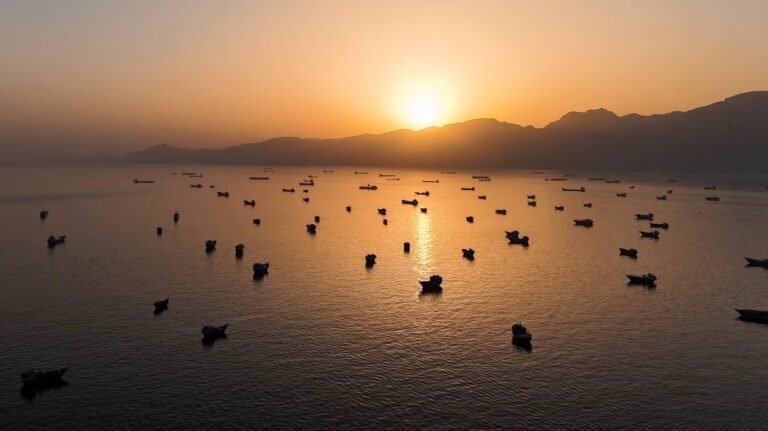
The world’s biggest oil tanker owners have raised the spectre of a market crash only weeks after the closure of the Strait of Hormuz helped power the industry to a quarter of record profits.
Owners are braced for a steep drop in the rates they can charge to charter tankers in the event that the US and Iran reach a deal to reopen the contested waterway, through which a fifth of global oil supplies typically pass.
Iran’s stranglehold on the strait since the war started in February has delivered a windfall for the industry, with profits surging to $36bn in the first quarter, according to Clarksons, one of the world’s biggest shipping brokers.
The previous quarterly record of $26bn was set in 2022.
The risk of a sharp downturn has been heightened after owners ploughed some of their profits into orders for new ships, stoking fears of another boom-and-bust cycle that has been a hallmark of the shipping industry for decades.
The number of the largest oil carriers ordered this year has already surpassed the total for any full year on record, according to maritime data company AXSMarine.
“There is a certainty that it crashes at one point,” said Alexander Saverys, chief executive of CMB Tech, one of the biggest listed shipping companies.
“The market has ordered, in my book, way too many ships. Now that will come and bite us eventually.”
The daily rates tanker owners can command have already eased back from the peaks hit in the early weeks of the conflict, when the average cost of hiring a tanker hit $162,992.
For the largest vessels, which can carry about 2 million barrels of oil a day, the daily rate soared to $386,685.
The effective closure of the strait has left more than 160 oil tankers stranded in the Gulf, limiting the supply of vessels and driving up shipping rates across the world.
A move by owners to route vessels around the Cape of Good Hope to avoid the Red Sea and potential attacks from Houthi rebels has also driven up rates.
Despite traffic through the strait remaining at a near-standstill, the daily average overall rates for tankers have dropped to between $55,000 and $95,000 for the larger vessels in recent weeks in anticipation of a reopening of the strait.
The range is still above the average in recent years of $30,000 to $40,000.
“We need to be very careful,” said Harry Vafias, a major owner of gas and oil tankers, referring to the potential risks facing the industry.
“There has been a lot of investment in second-hand and new building [of ships].”
Tanker orders this year are on track to match 2024, which was the third-busiest year since 2000, according to AXS.
The tanker industry would be one of the few industries to lose out if the volumes of shipping traffic through the strait returned to prewar levels.
The closure of the vital waterway has sent energy prices surging, hurting multiple industries.
The oil tanker industry is dominated by Greek shipowners, with a working fleet valued at $66.4bn, $26bn more than China, according to shipping technology company Veson Nautical.
While the industry is accustomed to boom-and-bust cycles, a string of global shocks this decade, including the coronavirus pandemic and US President Donald Trump’s trade war, has injected more volatility into shipping rates.
But some executives cautioned that the risk of an industry downturn was overblown, saying that this year’s burst of orders for new ships followed a period of undersupply.
Maria Angelicoussis, chief executive of Angelicoussis Group, a privately owned shipping company, said: “When I look at the tanker market, for example, yes, there’s been an uptick in new building orders in the recent past,” but it comes after a period in which there was a lack of vessels.
It was a view echoed by Capital Maritime Group, which is owned by Greek tycoon Evangelos Marinakis and has placed a large order for new ships.
Others argued that the war would lead to lasting changes in how oil was shipped around the world, supporting the fees tanker owners could charge.
The changes include using routes that were less exposed to the threat of conflict.
Angeliki Frangou, chief executive of Navios Partners, a Greek shipping company, told the FT that “excessive newbuilding orders” would push shipping rates lower but the impact would be reduced “by national security considerations of securing reliable energy supply chains”.
Anzana Secures $20 Million From British International Investment To Expand Renewable Energy Projects Across Africa

Anzana Electric Group, a leading developer and operator of hydropower and grid distribution projects across Africa, has secured a $20 million senior secured portfolio debt facility from British International Investment (BII), the UK’s development finance institution and impact investor, to accelerate the construction of run-of-river hydropower projects across the continent.
The facility is designed to address the high upfront costs and lengthy timelines typically associated with arranging project-specific financing.
The BII funding will provide construction financing for Anzana’s well-developed hydropower portfolio, which focuses on small- and medium-scale plants with potential solar hybridisation in East, Central and Southern Africa.
Through the facility, Anzana expects to unlock 10MW of newly installed distributed baseload generation capacity by 2030, generating more than 50 GWh of clean electricity annually for national and regional power grids as well as high-demand centres.
The first project under the facility will be located in Zambia.
If successful, Anzana plans to replicate the approach to enable more efficient financing for future projects in its pipeline.
Anzana’s operating model spans project development, power generation, distribution and interconnection, serving both communities and commercial and industrial customers with reliable electricity supply.
The portfolio is expected to create more than 500 jobs during construction and operations, while expanding electricity access and supporting economic activity across the targeted regions.
Chris Chijiutomi, Managing Director and Head of Africa at British International Investment, said:”Africa faces a significant energy access gap, with nearly 600 million people lacking electricity. We’re committed to working with partners like Anzana to support Mission 300 and provide electricity access to 300 million people in Africa by 2030. Through this financing, we’re helping countries transition to renewable power, strengthen electricity networks, and deliver clean, reliable energy to millions of households.”
Brian Kelly, Chief Executive Officer of Anzana Electric Group, said: “This facility is an important milestone for Anzana as we scale our platform across Africa and expand our close partnership with BII. Through an end-to-end model spanning generation and distribution, including customer connections, we ensure consistent reliability and quality across the entire power value chain.
“Our focus on strong governance, disciplined execution and strategic corridor development enables us to deliver power where it is needed most while supporting national government objectives for sustained long-term economic growth.”
South Africa: Eskom, Zululand Energy Terminal Sign Agreement To Advance 3,000MW Gas-To-Power Project

South Africa’s state-owned power utility Eskom and Zululand Energy Terminal (ZET) have signed a Heads of Agreement (HOA) to establish a long-term strategic partnership aimed at supporting the country’s 3,000MW gas-to-power programme.
Under the agreement, Eskom will assume “foundation customer” status at the proposed Zululand Energy Terminal, which will provide open-access liquefied natural gas (LNG) import, storage and regasification infrastructure to underpin the utility’s planned gas-fired generation project.
The two parties said the agreement marks a major step towards developing South Africa’s gas infrastructure ecosystem and strengthening energy security while supporting the country’s long-term energy transition.
ZET, a joint venture involving Vopak Terminal Durban, Reatile Group Proprietary Limited and Transnet Pipelines, was awarded a concession by the Transnet National Ports Authority to develop, construct, operate and maintain the LNG terminal.
Eskom’s 3,000MW Richards Bay Gas-to-Power Project will be located in the Richards Bay Industrial Development Zone (RBIDZ) in KwaZulu-Natal.
The facility is expected to operate for 25 years and use regasified LNG as its primary fuel source.
According to Eskom, the project will be implemented through a Private Sector Participation (PSP) model, leveraging strategic partnerships, project finance and long-term power off-take arrangements.
The investment is expected to attract international capital and accelerate industrial development in Richards Bay.
Eskom Group Chief Executive Dan Marokane described gas as a bridge fuel that will support South Africa’s transition to a low-carbon energy system.
“Gas plants are designed to complement intermittent renewable sources such as solar and wind, ensuring reliable 24/7 power while clean energy technologies are being developed and introduced onto the grid,” Marokane said.
He added that securing foundation customer status at the Zululand Energy Terminal provides a critical enabler for Eskom’s 3,000MW gas programme and supports the objectives of the Integrated Resource Plan (IRP) 2025.
Zululand Energy Terminal Director and Project Owner Oliver Naidu said Eskom’s participation demonstrates growing confidence in LNG as a driver of energy security, grid stability and industrial growth.
Naidu said the agreement strengthens the commercial foundation of the terminal and paves the way for a Terminal Use Agreement, financial close and the delivery of South Africa’s first LNG import terminal.
South Africa’s IRP 2025 calls for the development of 6,000MW of gas-fired generation capacity by 2030, with 3,000MW expected to come from the Gas Independent Power Producer (IPP) programme and the remaining 3,000MW to be delivered by Eskom.
The partners said the project will help enhance energy security, complement renewable energy sources, reduce diesel consumption for grid stabilisation and mitigate the country’s anticipated “gas cliff” while supporting broader industrialisation.
South Africa: African Power Utilities Join AEW 2026 As Grid Expansion And Electrification Take Center Stage

As the continent intensifies efforts to close the energy access gap, modernize power infrastructure and drive economic development, power utility companies from South Africa, Zambia and Uganda will take center stage at this year’s African Energy Week (AEW) 2026.
Senior executives from Eskom Holdings, ZESCO Limited and Uganda Electricity Transmission Company (UETCL) are speaking at AEW 2026, taking place October 12–16 at CTICC1 in Cape Town South, Africa.
This reflects the increasingly central role utility providers play in shaping Africa’s energy future.
South Africa’s state utility Eskom plays a central role in providing electricity to the market, supporting government targets of scaling generation capacity, strengthening transmission infrastructure and facilitating long-term industrial growth.
Aligned with national policy such as the Integrated Resource Plan 2025 – which envisions the addition of 105 GW of new generation capacity by 2039 – and the Renewable Energy Independent Power Producer program – which seeks to mobilize private investment in power generation –, the company is committed to improving generation performance and sustaining energy supply.
Recent milestones include progress under the General Recovery Plan which has resulted in over one year of uninterrupted power supply, extensions at nuclear power facilities, smart meter rollouts and strengthened supply for industrial users.
Dan Marokane, Group Chief Executive, Eskom Holdings, joins AEW 2026 as Eskom continues to scale generation and transmission capacity across the country.
World Bank Urges Shift to Clean Energy, Stronger Public Investment Amid Rising Oil Market Pressures
Zambia’s power market is experiencing similar growth with expanded hydropower capacity at the Kariba facility, new hydro plants being developed in the Northern provinces and forays into solar.
As the state utility, ZESCO is at the helm of this expansion and is currently pursuing infrastructure upgrades and diversification strategies aimed at improving energy reliability and supporting increasing activity in the mining sector.
Major projects include the 50 MW Mansa Solar Plant, the 200 MW Chisamba Solar Plant and the 100 MW Mailo Solar Plant.
The country is also strengthening transmission ties within neighboring countries, with projects such as the $100 million Kanona line linking Zambia and Tanzania as well as a Zambia-Botswana interconnector project.
Justin C. Loongo, CEO, ZESCO Limited, is speaking at AEW 2026.
Uganda has also been strengthening transmission infrastructure through a range of strategic projects. With the country’s generation capacity more than doubling from 850 MW in 2014 to over 2,052 MW in 2025, focus is gradually shifting to strengthening both domestic and regional distribution networks.
As the state-owned transmission company, UETCL is at the forefront of this strategy. Under the country’s Grid Map Vision 2040 – aimed at expanding transmission networks country-wide – UETCL has advanced several projects in recent months.
The most recent of these is a landmark agreement signed with Gridworks to upgrade the country’s national electricity transmission network. Richard Matsiko, CEO, UETCL, is expected to share further insight at AEW 2026.
“Power utilities are at the heart of Africa’s industrial future. If we are serious about making energy poverty history, we need stronger collaboration between utilities, governments, investors and technology providers. Africa does not lack energy potential – it needs integrated infrastructure, modern grids and partnerships capable of delivering reliable electricity to industries, businesses and households across the continent,” stated NJ Ayuk, Executive Chairman, African Energy Chamber.
Gambia, Italy’s Eni Sign Landmark Petroleum Exploration Agreement For Block A1

The Gambia has signed a landmark Petroleum Exploration, Development and Production Licence Agreement (PEPLA) with Eni Gambia Ltd, a subsidiary of Italian energy giant Eni S.p.A.
The agreement, signed on Friday, 5th June 2026, grants Eni Gambia Ltd exploration rights over Offshore Block A1 — a 1,300-square-kilometre deepwater area along the Atlantic Margin off the coast of The Gambia, with water depths reaching up to 3,300 metres.
The block is located in a region with proven hydrocarbon discoveries and comparable geological settings.
Under the terms of the PEPLA, the Gambian state will hold a 10% equity interest in Block A1, carried through the exploration phase and represented by the Gambia National Petroleum Corporation.
The agreement follows a rigorous multi-year engagement process coordinated by the Petroleum Commission of The Gambia, encompassing national data room visits, pre-qualification under a formal Request for Information process, and extensive technical and commercial negotiations.
 The agreement establishes a legal and commercial framework for the exploration and potential development of hydrocarbon resources within Block A1.
Commenting on the agreement, Minister for Petroleum, Energy and Mines, Hon. Nani Juwara, said: “The signing of this Petroleum Exploration, Development and Production Licence Agreement with Eni is a proud and defining moment for The Gambia’s energy sector. It reflects the confidence that a world-class operator has placed in our country’s resource potential and in the credibility of our investment climate. The government under the leadership of His Excellency Adama Barrow is committed to ensuring that every step of this exploration journey is conducted with environmental responsibility and with the long-term interests of the Gambian people at its centre. We enter this chapter with measured optimism: not as a nation that has already found oil, but as a nation that has created the right conditions to responsibly find it.”
On her part, the Director General of the Petroleum Commission of The Gambia, Engr. Cany Jobe, said:“The signing of the Block A1 PEPLA with Eni is the result of a deliberate, evidence-based and institution-led licensing process. Through the management of the national data room, international promotion of The Gambia’s petroleum potential, pre-qualification processes and technical negotiations, the Petroleum Commission has ensured a credible and competitive framework.
This signing reinforces The Gambia’s position as an emerging frontier jurisdiction with strong geological potential and a clear regulatory framework. We look forward to working with Eni as they commence exploration, while maintaining robust regulatory oversight at every stage.”
The agreement establishes a legal and commercial framework for the exploration and potential development of hydrocarbon resources within Block A1.
Commenting on the agreement, Minister for Petroleum, Energy and Mines, Hon. Nani Juwara, said: “The signing of this Petroleum Exploration, Development and Production Licence Agreement with Eni is a proud and defining moment for The Gambia’s energy sector. It reflects the confidence that a world-class operator has placed in our country’s resource potential and in the credibility of our investment climate. The government under the leadership of His Excellency Adama Barrow is committed to ensuring that every step of this exploration journey is conducted with environmental responsibility and with the long-term interests of the Gambian people at its centre. We enter this chapter with measured optimism: not as a nation that has already found oil, but as a nation that has created the right conditions to responsibly find it.”
On her part, the Director General of the Petroleum Commission of The Gambia, Engr. Cany Jobe, said:“The signing of the Block A1 PEPLA with Eni is the result of a deliberate, evidence-based and institution-led licensing process. Through the management of the national data room, international promotion of The Gambia’s petroleum potential, pre-qualification processes and technical negotiations, the Petroleum Commission has ensured a credible and competitive framework.
This signing reinforces The Gambia’s position as an emerging frontier jurisdiction with strong geological potential and a clear regulatory framework. We look forward to working with Eni as they commence exploration, while maintaining robust regulatory oversight at every stage.”

The agreement establishes a legal and commercial framework for the exploration and potential development of hydrocarbon resources within Block A1.
Commenting on the agreement, Minister for Petroleum, Energy and Mines, Hon. Nani Juwara, said: “The signing of this Petroleum Exploration, Development and Production Licence Agreement with Eni is a proud and defining moment for The Gambia’s energy sector. It reflects the confidence that a world-class operator has placed in our country’s resource potential and in the credibility of our investment climate. The government under the leadership of His Excellency Adama Barrow is committed to ensuring that every step of this exploration journey is conducted with environmental responsibility and with the long-term interests of the Gambian people at its centre. We enter this chapter with measured optimism: not as a nation that has already found oil, but as a nation that has created the right conditions to responsibly find it.”
On her part, the Director General of the Petroleum Commission of The Gambia, Engr. Cany Jobe, said:“The signing of the Block A1 PEPLA with Eni is the result of a deliberate, evidence-based and institution-led licensing process. Through the management of the national data room, international promotion of The Gambia’s petroleum potential, pre-qualification processes and technical negotiations, the Petroleum Commission has ensured a credible and competitive framework.
This signing reinforces The Gambia’s position as an emerging frontier jurisdiction with strong geological potential and a clear regulatory framework. We look forward to working with Eni as they commence exploration, while maintaining robust regulatory oversight at every stage.”
World Bank Urges Shift to Clean Energy, Stronger Public Investment Amid Rising Oil Market Pressures

The World Bank has called on governments around the world to accelerate investments in renewable energy, clean technologies and resilient infrastructure, warning that rising pressures in global oil markets could undermine economic stability and long-term development.
The institution said continued volatility in oil prices underscores the urgent need for countries—particularly developing economies—to reduce dependence on fossil fuels and diversify their energy sources.
It noted that investments in solar power, decentralised energy systems and other clean technologies are increasingly critical to shielding economies from future energy shocks, while also supporting growth, job creation and climate resilience.
The World Bank also said energy security can be strengthened through a broader energy mix that includes renewable energy and nuclear power. According to the institution, diversification helps reduce exposure to sudden price swings and supply disruptions in global fuel markets.
To support the transition, it urged governments to prioritise critical energy infrastructure, including solar mini-grids, decentralised electricity systems and reliable national grids, particularly in remote, underserved and climate-vulnerable communities.
Beyond energy, the Bank stressed the importance of sustained investment in human capital. It said education systems and workforce development programmes must be modernised to prepare workers for emerging sectors such as clean technology, digital services and artificial intelligence.
The institution highlighted the growing use of AI in improving productivity, noting that farmers in some countries are already using AI-powered tools to detect crop and livestock diseases, enhance decision-making and improve access to services.
It further emphasized that human capital investment goes beyond technical skills, urging governments to strengthen healthcare, education and social protection systems to boost productivity and economic resilience.
The World Bank warned that the global economy is facing heightened uncertainty driven by geopolitical tensions, climate risks, policy instability and rapid technological change. It added that higher oil prices and tightening supply conditions are increasing pressure on public finances, especially in developing economies already struggling with inflation and fiscal deficits.
Zambia: REA Hands Over 85 Electrification Projects Worth K463 Million To ZESCO
Despite these challenges, the Bank cautioned against cutting public investment during periods of economic stress, saying such moves weaken recovery, reduce productivity and limit long-term growth potential.
Instead, it recommended that governments focus on high-impact investments that create jobs, improve productivity and strengthen energy and climate resilience, while eliminating inefficient projects that offer limited economic returns.
The Bank also urged improvements in public sector efficiency, noting that nearly one-third of public investment spending is lost globally due to inefficiencies, with even higher losses in low-income countries.
It called for stronger project appraisal systems, improved procurement transparency, better implementation capacity and increased investment in infrastructure maintenance, warning that neglecting maintenance raises long-term costs and accelerates infrastructure deterioration.
The institution also pointed to the role of digital tools in improving accountability and project monitoring, citing countries such as Viet Nam and Cambodia, where governments use technology to track public investment outcomes.
As part of ongoing efforts, the World Bank said it is supporting countries including the Philippines, Viet Nam and Mongolia to strengthen investment planning and project appraisal systems to ensure projects deliver sustainable growth, job creation and long-term resilience.
The Bank concluded that while global economic shocks are likely to persist, countries that invest in clean energy, efficient public spending and human capital development will be better positioned to achieve sustainable growth, energy security and economic stability.