



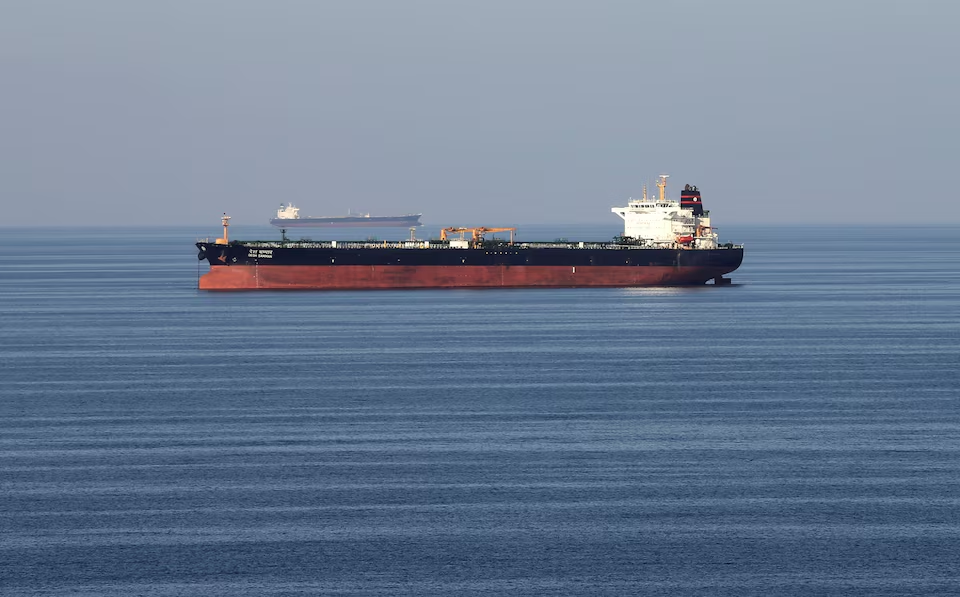
US President Donald Trump has threatened to attack Iran’s power plants if the country refuses to swiftly reopen the Strait of Hormuz to allow the passage of vessels.
Trump said in a social media post late Saturday that he would “hit and obliterate” Iran’s power plants—beginning with the country’s largest facility—if it did not reopen the strait within 48 hours.
A day after issuing the threat, the US president said he was considering “winding down” the military operation and suggested that responsibility for policing the Strait of Hormuz would fall to countries that rely on shipping through the corridor.
The threats have nearly brought shipments of commodities through the Strait of Hormuz to a halt. The strait accounts for the transit of about 20% of the world’s oil and gas supply.
The resulting energy supply shock has sent crude prices soaring, with the international benchmark Brent futures closing at $112.19 on Friday.
Despite the tensions, some countries are finding ways to move cargo through the corridor. The Iranian Navy has reportedly guided an Indian LNG tanker through the Strait of Hormuz following diplomatic engagement by New Delhi.
Iranian officials have signaled reluctance to engage in discussions about reopening the strait amid the ongoing conflict.
Trump’s threat to begin by striking Iran’s largest power facilities may also be a reference to the Bushehr nuclear plant.
His latest declaration comes despite an earlier appeal for a halt in Israel’s strikes on regional energy assets, which risk provoking retaliatory attacks by Iran on oil and gas infrastructure and further restricting global supply.
Energy assets across the region have increasingly become targets as the conflict escalates. Israel struck the South Pars gas field last Wednesday, and Iran retaliated with attacks on the world’s largest LNG facility in Qatar.
More than 100 people were injured in Israel on Saturday following multiple Iranian strikes in the country’s south, as Tehran responded to an earlier attack on its own nuclear facility.
As the conflict enters its fourth week and drives up energy prices, the US Treasury has taken the unusual step of allowing the sale of Iranian oil and petrochemical products already loaded onto tankers, despite existing sanctions.
The surge in prices poses political risks for Trump at home, just eight months before midterm elections expected to hinge largely on voters’ views of the economy and consumer costs.
Although the US is producing record levels of oil and gas domestically and is less dependent on Middle Eastern resources than countries like China and Japan, the supply shock linked to the Strait of Hormuz is still being felt through rising global prices.
Discover more from Energy News Africa
Subscribe to get the latest posts sent to your email.