



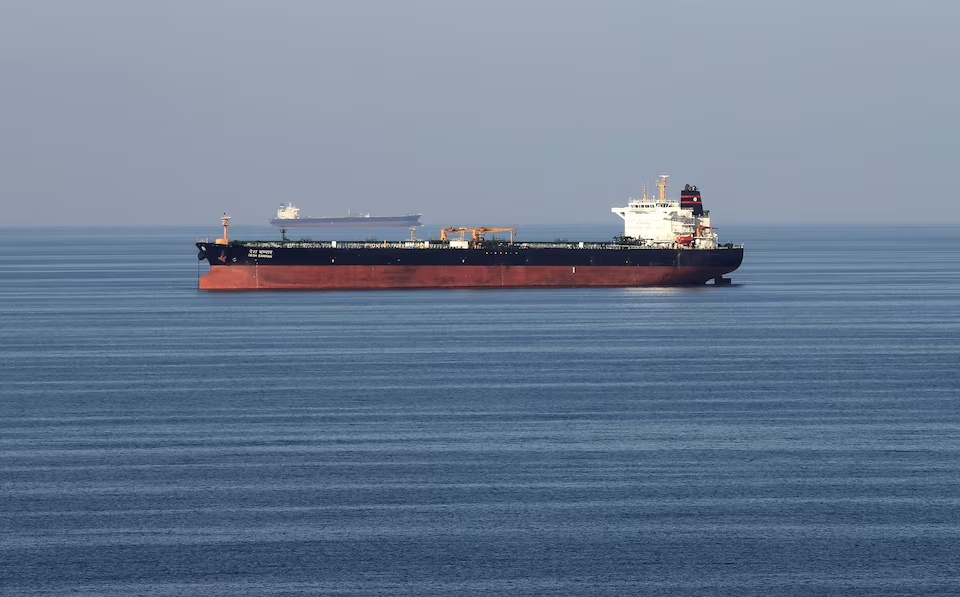
Three oil tankers have been damaged off the Gulf coast following U.S.–Israel airstrikes on Iran on Saturday, Reuters reported, citing officials of the shipping association BIMCO.
Iran on Saturday announced it had closed the Strait of Hormuz, a critical channel for global shipments of oil, gas, and other goods.
“The U.S.–Israeli attack on Iran dramatically increases the security risk to ships operating in the Persian Gulf and adjacent waters,” said Jakob Larsen, chief safety and security officer at BIMCO, as quoted by Reuters. “Ships with business connections to U.S. or Israeli interests are more likely to be targeted, but other ships may also be targeted deliberately or in error.”
A Palau-flagged oil tanker under U.S. sanctions was struck on Sunday off the Musandam peninsula in Oman, injuring four people, according to the country’s maritime security centre, which did not specify the source of the strike.
The Marshall Islands-flagged crude oil tanker MKD VYOM was also hit by a projectile off the coast of Oman while carrying cargo, two maritime security sources said. One source noted the vessel was struck 44.4 nautical miles northwest of Muscat.
The British maritime agency UKMTO said a laden merchant vessel reported an explosion in the same area.
In the Jebel Ali Port in the United Arab Emirates, a separate tanker narrowly escaped damage after debris fell from an aerial interception during overnight Iranian attacks targeting Gulf states, maritime security sources said. A third oil-bunkering tanker was also damaged off the UAE coast, according to two shipping sources.
The U.S. Department of Transportation’s Maritime Administration warned vessels to keep clear of the Strait of Hormuz and the wider Gulf of Oman due to potential Iranian retaliatory strikes.
“Any U.S.-flagged, owned, or crewed commercial vessels operating in these areas should maintain a standoff of 30 nautical miles from U.S. military vessels to reduce the risk of being mistaken as a threat,” the administration said.
Security sources also warned of the potential deployment of naval mines by Iranian forces in the narrow lanes of the Strait of Hormuz. According to earlier Reuters reporting, Iranian forces loaded naval mines onto vessels in the Persian Gulf in June, raising concerns in Washington that Tehran was preparing to enforce a blockade.
Maritime industry sources said they expect war-risk insurance premiums to surge when underwriters reassess cover on Monday. War-risk insurance is mandatory for operating in designated danger zones, and the Lloyd’s of London market already classifies Iran, the Gulf, and parts of the Gulf of Oman as high-risk regions.
Discover more from Energy News Africa
Subscribe to get the latest posts sent to your email.