


Ghana: Rainstorm Causes Power Outage In Parts Of Tamale

The Northern Electricity Distribution Company Limited (NEDCo) says a storm on the evening of May 7, 2025, has cut power supply to parts of Tamale township. The storm affected several feeders, thereby cutting power supply to parts of Tamale.
A release issued by the Corporate Communications outfit of NEDCo on May 7, 2025, mentioned that the affected areas include Gemani, Gbanyamni, Tuunaayili, Gurugu, Vittin, Yendi Road, Salaga Road, TTH, Kukuo, SSNIT Flats, Koblimahagu, Adubilyill, and their environs.
NEDCo apologized for the inconvenience caused to its cherished customers and assured that relentless efforts by the company were underway to overcome the challenges and restore power as soon as practicable.
Source:https://energynewsafrica.com
Ghana: I’ll Sack You If Future Dam Spillage Causes Flooding – Mahama Tells VRA CEO, Deputies

Ghana’s President John Dramani Mahama has issued a stern warning to the current leadership of the Volta River Authority (VRA) to ensure that any future Akosombo Dam spillage does not cause flooding as witnessed in 2023.
According to President Mahama, if the catastrophic Akosombo Dam spillage recurs, the Chief Executive Officer (CEO) of the Volta River Authority and deputies will be dismissed or forced to resign.
Addressing the nation on Wednesday, May 7, to mark his first 120 days in office, President Mahama emphasised that lessons had been learnt and firm steps were being taken to prevent another disaster.
Energy Minister John Abdulai Jinapor recently inaugurated a technical committee, headed by former VRA Chief Executive Ing. Kirk Koffi, to investigate the causes of the previous flooding and propose sustainable solutions.
President Mahama said the committee, under Ing. Koffi’s leadership, had proposed key measures, including a controlled spill flood plan and new engineering interventions downstream to better manage flood risks.
He stressed that implementing these recommendations would be immediate and mandatory.
“I’ve instructed that these strategies be executed without delay,” he stressed.
Highlighting the seriousness of the issue, President Mahama made it clear that the current VRA leadership would be held fully accountable for any failure to act effectively.
“I’ve made it clear that if these measures are not carried out properly and we face another damaging flood due to VRA negligence, the CEO and top deputies will be required to resign or will be removed from office,” he warned.
The Akosombo Dam spillage in 2023 had disastrous effects, displacing thousands and drawing harsh public criticisms over the VRA’s lack of preparedness.
With this firm stance, President Mahama has signalled a new era of accountability and proactive disaster management in the face of growing climate challenges.
Source:https://energynewsafrica.com
Methane Data And Transparency Continue To Improve, But Emissions Remain Far Too High
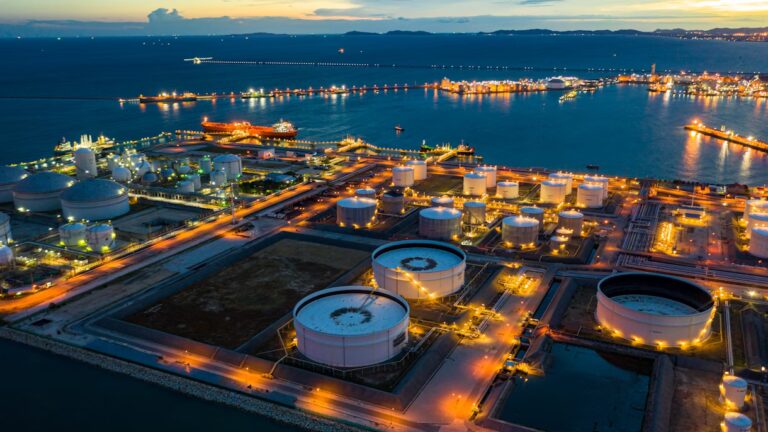
Methane emissions from fossil fuels remain at stubbornly high levels, according to the IEA’s latest global tracking update, which notes that efforts to bolster data collection and monitor methane leaks are making progress.
The Global Methane Tracker 2025, out today, presents the IEA’s latest sector-wide emissions estimates, based on the most recent data from satellites and measurement campaigns, and examines different abatement options along with their associated costs.
Methane abatement is a crucial opportunity to reduce near-term global warming at a time when temperatures worldwide have set record highs for two years in a row.
“Tackling methane leaks and flaring offers a double dividend: it alleviates pressure on tight gas markets in many parts of the world, enhancing energy security – and lowers emissions at the same time,” said IEA Executive Director Fatih Birol. “However, the latest data indicates that implementation on methane has continued to fall short of ambitions.
The IEA is working to ensure that governments and industry have the tools and knowledge they need to deliver on pledges and achieve the goals they have set.”
The 2025 update of the Global Methane Tracker adds several new elements, including country-level historical emissions data; an interactive tool to explore international methane initiatives; and estimates of emissions from abandoned fossil fuel facilities.
The report also features a fully open-access model for exploring methane abatement pathways in the oil and gas industry.
The fossil fuel sector accounts for nearly one-third of global methane emissions from human activity today. According to the report, record global production of oil, gas and coal – along with limited mitigation efforts to date – have kept methane emissions from the energy sector worldwide above 120 million tonnes annually.
The IEA estimate is considerably higher than the levels implied by official reporting, but data transparency is improving. There are now more than 25 satellites in orbit that can provide vital insights. Very large leaks from oil and gas facilities detected by satellites rose to a record high in 2024.
New analysis in this year’s Tracker also found that abandoned oil and gas wells and coal mines together contributed around 8 million tonnes to global methane emissions last year. Taken together, these sources would be the world’s fourth-largest emitter of fossil fuel methane.
According to the report, around 70% of annual methane emissions from the energy sector could be avoided with existing technologies. Meanwhile, a significant share of abatement measures could pay for themselves within a year, since the gas that is captured can be resold.
The analysis finds a huge range in methane emissions intensities across different countries and companies, with the best outperforming the worst by a factor of 100. Raising awareness and spreading readily available best practices are essential to narrow this gap, it notes.
According to new analysis published in the Tracker update, current methane pledges by companies and countries cover 80% of global oil and gas production.
At the moment, however, only around 5% of global oil and gas output demonstrably meets a near-zero methane emissions standard.
The Tracker finds that addressing methane emissions and flaring would improve energy security by creating additional natural gas supply.
Methane abatement could have made around 100 billion cubic metres of natural gas available to markets in 2024, on par with Norway’s total gas exports.
A further 150 billion cubic metres of natural gas is flared globally each year, the majority of which is part of routine practices and can be avoided.
Based on today’s policies, deploying targeted methane mitigation solutions in the fossil fuel sector would prevent a roughly 0.1 °C rise in global temperatures by 2050. This is comparable to eliminating all the carbon dioxide emissions from heavy industry worldwide.
Source: IEA
Nigeria: Exxon To Invest $1.5 Billion In Deepwater Oilfields

U.S. supermajor ExxonMobil plans to invest as much as $1.5 billion in deepwater oil and gas exploration and development offshore Nigeria, the local regulator, the Nigerian Upstream Petroleum Regulatory Commission (NUPRC), has said.
Exxon sold last year its onshore assets to local firm Seplat Energy, but is committed to offshore exploration and development in the country.
At the end of 2024, Nigeria’s regulators finally approved – after two years – Seplat Energy’s proposed acquisition of Mobil Producing Nigeria Unlimited (MPNU) from ExxonMobil.
Now the U.S. supermajor is committing to developing its offshore position in Nigeria.
Exxon plans the $1.5 billion investment between 2025 and 2027 for revitalizing production in the Usan deepwater oilfield, Nigeria’s NUPRC said.
The U.S. energy giant targets a final investment decision (FID) on the project for late in the third quarter of this year, subject to approval of its final Field Development Plan, as well as internal and partner funding approvals.
Shane Harris, ExxonMobil’s Managing Director in Nigeria, said that the planned capital investment reflects ExxonMobil’s confidence in Nigeria’s upstream potential and its dedication to playing a pivotal role in the country’s oil and gas production growth.
During a meeting with NUPRC chief executive Gbenga Komolafe this week, Harris also confirmed Exxon’s support for the regulator’s “Project 1 Million Barrels” initiative, which aims to increase Nigeria’s crude oil production to 2.4 million barrels per day (bpd) in the medium term.
Nigerian authorities have been clamping down on oil theft and have been supportive of an increase in oil and gas output in recent months.
The Nigerian government aims to boost the country’s oil production by 1 million bpd by December 2026, from the current 1.75 million bpd.
Oil theft and pipeline vandalism have long plagued Nigeria’s upstream oil and gas industry, driving majors out of the biggest OPEC producer in Africa and often resulting in force majeure at the key crude oil export terminals.
Source: Oilprice.com
Nigeria: Ekperikpe Wants Nigeria To Turn Gas Potential Into Prosperity

Nigeria’s Minister of State for Petroleum Resources (Gas), Mr. Ekperikpe Ekpo, has underscored the need for Nigeria to take decisive and unified action to tap into the country’s vast natural gas reserves.
Nigeria holds over 210 trillion cubic feet of proven natural gas reserves, Africa’s largest and among the top ten globally.
According to Minister Ekpo, this resource is a divine gift, but it comes with a responsibility—to use it for sustainable development, job creation, industrialization, and global energy security.
Delivering a keynote address at a session hosted by the Petroleum Technology Association of Nigeria (PETAN) on Tuesday in Houston, Texas, U.S., at the Offshore Technology Conference (OTC), Ekpo reaffirmed the Federal Government’s commitment to transforming Nigeria into a globally competitive, gas-powered economy.
The theme of the session was “Harnessing Nigeria’s Gas Potential for Domestic Utilization and Global Export Market”. He said, “Potential alone does not generate growth; action does.”
The minister commended PETAN for showcasing Nigeria’s innovation on the world stage and emphasized that the country’s Decade of Gas initiative, under President Bola Tinubu’s administration, is central to national energy transformation.
Ekpo stressed that innovation and technology, including digital oilfield solutions, low-carbon gas processing, and emissions monitoring, will be key drivers in this transformation. He called for greater investment in R&D and closer collaboration between academia, startups, and the private sector.
Addressing the financing challenge, the minister noted that Nigeria must make its gas projects bankable and ESG-compliant to attract global investment amid shifting energy transition priorities.
He commended the efforts of Nigeria’s regulatory agencies, the NMDPRA and NUPRC, for fostering investor confidence through transparency and efficiency.
Ekpo emphasized the need for indigenous companies to take the lead in this new energy era. “The future of gas in Nigeria is not just for multinational corporations; it belongs to every capable Nigerian entrepreneur ready to act.”
“Nigeria’s gas potential is vast, but it is only through decisive, collective action that we can transform that potential into prosperity—both for our people at home and for our position on the global stage,” he added.
Source:https://energynewsafrica.com
South Korea: MOTIE Unveils Plans For Massive 3.2 GW Offshore Wind Project

South Korea has announced an ambitious plan to develop a 3.2 GW (3,200 MW) offshore wind cluster in Sinan-gun, South Jeolla Province.
The Ministry of Trade, Industry and Energy (MOTIE) made the announcement after a meeting of the New and Renewable Energy Expert Committee.
The offshore wind complex is planned to be built in waters off Sinan, approximately 300 kilometers southwest of Seoul, by 2033.
The complex is expected to consist of ten offshore wind farms with a combined production capacity of 3.2 GW, equivalent to the output of two nuclear power plants.
In 2018, the government set a 2030 offshore wind target of 12 GW in its Renewable Energy 3020 Implementation Plan.
This target was reaffirmed by former President Moon Jae-in in 2020. As of 2022, South Korea aims to reach 14.3 GW of offshore wind power by 2030.
Last year, MOTIE awarded 1,886 MW in capacity across four fixed-bottom offshore wind projects and one floating wind farm.
Source:https://energynewsafrica.com
Zambia: Energy Board Approves Energy Investment Projects Valued At $370 Million

Zambia’s Energy Regulation Board (ERB) has approved 62 license applications and eight construction permits for petroleum, electricity, and renewable energy projects, valued at approximately $370 million.
This development reflects the ERB’s ongoing commitment to promoting a transparent and supportive regulatory environment that encourages sustainable investments in line with national energy policies.
The steady growth in investments highlights the country’s favorable regulatory framework and the ERB’s efforts to streamline approval processes for investors to participate in the value chains.
To maintain this momentum, the ERB remains focused on strengthening investor confidence through predictable, safe, and efficient regulatory processes that support timely application reviews and project implementation.
These licenses will play a critical role in ensuring energy availability, enhancing operational efficiency, and promoting access to modern energy services and equipment across the country.
According to a statement issued by the ERB, three major construction permits were approved in the electricity and renewable energy sub-sector:
- The Kalumbila-Kolwezi Interconnector Project (KKIP)
- A 100 MWp Solar Photovoltaic (PV) Power Plant to be developed by Sun Share Energy Limited in Chief Moono’s area, Mumbwa District, worth $75 million
- An 8 MWp off-grid Solar PV Power Plant integrated with 20 MWh battery storage to be developed by Sany International (Zambia) Industrial Company Ltd at Ruida Mine, in Kasempa District of North-Western Province, with an investment of $8 million
US Gulf Oil Output Could Rise To 2.4 Million Barrels Per Day, Industry Leaders Say

Oil output from the U.S. Gulf of Mexico can continue growing despite market uncertainty created by the most geopolitical volatility in decades, oil and gas industry leaders said on Monday.
U.S. President Donald Trump’s global tariff announcements since last month have contributed to a decline in oil prices and fears of an economic downturn.
This will make it harder for oil producers to follow his call of “drill, baby, drill.”
U.S. oil prices have fallen about 20% since early April, closing at $57.12 a barrel on Monday.
Prices have also been pressured by a decision from the Organization of Petroleum Exporting Countries and allies to accelerate output increases, as well as Saudi Arabia’s warning that it can withstand a prolonged period of lower prices.
“We’ve never been in a situation where we have so much geopolitical volatility,” Occidental Petroleum (OXY.N), CEO Vicki Hollub said during a panel discussion at the Offshore Technology Conference in Houston on Monday.
Investments in offshore projects are longer cycle and take into account decades of production.
Shale has a shorter production cycle, with wells turned on and off quickly in response to prices.
“I believe over the next few years we will see a strong, resilient, robust, offshore market,” said Girish Saligram, chief executive officer of oilfield service company Weatherford.
Operators will remain focused on offshore and an easier regulatory environment and permitting processes will help, Saligram added.
The Trump administration last week said it would implement an emergency permitting process for energy projects on federal lands, slashing approval times that typically take months or years to at most 28 days.
U.S. Gulf oil output could jump to as high as 2.4 million barrels per day from the current level of roughly 1.8 million bpd, said Erik Milito, president of the National Ocean Industries Association.
Advances in technology, including artificial intelligence, are also helping production, executives said.
“We’re seeing that today with the projects that are coming online, highly sophisticated projects that are overcoming a lot of the challenges that we saw 20 years ago,” Milito said.
Last year, Chevron delivered an industry first as it started production in a U.S. Gulf of Mexico field under extreme subsea pressures of up to 20,000 pounds per square inch.
The Trump administration plans to hold a lease sale for the U.S. Gulf in June as had been planned by former President Joe Biden’s administration.
That will be critical for the industry because shale oil production will eventually plateau and begin to decline, making it important to grow offshore exploration, Hollub said.
“We have to find a way to get more out of the Gulf of Mexico, and that’s got to happen in a big way,” she said
Offshore production from the U.S. Gulf accounts for about 15% of total U.S. crude output.
Industry leaders pointed to inflation as another challenge.
Tariffs are going to have an effect on costs and dilute margins, Weatherford’s Saligram said, adding the company was trying to mitigate the cost impact through supply chain management and passing along higher costs to customers.
Magda Chambriard, CEO of Brazil’s state-owned oil company Petrobras, told a panel his company was challenging its local suppliers and challenging international supplies on cost.
“We need to find a way to make these (offshore) projects feasible’ amid volatility and inflation impacting development costs,” said Renata Baruzzi, Petrobras’ chief of engineering.
Source: Reuters
ExxonMobil’s Q1 2025 Profits Drop 7%, Generates $13 Billion In Cash Flow

American oil and gas supermajor ExxonMobil Corporation has reported a 7.3% decline in its net profits during the first quarter of 2025, reaching $7.7 billion, compared to $8.2 billion in the same quarter of 2024.
ExxonMobil attributed the drop in net profits to the significant decline in industry refining margins, weaker crude prices, lower base volumes from strategic divestments and higher expenses from growth initiatives.
Also, increased oil and gas production volumes from the Permian and Guyana, additional structural cost savings and favorable timing effects have helped offset the decrease in net profits.
The supermajor generated strong cash flow from operations of $13.0 billion and free cash flow of $8.8 billion and distributed $9.1 billion to shareholders, which included $4.3 billion in dividends and $4.8 billion in share repurchases, consistent with the company’s annual $20 billion share-repurchase program through 2026.
Commenting on the first-quarter results, Chairman and Chief Executive of ExxonMobil, Darren Woods, said, “In this uncertain market, our shareholders can be confident in knowing that we are built for this. The work we have done to transform our company over the past eight years positions us to excel in any environment.”
He said that since 2019, the strategic choices they made to reduce costs, grow advantaged volumes, and optimize their operations have strengthened quarterly earnings power by about $4 billion at current prices and margins.
According to him, “This year, we’re starting up 10 advantaged projects that are expected to generate more than $3 billion in earnings in 2026 at constant prices and margins.”
He said the company will continuously leverage its competitive advantage to enable the company to excel in the current market environment and deliver on its plans through 2030 and far into the future.
Source: https://energynewsafrica.com
Marathon Petroleum Sinks To Q1 Loss Amid Low Refining Margins

Marathon Petroleum (NYSE: MPC), the biggest U.S. refiner by volumes, on Tuesday reported a loss for the first quarter as weak refining margins continued to depress profits and high turnaround activity limited the upside from margins and sales revenues.
Marathon Petroleum booked a net loss of $74 million, or $0.24 per diluted share, for the first quarter of 2025, compared with net income of $937 million, or $2.58 per diluted share, for the first quarter of 2024.
Marathon Petroleum attributed the loss “mainly due to the execution of the second largest planned maintenance quarter in MPC history.”
Planned maintenance is typical for the first quarter, with refiners doing turnaround activity in preparation for the coming peak summer driving season.
The major maintenance works and the lower refining margins led to a loss at Marathon Petroleum in Q1, which was nevertheless half compared to the $0.54 per-share loss expected by the analyst consensus.
Refining margins in North America have improved from the lows in the fourth quarter of 2024, amid resilient product demand and downtime at many North American refineries, but margins are still well below the record-highs seen in 2022 and 2023.
For Marathon Petroleum, they were also lower in the first quarter of the year compared to the same period a year ago.
MPC’s refining & marketing margin was $13.38 per barrel for the first quarter of 2025, down from $19.35 per barrel for the first quarter of 2024. Crude capacity utilization was at 89%, resulting in total throughput of 2.8 million barrels per day (bpd) for the first quarter of 2025.
As in the fourth quarter of 2024, Marathon Petroleum had a good Q1 quarter in its midstream business, whose strength supported the corporation’s $2.0 billion of adjusted EBITDA.
“For our refining business, we are positioned to meet summer demand as seasonal trends are expected to improve margins and we remain constructive on its long-term outlook,” president and CEO Maryann Mannen said.
“We believe we are positioned over time to deliver peer-leading capital returns.”
Source:Oilprice.com
Nigeria: President Tinubu Okays Electricity Plan To Attract $122 Billion Investments

Nigeria’s President Bola Ahmed Tinubu has formally approved the country’s long-awaited National Integrated Electricity Policy, which aims to seek $122.2 billion in investments for Nigeria’s power sector.
The policy outlines a sweeping reform agenda for the electricity sector, aligning with national development goals and global best practices, as required by Section 3(3) of the revised Electricity Act 2023.
According to reports, the President approved the document at the Federal Executive Council meeting on Monday, May 5, 2025. Per the policy, the $122 billion is expected to be raised between 2024 and 2045 to ensure energy diversification from the current electricity sources of hydropower and gas-fired thermal plants.
It aims to diversify energy sources by incorporating hydrogen, solar photovoltaic technology, biomass, wind, gas projects combined with carbon capture, utilization, and storage technologies, nuclear, solar (concentrated solar power), and bioenergy.
A statement by the Special Adviser to the Minister of Power on Strategic Communications and Media Relations, Bolaji Tunji, quoting his boss, Adebayo Adelabu, stated that the implementation of the new electricity policy was already underway. It noted that the policy’s impact would soon be visible across the power sector.
Adelabu said, “The roadmap policy addresses critical challenges in Nigeria’s electricity sector through a comprehensive framework for sector transformation with clear guidelines for sustainable power generation, transmission, distribution, as well as integration of renewable energy sources, its promotion, energy efficiency, and enhancement of sector governance.” He described the passage of the Electricity Act 2023 as a pivotal moment for the electricity sector, signaling a transformative change that has laid the foundation for NESI, thus enabling exponential socio-economic growth.
“This National Integrated Electricity Policy and Strategic Implementation Plan is a comprehensive roadmap developed to guide all stakeholders – the Federal and State Governments, market participants, investors, and indeed all Nigerians – through this transition,” he stated.
Source:https://energynewsafrica.com
U.S. Electricity From Fossils Fuels Dips Below 50% For The First Time Ever

For the first time in history, fossil fuels supplied less than half of the United States’ electricity generation for an entire month, according to new data released by energy think tank Ember. This milestone, achieved in March 2025, represents a turning point in the evolving energy mix of the world’s largest economy.
Historically, fossil fuels—primarily coal and natural gas—have dominated U.S. electricity production. But the steady rise of renewables over the past two decades has chipped away at their dominance. In March, wind, solar, hydro, and nuclear collectively overtook coal, oil, and gas, with fossil fuels accounting for just 48.9% of total generation.
However, note that this is an estimate of total generation, including small scale systems that are not connected to the grid. According to EIA data, fossil fuels still account for about 64% of electricity generation by utilities.
What’s Driving the Shift?
Several factors converged to make this moment possible. First, renewable energy capacity has expanded rapidly. Wind and solar are now mainstream technologies, supported by state mandates, federal tax incentives, and falling costs. Wind generation alone grew 12% in March year-over-year, and solar jumped by a remarkable 37%. Second, seasonal demand patterns played a role. March is typically a shoulder month for electricity demand—warmer than winter but not yet summer hot—which tends to reduce the need for gas-fired peaking power plants. Lower demand allows zero-marginal-cost renewables like wind and solar to play a more prominent role on the grid. Third, coal continues its long decline. Once the backbone of U.S. power generation, coal’s share of the mix has been in free fall since the mid-2000s. In March, coal accounted for just 15% of overall electricity generation (and ~18% of electricity produced by utilities). Nuclear power also remains a steady contributor, generating around 19% of electricity, while hydro added another 7%. Combined, these non-fossil sources provide a rapidly growing part of the U.S. grid, with gas providing backup during peaks and seasonal extremes.A One-Month Wonder, or a Trend?
It’s important to view this milestone in context. April’s low fossil fuel share is partly seasonal, and likely to rebound in the hotter summer months when demand for air conditioning increases and natural gas generation ramps up. Indeed, in 2023, fossil fuels still provided 60% of total annual electricity generation. However, the trajectory is clear: renewable energy is rapidly scaling, and fossil fuels—especially coal—are losing ground. The Inflation Reduction Act (IRA), passed in 2022, has accelerated investment in clean energy infrastructure. Billions of dollars are now flowing into solar, wind, battery storage, and transmission upgrades. Analysts project that renewables will continue to take a growing share of the power mix, driven not just by policy, but by economics. In many parts of the country, new wind and solar projects are already the lowest-cost option for new generation.Grid Reliability and the Energy Transition
One lingering concern is reliability. Fossil fuels, especially natural gas, still provide critical dispatchable power when the sun isn’t shining or the wind isn’t blowing. The challenge now is to scale clean, reliable alternatives, such as long-duration energy storage, advanced nuclear, and grid-interactive demand response. There are also regional differences to consider. Some states—like California and Texas—have made significant strides in renewable integration, while others remain heavily reliant on fossil fuels. Building out the national transmission grid will be essential to balancing these disparities and ensuring a reliable, resilient system.A Glimpse Into the Future
The March data doesn’t mean the U.S. has “solved” the energy transition—but it does offer a preview of what the grid could look like in the not-so-distant future. As technology improves, costs continue to fall, and policy support remains strong, it’s likely that fossil fuels will make up less than half of the annual electricity mix within this decade. For investors, utilities, and policymakers, the message is clear: the momentum behind clean electricity is real. Those who prepare for this transition—by investing in clean infrastructure, modernizing the grid, and rethinking electricity markets—will be best positioned for the energy system of tomorrow. Source: Oilprice.comGhana: NPA Boss Praises Finance Minister, BoG Governor For Cedi Stability

The Chief Executive Officer of the National Petroleum Authority, Ghana’s petroleum downstream regulator, Mr. Godwin Kudzo Tameklo Esq., is heaping praises on Ghana’s Finance Minister, Dr. Cassiel Ato Baah Forson, and Governor of the Central Bank, Dr. Johnson Asiamah, for the raft of forex measures put in place, resulting in the relative stability of the local currency, the cedi, against the US dollar.
According to him, the swift and prudent measures they have adopted in the last few months have contributed to the reduction in fuel prices at the pump. As of February 5, 2025, the average interbank exchange rate for a dollar to cedi was GH¢15.34. However, as at the close of business on May 5, the rate had dropped to GH¢13.68.
The NPA boss said this in an interview with this portal on the sidelines of the Petroleum Hub Development Corporation’s inter-agencies dialogue in Accra recently. “I think I need to thank the Minister of Finance and the Governor of the Bank of Ghana for the work they are doing at the upper end, relating to the stability of the cedi. The fuel market has witnessed relative stability,” he expressed appreciation for their contributions.
Another strategy he mentioned is the auctioning of forex, which helps reduce the cost of buying the product. “And so, if you monitor the market so far, I might say it has been relatively stable, and my prayer is that with one or two interventions we will be bringing onboard, it’s our hope that things become a bit more calm,” Mr. Tameklo assured Ghanaian petroleum consumers.
Touching on another step to reduce the cost of fuel, he disclosed that the government intends to build another Conventional Buoy Mooring (CBM) at the Tema Port to ease fuel traffic at the port and reduce the cost of the products to ordinary Ghanaian consumers.
“I think the Minister has made it clear much earlier that one of the things we are trying to do is also to build a second discharge facility at the port. The whole idea is that we essentially have only one CBM,” he stated. Many vessels spend time waiting at sea at a cost since there is only one discharging facility at the port, adding that a second facility will fix the increasing cost of demurrage.
“What it means is that you can have multiple vessels discharging white products – I mean diesel, petrol, and LPG – at the same time. And usually when that happens, the time for discharge will significantly reduce. It is estimated that we will be doing about $35 million in the course of demurrage. This cost eventually gets passed on to the final consumer,” the NPA boss lamented.
Explaining strategic measures his outfit is putting in place to monitor and control petroleum service providers in the value chain, he said that they have a robust team of inspectors in all regions who monitor the sector to ensure strict compliance and also ensure product quality and availability to consumers at all times.
Source:https://energynewsafrica.com
South Sudan’s Former Petroleum Minister Calls For Africa Energies Summit To Be Held In Africa

South Sudan’s former-Minister of Petroleum Ezekiel Lol Gatkuoth has called on Frontier to move the annual Africa Energies Summit to Africa, highlighting the critical value of hosting an Africa-focused event on African soil.
As the voice of the African energy sector, the African Energy Chamber (AEC) strongly agrees with the calls of Gatkuoth.
At a time when investing in African energy has become a critical topic, hosting an international energy conference on the continent has become even more imperative.
More than ever, Africa requires significant levels of global investment. At present, over 600 million people currently lack access to electricity in Africa while over 900 million people live without access to clean cooking solutions.
Global oil and gas investment has been on the decline in recent years, presenting major implications for African countries that rely on these resources. While renewable energy investment continues to grow worldwide, Africa only receives 2% of this investment.
To close the energy access gap in Africa, the continent requires $25 billion in annual investment by 2030, according to the International Energy Agency. As such, the need to promote African energy interests has become increasingly more important.
It is within this picture that it becomes key to bringing the conversation about African energy to Africa. Hosting an event such as Africa Energies Summit in Western Europe does not make sense when Africa has the perfect platform of its own to host these types of events.
Taking place from May 13-15 in London, Africa Energies Summit has dubbed itself Africa’s premier global upstream conference, bringing together Africa’s energy industry. The event is the only African energy conference hosted by Frontier. But the question remains: why can an African energy conference not be hosted in Africa? Instead of taking Africa to the world, the world should come to Africa.
By taking place in London every year, Africa Energies Summit is stating that Africa is not suitable to host its own international energy conference, a misunderstanding that will have significant impacts on the continent’s sector.
“We cannot keep taking the conversation about Africa outside of the continent. Just like it would not make sense for an event focused on Europe to be hosted in Africa, we should not be hosting an event about Africa in Europe. It is time to prioritize Africa. By hosting an African energy conference on the continent, we bring significant benefits to local communities and industries,” stated Gatkuoth.
Beyond the energy sector, bringing the Africa Energies Summit to Africa brings a range of benefits to the continent. AEW: Invest in African Energies, for example, has created significant value addition for local markets and industries by prioritizing local businesses, supporting business tourism and creating local employment opportunities.
By bringing international events to Africa, conferences ensure that local hotels, venues, workforces and more benefit. As such, the significance of hosting large-scale events in African cannot be overstated and should be considered by organizers such as Frontier.
As an industry, we need to prioritize local communities’ voices and create employment opportunities in Africa’s energy sector. It’s time to showcase Africa’s capabilities and host investment forums on our own continent. We’ve seen misrepresentations repeated by events like Africa Oil Week in Dubai; but it’s time to break this trend. Africa is capable of hosting its own energy conferences, and we should lead the narrative.
“We have seen the same misinterpretations by groups such as Africa Oil Week when it went to Dubai and it needs to end. Africa is fully capable of hosting an international energy conference. We do not need to go abroad to discuss our own energy matters. By bringing the conversation to Africa, we prioritize African interests and narratives. The AEC wholeheartedly agrees with Gatkuoth, that the Africa Energies Summit must be brought to Africa,” stated NJ Ayuk, Executive Chairman of the AEC.
Source: Energy Chamber