


Ghana: NPA Intensifies LPG Safety Campaign In Universities And Tertiary Institutions

Ghana’s petroleum downstream regulator, the National Petroleum Authority (NPA), has stepped up its nationwide Liquefied Petroleum Gas (LPG) Safety Campaign, extending the sensitization programme to universities and other tertiary institutions across the country.
The campaign, led by the Consumer Services Directorate in collaboration with the Corporate Affairs and Gas Directorates, seeks to promote the safe and efficient use of LPG, following recent gas-related incidents, including an explosion at the UDS–Nyankpala Campus that injured two students.
A team from the NPA, headed by Acting Director of Consumer Services, Mrs. Eunice Budu Nyarko, visited the Northern and Upper East Regions to educate students and traders in major markets on the health, safety, and environmental benefits of adopting LPG within a secure and well-regulated environment.
The sessions included interactive demonstrations, open fora, and the distribution of educational materials to deepen awareness of safe LPG use.
The team, which comprised Ing. Johnson Gbagbo Jnr, a Supervisor at the Gas Directorate; officials from the Consumer Services and Corporate Affairs Directorates; and representatives from the respective Regional Offices, visited the University for Development Studies (UDS – Dungu and Nyankpala Campuses) and the Tamale Nursing and Midwifery Training College in the Northern Region.
In the Upper East Region, the team interacted with students of the Bolgatanga and Zuarungu Nursing and Midwifery Training Colleges, as well as traders at the Bolgatanga Main Market, among others.
Delivering an insightful presentation on LPG Safety Tips, Ing. Johnson Gbagbo Jnr conducted practical demonstrations on how to safely install, handle, and maintain LPG cylinders and accessories. He emphasized the importance of regular cylinder inspection, proper ventilation, and prompt response to gas leaks.
Ing. Gbagbo further enlightened the students on the Cylinder Recirculation Model (CRM)—a key national policy aimed at ensuring safety in LPG distribution—and encouraged them to become advocates of safe LPG practices both on campus and within their communities.
In her remarks, Mrs. Eunice Budu Nyarko underscored the health and environmental benefits of LPG over traditional fuels such as firewood and charcoal. She cautioned that prolonged exposure to smoke from these fuels contributes significantly to respiratory and cardiovascular illnesses, while LPG offers a cleaner and safer alternative that aligns with the Authority’s sustainability and public health objectives.
Regional Managers and their representatives, who were part of the delegation, also sensitized participants on the broader regulatory functions of the Authority, including the siting and licensing of fuel stations.
They assured students and the general public that the Authority remains committed to maintaining safety standards across the downstream petroleum sector and operates an open-door policy to receive and address consumer concerns.
Nigeria: Petrol Tanker Explodes In Niger State Village, Kills 35 People

A petrol tanker exploded on Tuesday afternoon after skidding off the road near the Essan and Badeggi communities along the Bida-Agaei Road in Niger State, killing 35 people who had gathered to scoop fuel.
The tragic incident caused heavy vehicular traffic on the busy expressway, worsened by the poor condition of the road.
Aishatu Sa’adu, Sector Commander of the Federal Road Safety Corps (FRSC), Niger Command, confirmed the death toll to reporters. Several injured persons were transported to nearby hospitals for treatment.
Sa’adu noted that the deplorable state of the road also affected the response time of the rescue operation.
Niger State Governor Mohammed Umaru Bago expressed his “deepest condolences” to the people of Essan in the Katcha Local Government Area, where the explosion “claimed many lives and left several others injured.”
In a statement issued by his Chief Press Secretary, Bologi Ibrahim, the governor said several victims had approached the tanker after it overturned, attempting to retrieve its contents before the explosion occurred.
“This is yet another painful, difficult, and tragic incident for the people and the state government,” Governor Bago stated.
The Chairman of the Niger State Tanker Drivers’ Association, Farouk Mohammed Kawo, described the tragedy as “devastating and avoidable,” according to a report by Channels Television.
Kawo added that the tanker was transporting petrol from Lagos to northern Nigeria when it crashed, noting that about 30 accidents have been recorded on the same route in October alone — a situation he attributed to the “deplorable state of the road.”
Ghana: Energy Minister Commissions Nine Borehole Facilities To Improve Water Access

Ghana’s Minister for Energy and Green Transition, Hon. John Jinapor, has commissioned nine mechanised boreholes across communities in the Yapei Kusawgu Constituency in the Savannah Region, as part of his commitment to providing clean water for his constituents.
During the commissioning ceremony, Hon. Jinapor reaffirmed his dedication to improving the quality of life in the constituency through impactful projects in water, education, healthcare, and infrastructure.
He described the borehole initiative as a vital step toward increasing access to safe and clean drinking water for the people of Yapei Kusawgu. “As the Member of Parliament for Yapei Kusawgu, I am pleased to announce the successful completion and commissioning of nine mechanised boreholes in various communities within my constituency,” he said.
The beneficiary communities include Ali Complex, Cemetery, Fire Service, Near MP’s House, Technical, Chanchanco, Chanchanco (Second Site), Yipala East, and the Fulani Borehole at Npaha Junction.
Hon. Jinapor emphasized that this project forms part of his broader development agenda focused on ensuring equitable distribution of essential social amenities throughout the constituency. He added that it is one of several ongoing initiatives aimed at promoting inclusive development and improving living standards across Yapei Kusawgu.
Ghana: IEA Hosts Over 200 Energy Efficiency Professionals In Accra

Over 200 energy efficiency professionals from nearly 20 countries have gathered in Accra, the capital of Ghana, for a three-day training hosted by the International Energy Agency (IEA) to share experiences on how energy efficiency can enhance Africa’s energy security.
Co-hosted by Ghana’s Ministry of Energy and Green Transition, with support from the African Development Bank (AfDB) and the African Union Energy Commission (AFREC), the training marks a key milestone in the IEA’s growing collaboration with African countries on energy efficiency.
The event brought together policymakers and energy professionals from across the continent to exchange expertise on energy efficiency policies and explore how efficiency can contribute to energy security, affordability, and sustainability in emerging and developing economies.
“Delivering energy efficiency progress in Africa is the fastest and most affordable way to expand energy access, strengthen economies, and build a sustainable energy future for all across the continent,” said Brian Motherway, Head of the IEA’s Office of Energy Efficiency and Inclusive Transitions.
“The IEA has worked closely with countries across Africa to develop the expertise required for effective policymaking on energy efficiency. These training weeks help strengthen that knowledge base among countries and sustain momentum in this critical area,” he added.
Ghana serves as a leading example in Africa for advancing ambitious energy efficiency policies. It was among the first countries to ban second-hand appliances and restrict the import of products that fail to meet Minimum Energy Performance Standards, thereby preventing the inflow of outdated and inefficient technologies.
 Complementing these efforts, Ghana has introduced comprehensive measures to promote clean cooking and e-mobility—addressing energy access challenges and supporting electrification.
Ghana’s Minister for Energy and Green Transition, John Abdulai Jinapor, highlighted the progress the country has made, stating that through various initiatives, Ghana has saved 400 GWh of electricity, reduced peak load by 124 MW through efficient lighting, and saved 1.6 million tonnes of firewood annually through the use of improved cookstoves.
According to him, these milestones demonstrate that targeted energy efficiency policies can deliver lasting economic, environmental, and social benefits.
“Energy efficiency is a central pillar in Ghana’s Mission 300 Energy Compact, complementing renewable energy expansion by reducing overall demand, improving system reliability, and maximizing the value of every unit of energy produced,” said Jinapor.
“The Training Week provides a unique opportunity for policymakers, energy efficiency practitioners, experts, and learners to exchange knowledge, ideas, and practical tools to accelerate the implementation of energy efficiency policies across the continent.”
Since 2015, the IEA has convened 20 Training Weeks, engaging more than 3,000 energy efficiency professionals and contributing to the development of over 1,000 new energy efficiency policies in participating countries.
The Training Weeks form part of the IEA’s Energy Efficiency in Emerging Economies Programme and are funded through the Agency’s Clean Energy Transitions Programme. These events aim to build a community of experts to ensure that energy efficiency remains a key component of national energy strategies.
Complementing these efforts, Ghana has introduced comprehensive measures to promote clean cooking and e-mobility—addressing energy access challenges and supporting electrification.
Ghana’s Minister for Energy and Green Transition, John Abdulai Jinapor, highlighted the progress the country has made, stating that through various initiatives, Ghana has saved 400 GWh of electricity, reduced peak load by 124 MW through efficient lighting, and saved 1.6 million tonnes of firewood annually through the use of improved cookstoves.
According to him, these milestones demonstrate that targeted energy efficiency policies can deliver lasting economic, environmental, and social benefits.
“Energy efficiency is a central pillar in Ghana’s Mission 300 Energy Compact, complementing renewable energy expansion by reducing overall demand, improving system reliability, and maximizing the value of every unit of energy produced,” said Jinapor.
“The Training Week provides a unique opportunity for policymakers, energy efficiency practitioners, experts, and learners to exchange knowledge, ideas, and practical tools to accelerate the implementation of energy efficiency policies across the continent.”
Since 2015, the IEA has convened 20 Training Weeks, engaging more than 3,000 energy efficiency professionals and contributing to the development of over 1,000 new energy efficiency policies in participating countries.
The Training Weeks form part of the IEA’s Energy Efficiency in Emerging Economies Programme and are funded through the Agency’s Clean Energy Transitions Programme. These events aim to build a community of experts to ensure that energy efficiency remains a key component of national energy strategies.
Complementing these efforts, Ghana has introduced comprehensive measures to promote clean cooking and e-mobility—addressing energy access challenges and supporting electrification.
Ghana’s Minister for Energy and Green Transition, John Abdulai Jinapor, highlighted the progress the country has made, stating that through various initiatives, Ghana has saved 400 GWh of electricity, reduced peak load by 124 MW through efficient lighting, and saved 1.6 million tonnes of firewood annually through the use of improved cookstoves.
According to him, these milestones demonstrate that targeted energy efficiency policies can deliver lasting economic, environmental, and social benefits.
“Energy efficiency is a central pillar in Ghana’s Mission 300 Energy Compact, complementing renewable energy expansion by reducing overall demand, improving system reliability, and maximizing the value of every unit of energy produced,” said Jinapor.
“The Training Week provides a unique opportunity for policymakers, energy efficiency practitioners, experts, and learners to exchange knowledge, ideas, and practical tools to accelerate the implementation of energy efficiency policies across the continent.”
Since 2015, the IEA has convened 20 Training Weeks, engaging more than 3,000 energy efficiency professionals and contributing to the development of over 1,000 new energy efficiency policies in participating countries.
The Training Weeks form part of the IEA’s Energy Efficiency in Emerging Economies Programme and are funded through the Agency’s Clean Energy Transitions Programme. These events aim to build a community of experts to ensure that energy efficiency remains a key component of national energy strategies.
Ghana: Over 300 Entries Received 10 Days To Close Of Nominations For 9th Ghana Energy Awards

With barely 10 days remaining before the close of nominations for the 9th Ghana Energy Awards, organisers say the prestigious scheme has received over 300 entries from individuals and companies.
The nomination window officially closes on Friday, 31st October 2025.
Nominations for this year’s event opened on Tuesday, 9th September 2025, inviting submissions from individuals, companies, and institutions across Ghana’s energy value chain.
Established to recognise and honour outstanding achievements, innovation, and leadership within the energy sector, the Ghana Energy Awards has over the years become a respected benchmark for excellence.
The initiative is endorsed by the Ministry of Energy and Green Transition, its allied agencies, and the World Energy Council – Ghana.
Held under the theme “Repositioning the Energy Sector as a Pillar of National Development,” this year’s edition underscores the central role of energy in driving Ghana’s economic transformation. It calls for strategic reforms that foster sustainable growth, inclusivity, and resilience across the sector.
Now in its ninth year, the Ghana Energy Awards continues to evolve in line with both global and national energy trends. The 2025 edition features twenty-six competitive categories, reflecting the breadth of Ghana’s energy landscape—from the power to the petroleum subsectors.
 The Awards Secretariat has also introduced new categories this year, broadening participation and ensuring recognition for diverse contributions that support the country’s energy development agenda.
The response to this year’s call for nominations has been exceptional, with a noticeable shift away from the traditional last-minute submissions.
Entries have been overwhelming so far, with several nominations coming in earlier than expected — a change that signals stronger engagement and a growing sense of ownership among industry players.
With over 300 entries already received from across the energy sector, competition for shortlisting is expected to be intense.
The Secretariat has, however, reminded prospective nominees who have yet to file their submissions to do so within the stipulated period, stressing that no extensions will be granted beyond the October 31 deadline.
As part of the rigorous evaluation process, the Ghana Energy Awards Secretariat and the Awarding Panel have commenced site visitations, which will continue through to 15th November 2025.
These visits form a crucial component of the Awards’ verification framework, allowing the Panel to assess nominated projects and initiatives firsthand.
Source: https://energynewsafrica.com
The Awards Secretariat has also introduced new categories this year, broadening participation and ensuring recognition for diverse contributions that support the country’s energy development agenda.
The response to this year’s call for nominations has been exceptional, with a noticeable shift away from the traditional last-minute submissions.
Entries have been overwhelming so far, with several nominations coming in earlier than expected — a change that signals stronger engagement and a growing sense of ownership among industry players.
With over 300 entries already received from across the energy sector, competition for shortlisting is expected to be intense.
The Secretariat has, however, reminded prospective nominees who have yet to file their submissions to do so within the stipulated period, stressing that no extensions will be granted beyond the October 31 deadline.
As part of the rigorous evaluation process, the Ghana Energy Awards Secretariat and the Awarding Panel have commenced site visitations, which will continue through to 15th November 2025.
These visits form a crucial component of the Awards’ verification framework, allowing the Panel to assess nominated projects and initiatives firsthand.
Source: https://energynewsafrica.com
The Awards Secretariat has also introduced new categories this year, broadening participation and ensuring recognition for diverse contributions that support the country’s energy development agenda.
The response to this year’s call for nominations has been exceptional, with a noticeable shift away from the traditional last-minute submissions.
Entries have been overwhelming so far, with several nominations coming in earlier than expected — a change that signals stronger engagement and a growing sense of ownership among industry players.
With over 300 entries already received from across the energy sector, competition for shortlisting is expected to be intense.
The Secretariat has, however, reminded prospective nominees who have yet to file their submissions to do so within the stipulated period, stressing that no extensions will be granted beyond the October 31 deadline.
As part of the rigorous evaluation process, the Ghana Energy Awards Secretariat and the Awarding Panel have commenced site visitations, which will continue through to 15th November 2025.
These visits form a crucial component of the Awards’ verification framework, allowing the Panel to assess nominated projects and initiatives firsthand.
Source: https://energynewsafrica.com South Africa: Energy Minister Unveils Massive R2.2 Trillion Electricity Plan To Revive Economy

The South African government has announced plans to invest R2.2 trillion, representing about 30% of the nation’s gross domestic product (GDP), in a comprehensive energy strategy aimed at resolving the country’s long-standing electricity crisis and jump-starting economic growth.
Minister of Electricity and Energy, Dr. Kgosientsho Ramokgopa, disclosed this on Sunday, saying the government is determined to resolve the electricity crisis through the Integrated Resource Plan (IRP).
“As a result of the lights being off, the South African economy has not been able to grow. Electricity has been a structural constraint to the South African economy,” Ramokgopa said.
He highlighted how persistent power shortages have stunted economic development and contributed to high unemployment rates.
“Now that we have turned the corner on load shedding, we are addressing the future. Energy now ceases to be a crisis; energy and electricity are going to be a catalyst for growth,” he added.
The IRP aims to address electricity supply challenges, promote economic growth, and create jobs, targeting a 3% GDP growth rate by 2030.
“There is no economy that grows if the lights are off. There are no industries that will decide to locate in South Africa if we can’t guarantee them reliable, good-quality, and affordable electricity.”
The plan introduces a dramatic shift in the country’s energy mix, with cleaner energy sources such as hydro, nuclear, wind, and solar set to surpass coal for the first time in the nation’s history.
By 2039, the government aims to add 105,000 megawatts of new generation capacity—effectively building Eskom “two and a half times” its current size.
Key highlights include: 11,270 MW of solar photovoltaics (PV) by 2030, 7,340 MW of wind energy, 6,000 MW of gas-to-power, and 5,200 MW of new nuclear capacity
Currently, 58% of installed capacity comes from coal, with 10% from rooftop PV, 10% from grid-connected solar PV, 8% from wind, and 3% from nuclear sources.
The Minister acknowledged two key challenges — a limited skills pipeline and a weakened construction industry. However, he emphasized that the government remains committed to transforming South Africa’s energy landscape and creating new economic opportunities.
“This is not just an electricity programme, but a response to an economic question,” Ramokgopa said.
He underscored the plan’s broader ambitions of economic revival, job creation, and industrialisation.
“We’re talking about growth, industrialisation, new skills, and resuscitating collapsed industries,” he said.
Ramokgopa also stressed the importance of energy security, reducing load shedding, and ensuring affordable electricity for all.
“We want to ensure that each household has access to electricity that is affordable and reliable, and that we can guarantee it into the future. That’s the point we are making.”
He further noted the link between electricity access and human development:
“For as long as there is no electricity, for as long as the lights are off, we will undermine the country’s potential to achieve its ambitions of growth, attract investment, and enable our people to reach their full potential.
“This is not just about megawatts; we are constructing a story about how we are going to get the South African economy back on its feet.”
The strategy also commits to significant emissions reductions, targeting 160 million tonnes of carbon dioxide (CO₂) equivalent by 2030, declining to 142 million tonnes by 2035.
The Minister revealed that Eskom has already shown encouraging improvements, with the energy availability factor rising from 48% during peak load shedding to around 70% currently — providing a strong foundation for the country’s ambitious energy transformation.
Source:https://energynewsafrica.com
Ghana: Stabbing CRM In The Back At The Mercy Of Climate Change (Article)

In the Northern and Oti regions, the impact of climate change is strongly felt due to rapid environmental degradation caused by bush burning and deforestation.
These challenges make the area a fertile ground for promoting safe and clean energy alternatives through the Cylinder Recirculation Model (CRM).
However, the inaccessibility of Liquefied Petroleum Gas (LPG) stations poses a major threat to the success of the CRM campaign in Northern, Oti, and adjoining communities.
The situation is not different in the other five northern regions of Ghana. There is therefore a pressing need for authorities to intensify education, advocacy, and infrastructure expansion to support the CRM policy in these areas.
While efforts by the Ghana Gas Company to sensitize citizens on the importance of switching from charcoal and firewood to LPG are commendable, more must be done.
It is crucial for the responsible agencies to ensure the establishment of LPG refill stations across the length and breadth of the country to make refilling cylinders convenient, accessible, and safe for all.
This call is informed by my personal experience in Kpandai and its environs. Although many residents are willing to switch from firewood and charcoal to LPG, their enthusiasm is being dampened by the lack of nearby refill stations.
Several LPG users shared with me their struggles in accessing refill services. Many are forced to travel long distances just to refill their cylinders.
What they initially believed would be an easy, affordable, and clean energy option has turned into a burden — leaving them torn between returning to firewood and charcoal or enduring the high cost and inconvenience of LPG.
Consumers lamented that, in addition to the inaccessibility of refill stations, they often have to hire vehicles or tricycles to transport their empty cylinders to distant towns such as Dambai (Oti Regional capital), Salaga, and Nkwanta South for refilling.
The distances are considerable:
• Kpandai to Dambai – 68 kilometres
• Kpandai to Salaga – 69 kilometres
• Kpandai to Yendi – 120 kilometres
• Kpandai to Nkwanta South – 120 kilometres
Beyond cost and accessibility, consumers also expressed concern about the safety risks associated with transporting such highly flammable materials over long distances under the scorching sun. The risk of an explosion or accident remains high, especially given the lack of safety equipment such as fire extinguishers during transit.
Some motorists confirmed that due to these risks, they charge higher fares for transporting gas cylinders—ranging between GH₵25 and GH₵60 per cylinder, depending on the size and weight.
On one particularly hot day while traveling from Kpandai to Dambai, I could not help but ponder the danger faced by tricycle riders who risk their lives daily to transport gas cylinders for refilling. One small mistake could lead to a tragedy, yet many of them remain unaware of the magnitude of the risk they face.
The implementation of the Cylinder Recirculation Model (CRM) by the National Petroleum Authority (NPA) aims to ensure that at least 50 percent of Ghanaians have access to safe, clean, and environmentally friendly LPG by 2030.
If successfully executed, the CRM policy could significantly reduce deforestation resulting from the use of wood fuel, which continues to deplete Ghana’s forest reserves. The policy will also enhance safety standards, accessibility, and efficiency in LPG production, distribution, and usage nationwide.
According to a report by the Chamber of Oil Marketing Companies (COMAC), Ghana’s Liquefied Petroleum Gas (LPG) consumption in the first half of 2025 stood at 168,636,916 kilograms, compared to 160,541,591 kilograms recorded during the same period in 2024.
This represents an increase of 8,095,325 kilograms, or approximately 5%, in LPG consumption across the country.
In terms of regional distribution, the data indicates that the Northern Region consumed 3,614,780 kilograms of LPG in the first half of 2025, compared to 7,161,580 kilograms in the same period of 2024.
This shows a decrease of 3,546,800 kilograms, representing a 49% decline in LPG consumption within the region which is a clear indication of the accessibility gap in the northern parts of the country.
The Cylinder Recirculation Model serves as the implementation framework for the National LPG Policy. It provides a structured, market-driven approach to ensuring that LPG is distributed safely and efficiently, while also strengthening regulatory capacity to enforce health, safety, and environmental standards.
The success of the CRM policy depends not only on public education but also on the establishment of widespread infrastructure that guarantees accessibility and safety. Without adequate LPG refill stations across Ghana—especially in the northern sector—the noble goal of transitioning to clean energy will remain elusive, leaving communities to fall back on destructive traditional fuels.
To truly combat climate change and promote environmental sustainability, Ghana must match policy ambition with practical accessibility.
The Writer is a Journalist, Public Relations practitioner and communications specialist.
Email address: [email protected]
Namibia: bp Confirms Oil And Gas Discovery At Volans-1X Exploration Well In Orange Basin

UK-based oil and gas major bp has confirmed an oil and gas discovery at the Volans-1X exploration well in Namibia’s Orange Basin, where other international majors have made discoveries in recent years.
The Petroleum Exploration License (PEL) 85, where the well was drilled, is operated by Rhino Resources with a 42.5% working interest, while Azule Energy also holds 42.5%. NAMCOR and Korres Investments hold 10% and 5% interests, respectively.
bp holds a 50% interest in Azule Energy.
The Volans-1X exploration well, drilled using Northern Ocean’s semi-submersible Deepsea Mira, reached a total depth of 4,497.5 metres TVDSS (true vertical depth subsea) and successfully penetrated the Upper Cretaceous target.
According to a statement issued by bp, the well encountered 26 metres of net pay in gas condensate-bearing reservoirs, which showed excellent petrophysical properties and no observed water contact.
“Initial laboratory analysis of two samples indicated a high condensate-to-gas ratio (CGR) of 140 bbl/mmscf, with a liquid density of approximately 40° API gravity. The results are undergoing further evaluation,” the statement said.
The Volans-1X well marks the third significant hydrocarbon discovery in 2025 for Azule Energy and its partners, following the Capricornus-1X light oil find in Namibia and the Gajajeira-01 gas discovery in Angola.
bp has made eleven exploration discoveries so far this year across several basins, including the Far South discovery in the Gulf of Mexico and the 1-BP-13-SPS well at the Bumerangue block in Brazil’s Santos Basin, where it holds 100% participation.
Source:https://energynewsafrica.com
Nigeria: Kano, Katsina, And Jigawa States To Partner On Tri-State Electricity Market, Acquire Equity Stake In Future Energies Africa

The Executive Governors of three states in the Federal Republic of Nigeria — Kano, Katsina, and Jigawa — have met with Future Energies Africa (the core investor in the Kano Electricity Distribution Company – KEDCO) in Marrakech, Morocco, for a High-Level Electrification Summit/Meeting.
The participating Governors were Mal. Abba Kabir Yusuf (Kano State), Mal. Dikko Radda (Katsina State), and Mal. Umar Namadi (Jigawa State).
Others in attendance included the Speakers of the Katsina and Jigawa State Houses of Assembly, Rt. Hon. Nasir Yahaya Saif and Rt. Hon. Haruna Aliyu Dangyatin; the Commissioners responsible for Power in Kano and Jigawa States, Dr. Gaddafi Sani Shehu and Dr. Surajo Alhaji Musa; the Special Adviser to the Katsina State Governor on Power, Dr. Hafiz Ibrahim Ahmed; and the Attorney General of Jigawa State, Hon. Bello Fanini Abubakar.
Commissioner Dafe C. Akpeneye from the Nigerian Electricity Regulatory Commission (NERC) also participated in the session.
The hosts of the event, Future Energies Africa, were led by the company’s Chairman, Alh. Najib J.A. Koguna, alongside Ahmad Rufai Zakari, OON; Alh. Habib Daura Ahmed; and Engr. Yusuf Usman Yahaya. The Chairman of KEDCO, Alh. Adamu Ibrahim Gumel, and the Managing Director, Dr. Abubakar Jimeta, were also present. Experts from DLA Piper, the Boston Consulting Group, and BlackAion Capital participated in the discussions.
Key outcomes of the Summit and Meeting included the following:
1. Equity Participation: Kano and Katsina States agreed to join Jigawa State in taking equity stakes in Future Energies Africa to strengthen KEDCO’s strategic direction.
2. Electrification Fund: The three states will partner with Future Energies Africa to establish a first-of-its-kind electrification fund with an initial target capitalization of ₦50 billion, aimed at accelerating electricity access and supply across the tri-state area through embedded generation, renewables, solar home systems, grid extensions, and mini-grids.
3. Regulatory Collaboration: The states will collaborate under the provisions of the Electricity Act to explore mutually beneficial regulatory partnerships within the tri-state electricity market.
4. Loss Reduction: The states will work with KEDCO to reduce technical and commercial losses, particularly from residential consumers, to improve electricity supply to citizens.
5. Institutional Coordination: Future Energies Africa and state representatives will convene an annual international retreat and hold quarterly (or as-needed) meetings to review progress, set strategic direction, and strengthen the North-Western Tri-State Electricity Market framework.
Source: https://energynewsafrica.com
EU Agrees To Gradually End Russian Gas Imports By January 1, 2028

EU energy ministers on Monday backed a proposal to phase out Russian oil and gas imports to the bloc by January 2028, the Council of the European Union said.
The ministers approved the plans, which would phase out new Russian gas import contracts from January 2026, existing short-term contracts from June 2026, and long-term contracts in January 2028, at a meeting in Luxembourg.
The law is not yet final. EU countries must negotiate the final rules with the European Parliament, which is still debating its position.
The EU wants to phase out Russian energy imports to deprive the Kremlin of revenues to fund its war in Ukraine.
Russia currently accounts for 12% of EU gas imports, down from 45% before its 2022 invasion of Ukraine, with Hungary, France and Belgium among the countries still receiving Russian gas.
The European Commission designed the proposals to be able to pass despite past opposition from Hungary and Slovakia, the two countries that still import Russian oil.
It needed backing from a “qualified majority” of EU member states – meaning at least 55% so one or two nations alone could not block it.
The text approved on Monday allowed specific flexibilities for landlocked member states, which include Hungary and Slovakia.
Slovak Prime Minister Robert Fico defended his resistance to the gas and oil import phaseout and sanctions against Russia, which need EU unanimity.
Slovakia held up the last sanctions package over demands connected to the planned phase-out of Russian energy imports.
Separately, the EU is negotiating a new package of sanctions against Russia that would ban LNG imports one year earlier, from January 2027.
The EU’s Foreign Policy Chief Kaja Kallas said earlier on Monday the new sanctions package could be approved as early as this week.
Source: Reuters
Lamborghini Swerves Away From All-Electric Future

The boss of Lamborghini has said its customers still want “the sound and the emotion” of internal combustion engines, and the company will use them in its cars for at least the next decade.
Speaking to the BBC at the Italian supercar-maker’s London showroom, Chief Executive Stephan Winkelmann said enthusiasm for electric cars was declining – creating an opportunity to focus on hybrid power instead.
Lamborghini will decide in the next month whether a long-planned new model, the Lanzador, will be all-electric, or merely a plug-in hybrid, he said.
Mr Winkelmann insisted the business was socially responsible, but added that as a low-volume manufacturer, its actions would have a limited impact on the environment.
Lamborghini is a luxury brand ultimately owned by the Volkswagen Group. It currently has three main models.
The Temerario and Revuelto are supercars. Both are plug-in hybrids, combining powerful petrol engines with electric motors. They can run in all-electric mode, but only for very short distances.
The Urus is a luxury SUV, currently available as a plug-in hybrid and as a conventional petrol-powered car. Less exotic and certainly less ostentatious than the supercars, it nevertheless makes up more than half of the company’s sales.
There is also a limited edition “super-sports” car – the Fenomeno, which has a top speed of more than 215mph. Only 30 will be built, each costing at least €3m (£2.6m) before taxes.
Two years ago, Lamborghini announced plans for an all-electric successor to the Urus, which would have been available from 2029.
However, the plan was recently shelved, with the electric model now not expected before 2035.
It had also planned to make a brand new battery-powered grand tourer (GT), to be called the Lanzador. However, the future of that project is also deeply uncertain.
Lamborghini chief executive Stephan Winkelmann says enthusiasm for electric cars is declining
“We still need to decide whether we are going full electric, the decision we took some years ago, or seeing whether in the new environment this should also be a plug-in hybrid,” said Mr Winkelmann.
The new environment he refers to is a perceived waning of interest in electric cars among high-end buyers.
“Today enthusiasm for electric cars is going down,” he explained. “We see a huge opportunity to stay with internal combustion engines and a battery system much longer than expected.”
Continuing to use internal combustion engines for another 10 years, he said, would be “paramount for the success of the company”. Customers, he insisted, still hankered after the noise and fury of a conventional motor.
“This is something they want, they still want the sound and the emotion of an internal combustion engine,” he said.
It’s an approach that contrasts with that of Lamborghini’s Italian arch-rival Ferrari, which is pushing ahead with its own plans for a first all-electric car.
The aptly-named Elettrica is due to be unveiled next year, though the company showed off some key components at its Capital Markets Day earlier this month.
It will be sold alongside conventional and hybrid models.
Ferrari chief executive Benedetto Vigna said it would have driving traits that were “unique in the heart, in the soul of our clients”.
Mr Winkelmann insisted his own company was not ignoring the ongoing pressure to cut emissions.
“We are selling 10,000 cars in a world that is producing 80 million cars a year, so our impact in terms of CO2 emissions is not that important,” he said.
“For sure, we are socially responsible, but it doesn’t really make a lot of difference.”
The sale of new petrol and diesel cars, including plug-in hybrids, is due to be banned in both the EU and the UK from 2035.
However, in the EU, there has been intense lobbying from some manufacturers for the transition to electric cars to be given more time, in order to “acknowledge current industrial and geopolitical realities”.
If that happens, internal combustion engines could remain on the market beyond the current deadline.
Meanwhile the UK’s rules provide an exemption for “low volume” manufacturers who register fewer than 2,500 new cars each year.
This would currently cover Lamborghini, which sold just 795 cars here last year.
Source: https://energynewsafrica.com
Trump Threatens India With “Massive Tariffs” For Russian Oil Buying
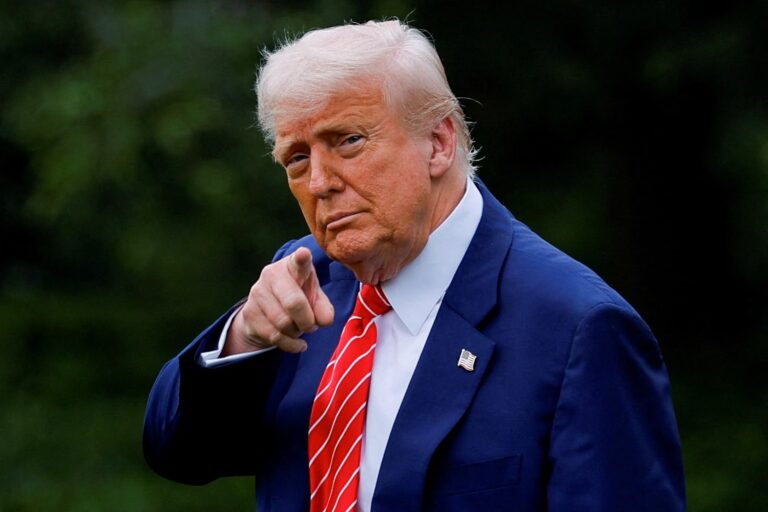
President Donald Trump has reiterated his threat to make India pay “massive” tariffs unless it stops buying Russian oil, repeating that India’s Prime Minister had assured him those purchases would stop.
“I spoke with Prime Minister Modi of India, and he said he’s not going to be doing the Russian oil thing,” President Trump told media on board Air Force 1, as quoted by Reuters. “But if they want to say that, then they’ll just continue to pay massive tariffs, and they don’t want to do that,” Trump also said, in response to a question about an official Indian government statement to the effect that there were no immediate plans to reduce Russian oil imports. Last week, Reuters reported that some Indian refiners were preparing to start reducing their intake of Russian crude following President Trump’s remarks. In a separate report, Reuters cited Washington officials as claiming Indian importers had already slashed their imports of Russian crude by 50% although sources from India denied this. Bloomberg also chimed in, citing Indian energy sector executives as saying Indian imports of Russian crude were about to dip in the short term. Earlier in the year, in an attempt to force India to stop buying Russian oil, President Trump slapped an additional 25% tariff on all Indian goods coming into the United States. At the time, the Modi government reacted sharply, noting there were energy security implications if Indian refiners stopped buying Russian oil. Since then, India has repeatedly stated that its import decisions are driven singularly by considerations of energy security and external pressure was unlikely to change that. Indeed, after President Trump’s original remarks about PM Modi promising to stop buying Russian oil, the Indian government issued a statement to the effect that New Delhi was not aware of such a conversation taking place at all. Source: Oilprice.comNigeria: NERC Invites Stakeholders To A Public Forum On Draft Net Billing Regulations In Abuja

The Nigerian Electricity Regulatory Commission (NERC) is set to hold a public consultation session on the Draft Net Billing Regulations in Abuja on Tuesday, October 21, 2025, at the Transcorp Hilton Hotel.
The consultation forms part of the Commission’s broader stakeholder engagement efforts to refine and finalise the proposed regulatory framework, which aims to promote greater participation of electricity consumers who generate their own power—known as prosumers—in the national electricity market.
According to the Commission, the draft regulations were developed pursuant to its rulemaking powers under Sections 46 and 48 of the Electricity Act (EA) 2023, and in accordance with its Business Rules.
The document was first published on NERC’s website on September 4, 2025, to solicit comments and submissions from stakeholders and the general public.
NERC expressed appreciation for the feedback received during the initial comment period and noted that the upcoming public consultation provides an additional opportunity for dialogue, transparency, and inclusion in shaping the final framework of the Net Billing Regulations.
The proposed regulations are expected to establish a structured approach for integrating small-scale renewable energy systems—particularly solar installations—into Nigeria’s electricity grid.
This will allow ‘prosumers’ to sell excess electricity generated from their systems to distribution companies, thereby supporting grid stability, clean energy adoption, and economic empowerment.
The Commission urged stakeholders across the electricity value chain—including distribution companies, renewable energy developers, consumer groups, and policymakers—to attend the Abuja session and share insights and recommendations on the draft regulations.
Source:https://energynewsafrica.com
Ghana: GOIL Announces Major Reductions In Petrol, Diesel Prices

Ghana’s indigenous oil marketing company, GOIL PLC, has announced a significant reduction in its pump prices for gasoline (petrol) and gasoil (diesel) for the second pricing window, effective today, October 20, 2025.
According to the latest pricing update, petrol (RON 91) is now selling at GH¢12.98 per litre, down from GH¢13.38 per litre, while diesel is selling at GH¢13.85 per litre, down from GH¢14.20 per litre recorded during the first pricing window of October.
Per the latest review, the price of gasoline has been reduced by 40 pesewas, while diesel has seen a 35 pesewas reduction.
The reductions are higher than those offered by its competitors
The reduction is attributed to a decline in the prices of refined petroleum products on the international market and the appreciation of the Ghanaian cedi.
However, the price for petrol (RON 95) has been maintained at GH₵15.25 per litre
Source: https://energynewsafrica.com