Billionaire industrialist and founder of Africa’s largest refinery, Aliko Dangote, has questioned the source of an estimated $5 million allegedly spent by the Chief Executive Officer (CEO) of the Nigerian Midstream and Downstream Petroleum Regulatory Authority (NMDPRA), Engr. Farouk Ahmed, on his children’s secondary education in Switzerland.
Dangote claimed that the amount was paid for the education of four of Ahmed’s children over a six-year period.
On Monday, Dangote alleged that Ahmed “paid $5 million” to Swiss secondary schools for his children’s education, describing the expenditure as “economic sabotage and corruption.”
In a newspaper advertisement detailing his allegations, Dangote listed the children as Faisal Farouk, Farouk Jr., Ashraf Farouk, and Farhana Farouk.
He named the schools they reportedly attended over the six-year period as Montreux School, Aiglon College, Institut Le Rosey, and La Garenne International School.
Dangote also presented estimated annual tuition fees, living expenses, air travel, and upkeep, calculated across four children and several years of study. He claimed that the annual cost of tuition, airfare, and upkeep per child amounted to about $200,000, bringing the total to approximately $800,000 per year for all four children.
According to him, total living expenses and air travel per child over six years amounted to about $1.2 million, or $4.8 million for the four children combined. Overall, Dangote estimated that the total cost of tuition and upkeep reached $5 million.
He further listed alleged tertiary education expenses for the children, stating that tuition, upkeep, airfare, and related costs average approximately $125,000 per year over a four-year period. This, he claimed, amounts to $500,000 per child and a total of $2 million for all four.
“Faisal just finished a 2025 Harvard MBA at $150,000, with an additional $60,000 for upkeep, tickets, and other incidentals. Total expenditure for Faisal’s MBA in 2025 was $210,000,” Dangote added.
Dangote said Nigerians deserve to know the source of funds allegedly paid by a public officer, especially at a time when, according to him, many parents in Ahmed’s home state of Sokoto struggle to afford school fees as low as ₦10,000 for their children and wards.
The Kenya Electricity Transmission Company Limited (KETRACO) on Monday signed a Sh40.4 billion (US$311 million) Public-Private Partnership (PPP) agreement with a consortium comprising Africa50 and Power Grid Corporation of India to expand and modernise Kenya’s power transmission network, local media outlets have reported.
The project will be fully financed, implemented, operated, and maintained by the private sector, with no public funds committed. It covers the design, construction, financing, operation, and maintenance of two high-voltage transmission lines and associated substations aimed at improving grid reliability, integrating renewable energy, and strengthening power supply across Western and Northern Kenya.
The consortium brings together Africa50, a pan-African infrastructure investment platform backed by 33 African governments, the African Development Bank Group, and other institutions, and Power Grid Corporation of India, one of the world’s largest transmission utilities, responsible for transmitting about 50 per cent of India’s electricity.
The project was initiated as a Privately Initiated Proposal (PIP) and approved under Section 61 of the PPP Act, 2021.
The PPP covers two major transmission lines. The 400kV Lessos–Loosuk line will pass through Nandi, Elgeyo Marakwet, Baringo, and Samburu counties, providing an alternative evacuation route for up to 300MW of geothermal power from the Baringo–Silali fields.
The 220kV Kibos–Kakamega–Musaga line will serve Kisumu, Vihiga, and Kakamega counties, extending the high-voltage grid into Western Kenya for the first time and reducing voltage instability and technical losses.
“This partnership demonstrates the strength of Kenya’s investment environment and the confidence of global partners in our energy agenda. We are accelerating access to reliable and affordable electricity while laying the foundation for industrialisation, job creation, and inclusive economic growth,” Energy Cabinet Secretary Opiyo Wandayi said during the signing ceremony.
National Treasury Cabinet Secretary John Mbadi said the project reflects strong fiscal discipline, noting that the full cost will be borne by the private partner. He added that cost recovery will be through an availability-based tariff payable only after independent certification of completed works, with the concession period capped at 30 years.
Under the agreement, Africa50 and Power Grid will establish a project company to manage the infrastructure over the concession period. KETRACO will make performance-based availability payments, while an independent expert jointly appointed by both parties will oversee project delivery.
At the end of the concession period, all assets will revert to KETRACO in good condition and free of encumbrances.
KETRACO Acting Managing Director, Eng. Kipkemoi Kibias, said the company plans to develop an additional 8,000 kilometres of transmission lines over the next 20 years, requiring about US$5 billion in investment.
However, limited public funding has necessitated increased private sector participation. “This PPP reflects our commitment to innovative financing solutions to bridge the transmission financing gap and deliver critical infrastructure,” he said.
The project aligns with Kenya’s Least Cost Power Development Plan and KETRACO’s Transmission Master Plan, and will support the integration of geothermal and wind power, including from the Baringo–Silali fields and the Lake Turkana Wind Power Project, helping to reduce reliance on costly thermal generation.
Africa50 Chief Executive Officer, Alain Ebobisse, said the deal represents an Africa-first Independent Power Transmission model that can be replicated across the continent, while Power Grid Corporation of India Chairman and Managing Director, Dr. R.K. Tyagi, said the partnership combines global technical expertise with innovative project structuring to unlock Africa’s energy potential.
The U.S. Treasury Department has rejected a bid by a group of companies led by investment bank Xtellus Partners to buy the foreign assets of Russia’s Lukoil, Reuters has reported, citing several unnamed sources.
The assets, valued at some $22 billion, were put on the market after the United States imposed sanctions on Lukoil and Rosneft.
The first bidder was Swiss commodity major Gunvor, which President Trump called a Russian “puppet”.
Since then, Chevron, Exxon, Hungarian MOL, Emirati International Holding Company, and private equity major Carlyle have come forward as potential suitors for Lukoil’s foreign business, among others.
According to the Reuters sources, the Russian energy major had liked the Xtellus bid, which involved a stipulation that the proceeds from the sale would be used to compensate U.S. investors in the Russian company that lost their money after the stock freeze following the Ukraine war.
Essentially, the deal was going to be a cashless sale back to Lukoil securities held by U.S. investors in exchange for the company’s global assets.
The deal, as proposed, however, had been seen as too difficult to execute, Reuters said, citing its sources.
The Treasury Department had reportedly rejected the deal because the buyers’ group had no permission to use sanctioned securities in a transaction.
The group is not giving up, however, planning to go higher in the Treasury Department and get the initial decision reversed.
Lukoil has faced escalating restrictions on its global operations since the onset of Western sanctions following Russia’s invasion of Ukraine.
The company holds a range of international upstream and downstream assets across Europe, the Middle East, and Africa, including refineries in Italy and the Netherlands, and upstream stakes in Iraq, Uzbekistan, and West Africa.
The company operates a network of more than 2,000 fuel stations across the world.
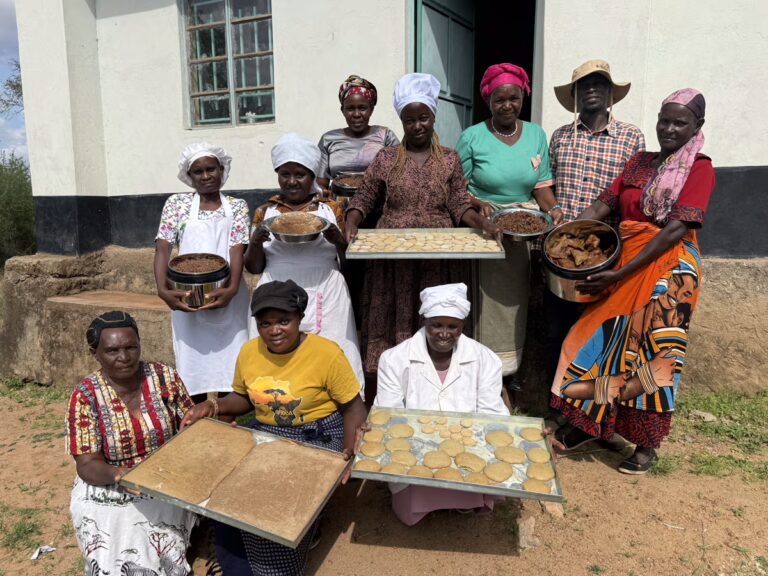
The International Crops Research Institute for the Semi-Arid Tropics (ICRISAT), through the World Bank–funded AICCRA project, has intensified efforts to strengthen climate resilience and improve livelihoods in Kenya’s drylands by delivering practical value-added training and distributing modern, energy-saving ovens to organized women’s groups.
This initiative aims to rapidly increase the adoption of drought-tolerant crops, create new income opportunities for rural women, and enhance household nutrition, particularly for women and children, through more diverse and fortified diets.
Dr Himanshu Pathak, Director General of ICRISAT, underscored the initiative’s importance, noting that as a key partner to government, communities, and development agencies, the Institute is focused on strengthening climate resilience in the drylands with solutions that are practical, scalable, and centered on the people who sustain local food systems.
“By equipping women with skills in value addition and access to energy-efficient technologies, we are supporting real economic opportunity while improving nutrition for households across Kenya’s drylands.
“Under AICCRA, this work is helping communities adapt today while building a more secure and resilient food future for tomorrow,” Dr Pathak said.
Value addition lies at the heart of this initiative. Through the training, women learned new techniques for processing traditional crops such as sorghum, millets, pigeon pea, and groundnuts, turning them into nutritious flours, snacks, baked foods, and market-ready products.
The introduction of energy-saving ovens will reduce fuel consumption, cut household costs, and make small agro-processing enterprises more viable.
With better equipment and improved skills, women’s groups are expected to earn higher incomes, build stronger community-based enterprises, and supply households with healthier food options.
This work comes at a time when drought-tolerant crops are gaining importance across Africa’s drylands.
Their rich protein, fibre, and micronutrient content make these crops essential in tackling hunger, malnutrition, and the growing threat of climate-driven crop failures.
By strengthening value addition, AICCRA is boosting food security and rapidly creating new agribusiness opportunities for women and youth.
Reflecting on the broader vision of ICRISAT’s work in Africa, Dr. Rebbie Harawa, Global Research Program Director (RFFS) & Director – Africa, said the organisation’s mission is to strengthen African food systems through science, innovation, and inclusive partnerships.
“With AICCRA, we are closing the gap between research and real-life impact, ensuring that climate-smart technologies reach those who need them most, especially women and youth” said Dr. Harawa.
Beyond value addition, AICCRA integrates several other components that collectively enhance resilience and productivity in dryland farming systems.
The project’s seed systems component ensures the availability of high-quality certified seeds of drought-tolerant crops through partnerships with seed companies, community seed banks, farmer producer groups, and national partners.
By improving the last-mile distribution of seeds, more farmers can access varieties that thrive in harsh climatic conditions.
The conservation agriculture and climate-smart practices component promotes sustainable land management techniques, including minimum tillage, crop rotation, mulching, and integrated soil fertility management.
These practices improve soil health, increase water use efficiency, and stabilize yields, even in seasons of unpredictable rainfall.
Through on-farm demonstrations and training, farmers learn how to transition from traditional methods to more resilient farming systems.
AICCRA also strengthens climate information services, ensuring that farmers receive timely advisories on weather, pests, diseases, and agronomic decisions.
By combining scientific data with local knowledge, the project helps communities make informed decisions that reduce risk and increase productivity.
The significance of these interventions is evident in the enthusiasm of the women beneficiaries, who now see new possibilities in entrepreneurship, food processing, and community nutrition.
Dr. Henry Ojulong, Project Lead at ICRISAT, said AICCRA’s success is measured by the smiles and confidence we see in farmers who adopt climate-smart innovations.
“By equipping women with energy-saving technologies and value addition skills, we are investing in the next generation of rural entrepreneurs and nutrition champions” said Dr Ojulong.
As climate challenges intensify, strengthening the role of women in food systems is critical. Through AICCRA, ICRISAT is helping communities apply proven scientific solutions that improve livelihoods and build a more resilient, food-secure future for Africa.
The Government of Ghana is expected to appoint a transaction advisor for private sector participation (PSP) in the operations of the country’s two major electricity distribution companies—the Electricity Company of Ghana (ECG) and the Northern Electricity Distribution Company (NEDCo)—before the Christmas festivities.
This was disclosed by the Chairman of the Technical Committee for Private Sector Participation, Ing. Jabesh Amissah-Arthur, during the official unveiling of the Guiding Framework for the PSP by the Ministry of Energy and Green Transition on Monday, December 15, 2025.
According to him, the government cannot delay the process beyond Christmas, as it has already suffered setbacks.
The Technical Steering Committee was inaugurated in May this year to, among other responsibilities, provide strategic direction for the PSP rollout; gather baseline data, including auditing the PSP deal; coordinate with ECG, NEDCo, regulatory bodies, and transaction advisors; and monitor progress across key milestones.
The Committee was also tasked with reviewing and advising on transaction documents, procurement frameworks, draft agreements, risk-mitigation strategies, regulatory compliance, and stakeholder communication.
Additionally, the Committee was expected to ensure that the procurement of technical, financial, and legal transaction advisors was completed by May 31, 2025, to facilitate the commencement of detailed implementation.
“By September 2025, we anticipated issuing the first phase of the competitive bidding documents for private concessionaires,” Minister for Energy and Green Transition, Dr. John Abdulai Jinapor, said at the time.
Providing details of the work undertaken that culminated in the drafting of the Guiding Framework for the PSP, Ing. Amissah-Arthur noted that the Committee engaged various stakeholders and visited several countries to study their private sector participation models.
He added that the Committee will roll out a nationwide stakeholder engagement exercise to solicit public input and fine-tune the Guiding Framework, ensuring that the most suitable option is adopted.
Ghana’s petroleum downstream regulator, the National Petroleum Authority (NPA), has engaged Chief Executive Officers (CEOs) of key public and private institutions within the petroleum downstream industry at a breakfast meeting held in Accra.
The meeting formed part of preparations toward the 2026 Ghana International Petroleum Conference (GhIPCon), scheduled for July 2026.
Welcoming participants, the Chief Executive of the NPA, Mr. Godwin Kudzo Tameklo, Esq., noted that the engagement provided an opportunity to officially launch the theme for GhIPCon 2026 and to gather industry perspectives ahead of the Conference, which will take place at the Accra International Conference Centre.
GhIPCon is Ghana’s flagship downstream petroleum conference, bringing together over 1,500 participants from more than 25 countries to exchange insights on policy and regulatory developments, operational strategies, innovation, and investment opportunities.
The biennial event is organized by the NPA in partnership with the Ghana Chamber of Bulk Oil Distributors (CBOD) and the Chamber of Oil Marketing Companies (COMAC), under the auspices of the Ministry of Energy and Green Transition.
The 2026 theme, “Building a Resilient Downstream: Policy, Innovation and Investment for Growth,” was officially unveiled by the NPA Chief Executive, who explained that it reflects the core pillars required to secure the future of the downstream industry. A Technical Committee was also inaugurated to steer the organization of GhIPCon 2026.
Delivering the keynote address, the Deputy Minister for Energy and Green Transition, Hon. Richard Gyan-Mensah (MP), commended the NPA and its partners for their leadership in strengthening the sector.
He emphasized the importance of stakeholder engagement in shaping responsive policies and reaffirmed the Ministry’s support for GhIPCon.
During an open forum, industry stakeholders expressed satisfaction with the progress GhIPCon has made over the years and encouraged the NPA to work closely with partners to implement key recommendations from previous Conferences.
They pledged their full support for GhIPCon 2026.
The Public Utility Workers’ Union (PUWU) of TUC-Ghana, in conjunction with the National Divisional Union, Senior Staff and Junior Staff Association of ECG, has congratulated the Managing Director of the Electricity Company of Ghana (ECG) Limited for being adjudged Power Sector CEO of the Year at the recently held Ghana Energy Awards 2025.
In a statement issued by its General Secretary, Timothy Nyame, PUWU emphasised that the recognition is not merely a personal accolade but a powerful testament to Ing. Kwame Kpekpena’s exceptional leadership skills, commitment to operational excellence, and strategic vision in navigating the challenging energy sector he inherited.
“Your dedication and efforts as the Acting Managing Director have significantly contributed to the ongoing stability and efficiency of the Electricity Company of Ghana (ECG). This award reflects positively on the hard work and resilience of management and workers alike who operate under your guidance,” PUWU said.
According to the union, it highly values the cordial and productive industrial relations prevailing under his tenure.
The union further acknowledged that strong leadership is essential to the success and reputation of the power distribution sector.
“We are proud of you and wish you continued success as you lead ECG through its transformation phase into a stronger and more resilient company,” the statement concluded.
PETROSOL Platinum Energy Limited, one of Ghana’s leading Oil Marketing Companies (OMCs), has been honoured with the Marketing Campaign of the Year award at the recently held 12th Oil & Gas Awards 2025.
The award recognises the company’s customer-centric approach and innovative marketing strategies implemented nationwide.
Through tailored campaigns executed across all 16 regions of the country, PETROSOL ensured that customers derive maximum value from initiatives designed to strengthen brand loyalty and enhance service delivery.
Speaking on the achievement, the company reaffirmed its commitment to delivering value where it matters most, noting that its marketing efforts continue to position PETROSOL as a proud indigenous brand dedicated to “energising dreams.”
According to the company, the recognition is a testament to its unwavering focus on innovation, excellence, and customer satisfaction.
PETROSOL Platinum Energy expressed gratitude to its customers, partners, and dedicated staff for their continued support, which made the achievement possible.
Amsons Group and Exergy Africa have signed a Memorandum of Understanding (MoU) to deliver 1,300 megawatts of power from solar and coal in Zambia.
Speaking at the signing ceremony in Lusaka, Energy Minister Makozo Chikote said the partnership will help stabilize Zambia’s power deficit, which has slowed economic growth.
He emphasized that the investment comes at a critical time as the country works to address its energy crisis.
Exergy Africa Shareholders Representative Monica Musonda described the project as a significant leap toward energy sustainability for Zambia and the wider region.
Amsons Group Managing Director Edha Nahdi said the MoU represents a new era in solar power while incorporating coal into Africa’s energy mix.
Africa Power Generation Director Ismail Hemed added that the agreement demonstrates how Africans can unite to make a difference through collaborative projects.
Fuel prices are set to record a significant drop ahead of the Christmas festivities, the Chamber of Oil Marketing Companies (COMAC) has said.
The Chairman of the chamber, Gabriel Kumi, noted that current market indicators point to clear reductions in petrol, diesel, and liquefied petroleum gas (LPG), with consumers expected to feel the relief from mid-December.
Speaking on Accra-based Joy News’ PM Express Business Edition, Mr. Kumi said, “Fortunately, Ghanaians are going to have a very good Christmas in terms of petroleum prices, because indications already show that the prices of finished petroleum products are coming down.”
He explained that diesel “has seen about a 10% decrease,” while petrol “has already recorded about a 6% decrease.” Mr. Kumi added that LPG “has also declined by about 1–1.5%.”
According to the COMAC Chairman, the key determining factor remains the stability of the cedi. He noted, “If the cedi is held in check, then we can be sure that from the 16th of December, prices of petroleum products will generally go down.”
Mr. Kumi said the anticipated reduction will “carry us through Christmas,” adding that the second pricing window, which covers the festive period, is likely to bring further reductions. He stressed that Ghana is therefore “likely to see further decreases in the prices of petroleum products.”
Nigeria has approved permits for 28 companies to purchase natural gas currently being flared at oil fields, marking a significant shift from environmental liability to economic opportunity in the country’s upstream petroleum sector.
The permits, issued under the Nigerian Gas Flare Commercialisation Programme (NGFCP), are expected to reduce carbon dioxide emissions by about six million tonnes annually, attract up to $2 billion in investments, and create more than 100,000 jobs.
In total, 42 companies applied to capture gas from 49 flare sites across the Niger Delta. Fourteen bidders failed to meet the requirements and were not approved.
“A total of 49 flare sites have been auctioned. Forty-two (42) bidders have been awarded the sites. Between 250 and 300 million standard cubic feet per day (mmscfd) of currently flared gas will be captured and commercialised, eliminating approximately six million tonnes of carbon dioxide (CO₂) annually,” Chief Executive Officer of the Nigerian Upstream Petroleum Regulatory Commission (NUPRC), Engr. Gbenga Komolafe, revealed on Friday, December 12, 2025.
Engr. Gbenga Komolafe, Chief Executive Officer of NUPRC
Nigeria’s gas losses are well documented. The country holds larger gas reserves than oil, yet continues to flare a significant share due to inadequate or unreliable gas gathering and transportation infrastructure.
In October, Nigeria produced approximately 221 billion standard cubic feet of gas, of which about 7.6% was flared, according to regulatory data.
.
President of the Nigeria-based Dangote Group, Aliko Dangote, has unveiled plans to introduce an innovative dividend structure for his $20 billion oil refinery when it lists on the Nigerian Exchange in 2026, allowing shareholders to receive returns in US dollars despite purchasing shares in naira.
He made the announcement on Thursday at the Eko Hotel in Lagos, stating that the company is working closely with the NGX and the Securities and Exchange Commission to finalise the framework ahead of the Initial Public Offering (IPO).
“You buy in naira, but you get dividends in dollars,” Dangote said, describing the model as a hedge against currency volatility for Nigerian investors.
He explained that the dollar-denominated payouts would be backed by $6.4 billion in projected revenue from petrochemical exports, particularly polypropylene and fertiliser.
The plan forms part of a broader growth strategy for the Dangote Group, which aims to increase revenues from the current $18 billion to $100 billion by 2030—potentially positioning the conglomerate among the world’s top 100 companies and targeting a market capitalisation of more than $200 billion.
Dangote also highlighted the company’s financial performance over the past five years, noting that revenues have risen from $3.3 billion to $18 billion, while earnings before interest, tax, depreciation and amortisation (EBITDA) have increased from $1.8 billion to $2.8 billion.
The industrialist confirmed that a 10% stake in the refinery and petrochemicals complex will be offered to the public through the NGX. He added that while international secondary listings are possible, the Nigerian market remains the priority.
“We want the Dangote Refinery to be the golden stock of the exchange,” he said.
The 650,000-barrel-per-day facility, which began producing diesel and aviation fuel in January and added petrol output in September, is considered central to Nigeria’s goal of achieving fuel self-sufficiency.
Dangote also announced plans to expand the refinery’s capacity to 1.4 million barrels per day within three years, more than doubling current output.
Malawi will, from February 2026, import 50 MW of power from neighboring Mozambique to ease the crippling load shedding that has battered households and businesses, Minister for Natural Resources, Energy and Mining, Hon. Dr. Jean Mathanga, has announced.
The minister revealed this during an inspection tour of the Phombeya Substation in Balaka, where she confirmed that the Mozambique–Malawi Interconnector Project (MOMA) is now in its final stages of completion.
According to her, the project is now firmly backed financially, following strong assurances from the Minister of Finance and the Reserve Bank of Malawi that the required monthly payments will be prioritized.
“This 50 MW will go a long for a long way in easing the burden of load shedding that Malawians are experiencing. I have also received firm guarantees that the US$5 million monthly obligation needed to access this power will be honored without disruption,” said Dr. Mathanga.
She emphasized that energy is the backbone of economic growth, and the government is treating the MOMA project as a national economic lifeline, not just an electricity deal.
The importation of the 50 MW is expected to stabilize Malawi’s power grid, support industries, revive struggling businesses, and restore productivity lost due to persistent blackouts.
ESCOM Acting Chief Executive Officer, Engineer Sinosi Maliano, confirmed that the 50 MW supply has already been secured under an existing Power Purchase Agreement (PPA) with Mozambique.
“This is an immediate and realistic gain. While discussions for higher imports have taken place, the current 50 MW is guaranteed and will make a tangible difference in reducing load shedding nationwide,” said Maliano.
The MOMA project connects the Matambo Substation in Mozambique to the Phombeya Substation in Malawi through 218 kilometers of high-voltage transmission lines, marking one of the most strategic power investments in Malawi’s history.
Once operational, the interconnector is expected to boost national energy security, strengthen investor confidence, and accelerate industrial growth, especially in manufacturing, tourism, and mining.
The project also signals renewed momentum in Malawi’s regional energy integration and long-term power stability strategy, bringing fresh hope to citizens who have endured years of unreliable electricity supply.
As February 2026 draws closer, all eyes are now on ESCOM, the Ministry of Energy, the Treasury, and the Reserve Bank to translate these assurances into uninterrupted power — and finally turn the page on Malawi’s long-standing load shedding crisis.
British company Sound Energy PLC has announced that the Tendrara gas project in Morocco’s Oriental region has reached a significant milestone, with first gas entering the field’s gas gathering system.
This marks the start of commissioning activities for the TE-5 Horst development, the project’s production concession, in preparation for long-term gas supply to the micro-LNG plant.
Sound Energy, which holds a 20% stake in the Tendrara production concession, said the final component of the gas gathering system was completed on November 28. The concession is operated by Mana Energy Ltd, which owns a 55% stake.
“After installation, gas was safely and successfully flowed from the TE-6 production well to commence the commissioning of the GGS,” the company said, referring to the gas gathering system.
The company noted that the micro-LNG plant, designed by Italfluid Geoenergy, will operate and maintain the facility and ensure LNG delivery to Moroccan distributor Afriquia Gaz under a 10-year gas sales agreement. The contract guarantees the purchase of 100 million cubic meters of gas per year at a price indexed to European and U.S. benchmarks.
Sound Energy thanked all project partners, including the National Office of Hydrocarbons and Mines (ONHYM) and key contractors, for their support.
Earlier this year, the company reaffirmed its growing interest in Morocco’s gas sector and suggested that potential undiscovered reserves in the east could exceed 20 trillion cubic feet.
Sound Energy CEO Majid Shafiq described the development as an important step toward supplying gas to Moroccan industrial consumers. “I look forward to the full commissioning of the micro-LNG facility and delivery of sales gas in the coming months,” he said, calling it an “exciting period” for the company.
Morocco has been partnering with international energy firms to diversify its supply sources and strengthen its energy sovereignty. Earlier this month, the Ministry of Energy launched major international tenders to develop the country’s first LNG infrastructure phase.







 According to the company, the recognition is a testament to its unwavering focus on innovation, excellence, and customer satisfaction.
PETROSOL Platinum Energy expressed gratitude to its customers, partners, and dedicated staff for their continued support, which made the achievement possible.
According to the company, the recognition is a testament to its unwavering focus on innovation, excellence, and customer satisfaction.
PETROSOL Platinum Energy expressed gratitude to its customers, partners, and dedicated staff for their continued support, which made the achievement possible.


