


Ghana: PETROSOL CEO Hails Deregulation Policy, Warns Against Unsustainable Fuel Price Competition

The Chief Executive Officer of PETROSOL Platinum Energy PLC, Michael Bozumbil, has praised Ghana’s petroleum downstream deregulation policy, describing it as the key reason for the country’s fuel supply security and the intense competition in the downstream petroleum sector.
Speaking at the recent Ghana Biennial International Summit and Exhibition (GH-BISE) 2026, organised by the Society of Petroleum Engineers (SPE) in Accra, Mr. Bozumbil said the first phase of the deregulation policy began in the late 1990s and focused on opening the downstream petroleum sector to indigenous private investment.
This led to the licensing of indigenous Oil Marketing Companies (OMCs) to operate in a market that had previously been dominated by foreign-owned OMCs.
According to him, the policy paved the way for the emergence of indigenous OMC brands and encouraged significant investment in retail fuel stations and storage infrastructure by local investors, thereby improving access to petroleum products and strengthening Ghana’s fuel supply security.
Read also: Global Gas Flaring Rises For Third Straight Year, Undermining Energy Security — World Bank Report
Mr. Bozumbil said the second phase of deregulation came in July 2015 with the liberalisation of prices for petroleum products, particularly petrol, diesel and Liquefied Petroleum Gas (LPG).
He explained that the move largely ended government subsidies on petroleum products and shifted the responsibility of providing affordable fuel from the government to OMCs and Bulk Distribution Companies (BDCs), with competition serving as the primary mechanism for keeping prices low.
He commended successive governments for maintaining the policy, saying consistency in its implementation has strengthened national fuel supply security by eliminating fuel queues, increasing competition and creating opportunities for private sector investment in infrastructure, while also helping to develop indigenous entrepreneurs in Ghana’s oil and gas industry.
Mr. Bozumbil, however, noted that although consumers continue to benefit from relatively low fuel prices due to intense competition among numerous OMCs, many of these companies are heavily indebted because they are forced to significantly reduce their profit margins—or, in some cases, sell at zero or even negative margins—to compete for market share.
He warned that this practice threatens the long-term sustainability of the industry.
He further alleged that some OMCs engage in illicit activities, including tax evasion and fuel adulteration, to sustain their low pricing strategies.
Mr. Bozumbil said these practices, which he indicated are largely associated with some indigenous OMCs, pose a serious threat to the sustainability of the downstream petroleum industry and Ghana’s fuel supply security if they are not addressed.
He commended the National Petroleum Authority (NPA) for its recent decision to enforce floor prices and reintroduce uniform pricing of petroleum products at individual OMC fuel stations.
However, he urged the regulator to take more decisive action against OMCs and BDCs found to be engaging in illicit activities in order to sanitise the industry and safeguard its long-term sustainability.
Mr. Bozumbil also urged the NPA to review the current licensing regime to encourage industry consolidation and ensure that new licences are issued only to companies with the requisite industry experience, proven business management practices and strong financial capacity.
He further challenged leaders of existing OMCs and BDCs to uphold best industry practices, make prudent commercial decisions, comply with regulatory and tax obligations, maintain sound corporate governance and embrace innovation to build sustainable businesses.
His remarks contributed to broader discussions on the growth and long-term sustainability of Ghana’s petroleum and energy industry, particularly the need to balance consumer protection with the financial sustainability of petroleum service providers.
Supporting Mr. Bozumbil’s position, Abass Ibrahim Tasunti, Director of Economic Regulation and Planning at the National Petroleum Authority (NPA), who also served as a panellist at the event, said the Authority remains committed to ensuring a fair pricing regime that benefits both consumers and Oil Marketing Companies (OMCs).
“The NPA remains committed to working closely with OMCs to ensure fair pricing that supports business sustainability while also delivering value to consumers,” he said.
The Ghana Biennial International Summit and Exhibition (GH-BISE 2026), organised by the Society of Petroleum Engineers (SPE) Ghana Section, brought together regulators, policymakers, investors and energy industry leaders to discuss sustainable energy development in Africa.
The summit served as a platform for discussions on energy investment, sustainability, innovation and the future of Africa’s petroleum and energy industry.
Malawi: ESCOM Signs Transmission Connection Deal With Press Energy Limited

The Electricity Supply Corporation of Malawi (ESCOM) Limited on Friday, 26 June 2026, signed a 50 MW Transmission Connection Agreement with Press Energy Limited (PEL), a subsidiary of Press Corporation Limited (PCL), Malawi’s leading conglomerate and a listed company.
The agreement marks a significant step towards increasing electricity generation and improving power supply in the country.
Under the agreement, Press Energy Limited will construct a transmission line to facilitate the evacuation and injection of electricity generated from its 50 MW solar power plant into ESCOM’s existing transmission network.
The Transmission Connection Agreement complements the Power Purchase Agreement (PPA) signed between ESCOM and Press Energy Limited in December 2024, which paved the way for the development of the 50 MW solar power plant at Nkhoma in Lilongwe District.
Speaking during the signing ceremony, ESCOM Chief Executive Officer, Eng. William Kaipa, described the agreement as a demonstration of the Corporation’s commitment to delivering a reliable and sustainable electricity supply for Malawi.
“In April, we made a promise to Malawians that within eight months we would improve power supply in the country and address the challenge of load shedding. Today’s agreement is another important milestone towards fulfilling that commitment,” Kaipa said.
Read Also: The Gambia: Barrow Pledges To End Power Outages Within Two Years
Eng. Kaipa added that the agreement aligns with ESCOM’s strategic direction of expanding electricity supply through partnerships with Independent Power Producers (IPPs).
“Together, we are not just connecting power to the national grid—we are connecting Malawians to opportunities, businesses to growth, and the nation to a more prosperous and sustainable future,” he said.
On his part, the Chief Executive Officer of Press Corporation Limited, Professor Ronald Mangani, thanked ESCOM management for expediting the signing process, noting that the partnership reflects the shared responsibility of both institutions to improve electricity supply and reliability in Malawi.
“Press Corporation is an indigenous Malawian company, and we believe it is our responsibility to contribute to improving the lives of Malawians and supporting national economic development. That is why we made the strategic decision to invest in the energy sector,” said Prof. Mangani.
He expressed confidence that the project would contribute significantly to increasing Malawi’s electricity generation capacity, enhancing energy security, and supporting the country’s broader socio-economic development.
Zambia: TAZAMA Pays Government $6.69 Million Dividend After Record 2025 Performance

TAZAMA Pipelines Limited, a joint venture between Zambia and Tanzania, on Thursday presented a dividend cheque worth K120.4 million (approximately $6.69 million) to the Government of Zambia following a strong financial performance for the year ended December 31, 2025.
The cheque was presented by TAZAMA Board Chairperson Professor Ephraim Munshifwa during a ceremony held at the Ministry of Finance and National Planning, where Acting Secretary to the Treasury Mwaka Mukubesa received it on behalf of the government.
Speaking during the presentation, Professor Munshifwa said the dividend represented more than a corporate obligation, describing it as a demonstration of how strategic state-owned enterprises can create value for shareholders while making meaningful contributions to national development.
He said the payment reflected TAZAMA’s strong financial performance, sound corporate governance, and unwavering commitment to supporting Zambia’s economic aspirations and safeguarding energy security.
Prof. Munshifwa disclosed that TAZAMA recorded a net profit of K722.3 million in 2025, up from K635.6 million in 2024.
The company also achieved the highest throughput in its history, reaching 1,006,995 metric tonnes, compared with 747,186 metric tonnes the previous year.
He attributed the strong performance to increased throughput volumes, enhanced operational efficiency, strategic investments in pipeline security, and improved operational uptime.
 Receiving the dividend on behalf of the government, Acting Secretary to the Treasury Mwaka Mukubesa commended TAZAMA for reaching what she described as a significant milestone, noting that the dividend would help strengthen public finances and enhance the government’s capacity to deliver on national development priorities.
She praised the board and management for their prudent stewardship and urged other state-owned enterprises to emulate TAZAMA’s strong governance and operational discipline.
Ms. Mukubesa also commended TAZAMA for the successful implementation of the Open Access Policy and the introduction of the Drag Reducing Agent (DRA), which has improved operational efficiency and enhanced fuel transfer along the Dar es Salaam–Ndola pipeline corridor.
She said the achievements demonstrated how innovation, sound management, and operational excellence can contribute to improved performance and sustainable national development.
Receiving the dividend on behalf of the government, Acting Secretary to the Treasury Mwaka Mukubesa commended TAZAMA for reaching what she described as a significant milestone, noting that the dividend would help strengthen public finances and enhance the government’s capacity to deliver on national development priorities.
She praised the board and management for their prudent stewardship and urged other state-owned enterprises to emulate TAZAMA’s strong governance and operational discipline.
Ms. Mukubesa also commended TAZAMA for the successful implementation of the Open Access Policy and the introduction of the Drag Reducing Agent (DRA), which has improved operational efficiency and enhanced fuel transfer along the Dar es Salaam–Ndola pipeline corridor.
She said the achievements demonstrated how innovation, sound management, and operational excellence can contribute to improved performance and sustainable national development.
Receiving the dividend on behalf of the government, Acting Secretary to the Treasury Mwaka Mukubesa commended TAZAMA for reaching what she described as a significant milestone, noting that the dividend would help strengthen public finances and enhance the government’s capacity to deliver on national development priorities.
She praised the board and management for their prudent stewardship and urged other state-owned enterprises to emulate TAZAMA’s strong governance and operational discipline.
Ms. Mukubesa also commended TAZAMA for the successful implementation of the Open Access Policy and the introduction of the Drag Reducing Agent (DRA), which has improved operational efficiency and enhanced fuel transfer along the Dar es Salaam–Ndola pipeline corridor.
She said the achievements demonstrated how innovation, sound management, and operational excellence can contribute to improved performance and sustainable national development. India: Adani Targets 10 GW Of Nuclear Power Capacity By 2035

Adani Group, the Indian conglomerate owned by billionaire Gautam Adani, could become India’s largest private developer of nuclear power capacity within the next decade, targeting 10 gigawatts (GW) by 2035 as India opens its civil nuclear power sector to private investment.
“Our entry into nuclear energy through Adani Atomic Energy is another confident step towards securing India’s long-term energy future,” Gautam Adani said at the Adani Group’s annual general meeting on Wednesday, according to a report by Oilprice.com.
“With land identified and a targeted capacity of 10 GW by 2035, we are positioning ourselves early to serve the growing national demand for clean, round-the-clock power,” the billionaire said.
A panel set up by India’s Ministry of Power stated in a report that achieving the country’s goal of increasing installed nuclear power capacity to 100 GW by 2047, from just 8.8 GW currently, would require cumulative capital investment of up to 19.28 trillion Indian rupees ($204 billion at current exchange rates).
The Indian government has said its Nuclear Energy Mission aims to achieve 100 GW of capacity by 2047 “through the deployment of existing and emerging advanced nuclear technologies, both indigenous and in partnership with foreign collaborators.”
Adani Group is reportedly in talks with the government of the northern Indian state of Uttar Pradesh on a public-private partnership to build small modular reactors (SMRs) as the country opens its nuclear energy sector to private investment.
According to Bloomberg, Adani is discussing plans with Uttar Pradesh officials to build eight SMRs with a capacity of 200 megawatts (MW) each at sites yet to be identified in the state. Anonymous sources familiar with the matter disclosed the information at the end of 2025.
If the group achieves its target of 10 GW of nuclear power capacity by 2035, it would become India’s third-largest nuclear power operator, behind state-owned Nuclear Power Corporation of India Limited (NPCIL) and state-run power giant NTPC Limited. NPCIL currently operates all of India’s 8.8 GW of nuclear power capacity.
Indian conglomerate Reliance Industries, controlled by billionaire Mukesh Ambani, is also reportedly considering investments in India’s nuclear power sector following its opening to private capital.
Global Gas Flaring Rises For Third Straight Year, Undermining Energy Security — World Bank Report

Global gas flaring rose for the third consecutive year, surging to 167 billion cubic meters (bcm) in 2025 and wasting an estimated $54 billion worth of gas, according to the 2026 Global Flaring Tracker, released by the World Bank Group on Tuesday, June 23.
The report finds that the 167 bcm flared globally in 2025 exceeds the volume of liquefied natural gas (LNG) that transited the Persian Gulf that year, a stark measure of the energy value being wasted.
The volume also matches Africa’s entire annual gas consumption, on a continent where energy poverty remains a significant barrier to economic development.
In effect, oil producers are burning a valuable resource that could support energy access, reduce reliance on costly imports, generate much-needed revenue in developing countries, and cut greenhouse gas emissions.
With acute energy challenges persisting across much of the world, the scale of this missed opportunity demands urgent attention from policymakers, operators, and investors.
Published annually by the World Bank’s Global Flaring and Methane Reduction (GFMR) Partnership, in collaboration with the Payne Institute at the Colorado School of Mines, the report provides a comprehensive and independent assessment of global gas flaring volumes, intensity, and trends.
Nine countries—Russia, Iran, Iraq, Venezuela, Mexico, Libya, Algeria, Nigeria, and the United States—account for more than four-fifths of global flaring while producing nearly half of the world’s oil.
“At a time when many countries are struggling to increase affordable and reliable energy, the economic development costs of continued flaring are simply too high,” said Demetrios Papathanasiou, World Bank Group Global Director for Energy.
“The gas currently being flared could be captured to power industries and businesses, create jobs, and strengthen energy security.”
Many countries import costly gas while simultaneously flaring vast amounts of it at their oilfields. Eliminating routine flaring globally would require an estimated $70–100 billion—less than twice the annual value of the gas currently being wasted.
Countries facing high import costs and domestic energy shortfalls stand to benefit from increased energy access, new gas revenues, and lower energy bills. Yet despite the tools needed to end routine flaring being well established, the practice persists. What holds back progress is not technical capability but structural challenges, including inadequate regulation, insufficient capital, limited market infrastructure, and a failure by operators and governments to prioritize flaring reduction.
Where effective policies and regulations, targeted investment, and strong leadership come together, flaring declines.
Governments and operators that act decisively achieve results. For instance, Kazakhstan has reduced flaring by 87% since 2012, including a further 16% reduction in 2025 alone.
“The technologies, policies, regulations, and financing mechanisms needed to capture and utilize associated gas are available. What is missing, in too many places, is the leadership, prioritization, and governance needed to put these solutions into practice and create access to markets and infrastructure. The cost of inaction will be measured in billions of dollars in lost revenue and continued energy insecurity for millions of people,” said Zubin Bamji, World Bank Manager for the Global Flaring and Methane Reduction (GFMR) Partnership.
Ghana: Gov’t Raises Gh¢8.81 Billion From Energy Levy In 2025 – Finance Minister

Ghana’s Minister for Finance, Dr. Cassiel Ato Baah Forson, on Tuesday revealed that the Energy Sector Shortfall and Debt Repayment Levy generated a total of GH¢8.81 billion in 2025 for the Energy Sector Support Account.
According to him, the government allocated additional resources amounting to GH¢1.26 billion, bringing the total funds available in the account to GH¢10.07 billion.
Dr. Forson made this known in an annual report on the energy levy presented to Parliament.
Of this amount, GH¢9.82 billion was utilised in 2025, with GH¢6.32 billion used to settle energy sector shortfalls and GH¢3.52 billion allocated toward the repayment of legacy debt.
Read also: Global Gas Flaring Rises For Third Straight Year, Undermining Energy Security — World Bank Report
The minister said proceeds from the levy were insufficient to fully meet the obligations for the 2025 fiscal year, resulting in an additional GH¢12.85 billion being paid by the Controller and Accountant-General’s Department from the Treasury Main Account.
In total, GH¢22.67 billion was expended from both the Energy Sector Support Account and the Treasury Main Account to address energy sector shortfalls and repay legacy debt.
The government further revealed that the balance in the Energy Sector Support Account as of December 31, 2025, stood at GH¢252 million.
“Lodgements for the period under review amounted to GH¢8.81 billion, exceeding collections by GH¢158.25 million (1.8%). An amount of GH¢1.26 billion was also brought forward into 2025 as balances on the various accounts making up the Energy Sector Support Account, bringing the total funds available to GH¢10.07 billion.
“Total utilisation from the Energy Sector Support Account in 2025 amounted to GH¢9.82 billion, comprising payments for energy sector shortfalls and the repayment of legacy debt in line with the provisions of Act 1135, leaving a balance of GH¢252.23 million,” Citinewsroom quoted from the annual report on the energy levy.
The energy levy, introduced to raise additional funds for fuel purchases for thermal power plants and to settle outstanding sector debts, has faced calls for greater transparency from stakeholders.
However, the government has defended its use of the proceeds, emphasising that the levy has supported efforts to ensure a more reliable power supply across the country.
South Africa: Sasol Expands Green Hydrogen Strategy Beyond Boegoebaai To Province-Wide Approach
Sasol has completed a pre-feasibility study on the Boegoebaai green hydrogen and ammonia export opportunity, confirming its strong technical and economic viability.
While Boegoebaai remains an important asset within Sasol’s portfolio, the company said it is refining its green hydrogen strategy in the Northern Cape to adopt a broader, province-wide development approach.
Instead of focusing on a single flagship project, Sasol is now pursuing a coordinated green hydrogen ecosystem that spans multiple sites across the province.
The shift reflects the scale of the opportunity and the need for long-term enabling conditions, including land availability, grid capacity, infrastructure development, and phased market growth.
Within this framework, Boegoebaai is expected to serve as a potential anchor project in a wider Northern Cape green hydrogen corridor, supported by a planned deep-water port and Special Economic Zone.
However, Sasol’s focus now extends beyond one location to a portfolio of renewable energy developments that together could support an integrated hydrogen economy.
The strategy aligns with the Northern Cape’s ambition to become a globally competitive green hydrogen export hub, leveraging its abundant solar and wind resources, available land, and infrastructure potential.
Sasol said it will continue working with government and other stakeholders to support the development of key enabling infrastructure, including transmission networks, port facilities, and logistics systems.
The company aims to help build a coordinated industrial platform capable of attracting investment and accelerating large-scale deployment.
A key driver of the strategy is the expectation that competitive green hydrogen production in the 2030s will depend on rapid expansion of large-scale renewable energy capacity in the 2020s.
Sasol therefore sees accelerated rollout of solar and wind projects as essential to supporting future hydrogen production, strengthening industrial demand, and ensuring long-term cost competitiveness for low-carbon fuel production in the region.
The company added that successful large-scale hydrogen development will require a multi-partner, multi-project approach to reduce early-stage risk, align infrastructure build-out with demand, and support both export and domestic market development. Sasol said its role is evolving toward that of a catalyst and integrator within a broader public and private sector ecosystem.
Angola: Azule Energy Approves Major Offshore Oil Development

Azule Energy has taken a final investment decision (FID) on the Greater PAJ project offshore Angola, advancing what the company describes as the country’s first integrated cross-block development.
The deepwater project spans Blocks 31 and 31/21 and combines five offshore discoveries into a single development.
Greater PAJ will develop the Palas, Astraea, and Juno fields in Block 31, as well as the Urano and Dione fields in Block 31/21.
Operated by Azule Energy, the Angola-focused joint venture between Eni and BP, the project is expected to deliver first oil in the first half of 2029, less than three years after final approval.
The development plan includes 17 wells tied back to a new floating production, storage, and offloading (FPSO) vessel with a nameplate production capacity of 95,000 barrels of oil per day (bpd).
The FPSO will also be capable of exporting up to 70 million standard cubic feet per day (MMscfd) of natural gas.
Associated gas produced by the development will be transported to the Angola LNG facility via a new gas export line connected to the existing Block 31 gas export network.
According to Azule, the project represents a new approach to resource development in Angola by integrating reservoirs across adjacent offshore concessions, allowing operators to optimize infrastructure and improve development efficiency.
The project supports Angola’s broader efforts to sustain offshore oil production while maximizing recovery from existing deepwater assets and infrastructure.
In addition to operator Azule Energy, project partners include Sonangol E&P and Equinor.
Azule Energy is Angola’s largest independent oil and gas producer and was formed in 2022 through the combination of Eni and BP’s Angolan upstream businesses.
The Gambia: Barrow Pledges To End Power Outages Within Two Years

The Gambia’s President, H.E. Adama Barrow, has stated that the intermittent power supply affecting the country will end within the next two years, assuring citizens that ongoing investments in the energy sector will deliver a more reliable electricity supply nationwide.
The Greater Banjul Area and the West Coast Region are currently experiencing power outages due to what officials of the country’s electricity provider, NAWEC, describe as a reduction in power imports from the regional power grid.
President Barrow, who is seeking re-election in the general election later this year, has faced criticism from opposition parties over the persistent power supply challenges.
Speaking at a National People’s Party (NPP) rally in Brikama over the weekend, Barrow addressed growing public concerns over recent blackouts and water shortages, which have drawn criticism from opposition figures and residents alike.
He defended his government’s record, arguing that no administration since independence has invested more in improving electricity generation and distribution.
Zambia: Man Jailed Three Months For Trespassing At ZESCO Substation
“I can confidently say that since The Gambia gained independence, no government has done as much to improve electricity supply as this government,” he told supporters.
He attributed the recent nationwide outages to technical problems rather than systemic failures, stressing that such disruptions can occur even in advanced countries.
“The recent electricity problems were caused by technical issues, which can happen anywhere,” he said.
Barrow, however, maintained that the challenges are temporary and promised that Gambians would soon begin to see the benefits of ongoing investments in the energy sector.
“I want to assure the nation that within the next two years, electricity outages will become a thing of the past,” he declared.
He said his administration remains committed to expanding infrastructure, including electricity, roads, and water systems, as part of its broader development agenda.
His remarks come at a time when electricity supply has emerged as a major political issue ahead of the presidential election, with opposition parties and civil society groups demanding lasting solutions to recurring power cuts.
Barrow urged Gambians to support the continuation of the NPP government, arguing that sustained progress in electricity, water, and infrastructure development depends on the implementation of his administration’s long-term plans.
Thirteen Killed, 66 Injured Following Explosion At Qatar’s LNG Facility
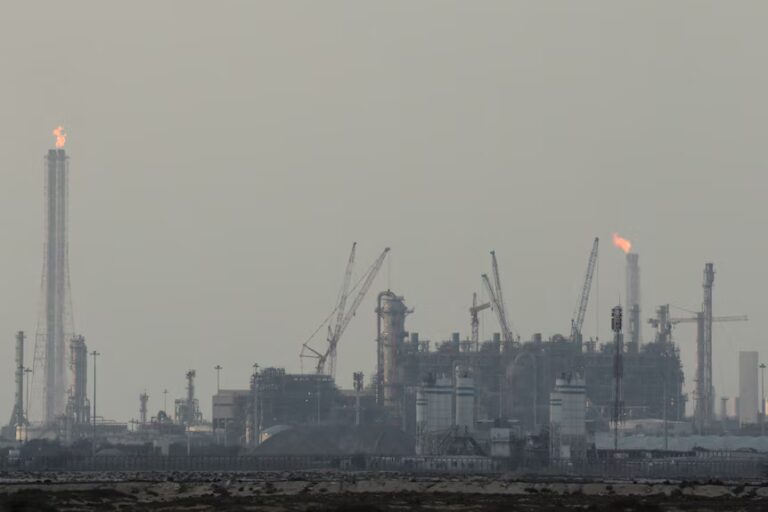
At least 13 people were killed and 66 others injured after an explosion at Qatar’s main liquefied natural gas (LNG) processing facility in Ras Laffan Industrial City, Energy Affairs Minister H.E. Saad bin Sherida Al-Kaabi confirmed on Monday.
The deceased were Indian and Pakistani nationals, while those injured include citizens of Qatar, India, Pakistan, Bangladesh, Kenya, Ghana, Tanzania, Nigeria, and Nepal.
The injured are currently receiving medical treatment, the minister said.
The facility was engulfed by fire on Sunday evening, June 21, 2026, triggering an explosion.
Speaking on Monday, Minister Al-Kaabi said the blast at the Ras Laffan LNG complex was caused by a “technical malfunction” and ruled out any “hostile” action.
He added that Qatar’s LNG exports would not be affected.
Like its Gulf neighbours, Qatar has experienced Iranian missile and drone attacks during the United States and Israel’s war with Iran.
The explosion occurred as workers were restarting operations at the giant gas complex after an Iranian attack in March had forced a suspension of activities.
“This was an accident and not sabotage or hostile in nature. Plant production had been intentionally and completely halted since December 2025 due to urgent maintenance requirements. Operations resumed only two days ago,” Al-Kaabi said.
He stated that the fatalities were all Indian and Pakistani nationals. Officials have not provided details on the conditions of the injured.
The Ministry of Interior said there was no gas leakage that would pose a threat to public safety.
The plant’s operator, QatarEnergy, did not disclose the exact location of the explosion or the extent of the damage. Al-Kaabi, who is also Chief Executive Officer of the state-owned company, said an investigation had been launched.
“This will not affect our exports to the world in any way,” he insisted.
QatarEnergy said emergency response teams were immediately deployed after the explosion at the Barzan gas facility and successfully brought the fire under control.
Ras Laffan Industrial City, located about 80 kilometres (50 miles) north of Doha, is home to the world’s largest LNG export complex, producing approximately one-fifth of the global LNG supply.
America’s Nuclear Energy Race Accelerates At Texas A&M-RELLIS

America’s race to build the next generation of nuclear energy is accelerating at Texas A&M-RELLIS, as the Texas A&M University System recently signed agreements with Terrestrial Energy Inc. to advance the development of its planned small modular reactor.
The ground lease and research agreements grant Terrestrial Energy site control over about 77 acres at Texas A&M-RELLIS and support site characterization, environmental reviews, testing, and research tied to its Integral Molten Salt Reactor (IMSR) technology.
The work follows a 2025 memorandum of understanding between the A&M System and Terrestrial Energy after the company joined the RELLIS Energy Proving Ground initiative.
“President Trump has made clear that America needs to move faster to develop the next generation of nuclear energy,” said Board Chairman Robert L. Albritton.
“Texas is ready to help lead that work. At the RELLIS campus, the A&M System has the land, research capacity, and workforce mission to help move important energy technologies into the commercial world. This work can strengthen our state, our economy, and our national security.”
The A&M System created the RELLIS Energy Proving Ground to give advanced energy companies access to land for planning demonstrations and commercial operations, research expertise, testing capacity, and workforce partnerships within one of the nation’s largest public university systems.
At A&M-RELLIS, companies can pursue project siting, licensing, testing, and development work needed to move advanced nuclear energy technologies into nationwide commercial use.
The U.S. Department of Energy also selected Terrestrial Energy for its Reactor Pilot Program, a federal effort announced in 2025 following President Trump’s Executive Order 14301 to accelerate the testing of advanced reactor designs outside the national laboratories.
Texas and the nation face growing electricity demand driven by population growth, advanced manufacturing, data centres, artificial intelligence, and other energy-intensive industries.
“The Texas A&M System was built to solve problems that matter to Texas and the nation,” said Chancellor Glenn Hegar.
“Reliable power is one of those problems. At A&M-RELLIS, we are bringing industry, researchers, and public partners together to work on practical energy solutions that can support growth, strengthen the grid, and prepare students for high-demand careers.”
The work also strengthens Bryan’s role as a hub for advanced energy development.
“Energy is the catalyst for everything that drives our state and nation forward,” said Bryan Mayor Bobby Gutierrez. “These critical challenges are courageously studied and tested every day at the RELLIS campus, making our community a world-class destination for advancing new technology. The City of Bryan is honoured to help solve these challenges by supporting investments from companies like Terrestrial Energy.”
Terrestrial Energy is developing a small modular reactor using its Generation IV IMSR technology, which the company says can provide reliable heat and electricity for industrial and power-generation uses.
The agreements at A&M-RELLIS support completion of site characterization work, project development, and testing activities tied to the company’s commercial plans. They also support research and development activities connected to Terrestrial Energy’s Department of Energy partnership projects, known as TETRA and TEFLA.
Terrestrial Energy has opened an engineering and project management office on the RELLIS campus to help coordinate its work with the A&M System and other partners.
The agreements follow another recent milestone at the RELLIS campus. In May, Last Energy announced that the U.S. Department of Energy approved the Preliminary Documented Safety Analysis for its PWR-5 pilot reactor project at the campus.
The projects are part of the A&M System’s broader effort to make A&M-RELLIS a national hub for advanced energy research, testing, and workforce development.
Texas A&M-RELLIS, located in Bryan, was designed as an applied research and technology campus where universities, state agencies, and private-sector partners can collaborate on complex challenges in energy, national security, transportation, advanced manufacturing, and workforce development.
Zambia: Man Jailed Three Months For Trespassing At ZESCO Substation

A magistrate court in Chingola has sentenced a 30-year-old man, Samuel Chungu, from the Mikiloni area of Zambia, to three months’ imprisonment with hard labour after he was found guilty of trespassing at a ZESCO substation.
He pleaded guilty to criminal trespass, contrary to Section 306(a) of the Penal Code, Chapter 87 of the Laws of Zambia, and was consequently convicted on his own plea.
According to a statement issued by ZESCO Limited, on March 10, 2026, ZESCO security personnel and Zambia Police officers were conducting a night patrol in the Mwaiseni Industrial Area when they discovered a freshly dug trench suspected to be linked to an attempted theft of underground armoured cables.
During an inspection of Substation No. 28, officers found Chungu hiding at the site.
The suspect attempted to flee but was apprehended. A shovel, hacksaw, and pick were recovered from the area where he had been hiding.
Chungu appeared before the Chingola Magistrate Court on June 10, 2026, and pleaded guilty. On June 17, 2026, he was convicted and sentenced to three months’ imprisonment with hard labour, effective from the date of conviction.
Meanwhile, ZESCO recorded 37 security-related cases involving vandalism, theft, fraud, corruption, fraudulent appropriation of power, and abuse of corporation motor vehicles during the week of June 12 to June 19, 2026.
Read also:South Africa: Sasol Expands Green Hydrogen Strategy Beyond Boegoebaai To Province-Wide Approach
The reported cases resulted in estimated property losses valued at K1,647,905, while recoveries amounting to K1,259,900 were made, leaving a net loss of K388,004. This compares with the week of June 5 to June 12, which recorded 20 cases and a net loss of K344,029.
ZESCO commended members of the public for providing timely information that continues to support the recovery of stolen property and the protection of electricity infrastructure.
The utility company urged the public to remain vigilant and report any suspicious activities around electricity infrastructure to ZESCO, the Zambia Police Service, or other local security authorities.
Saudis Turn To Russian Fuel Oil As Iran War Saps Fossil Power Supplies

Saudi Arabia continues to snap up high volumes of Russia’s fuel oil as the Hormuz crisis has forced shut oil and gas wells and reduced domestic supply for power generation amid rising temperatures.
Russia’s vessel shipments of fuel oil and vacuum gasoil (VGO) slumped in May by some 6% from April, due to the continued Ukrainian strikes on Russian energy infrastructure, Reuters reported on Monday, quoting shipment data on LSEG and traders.
Despite the overall decline in Russian fuel oil exports, to about 3.2 million metric tons last month, Saudi Arabia remained the single biggest buyer, accounting for more than a third of all Russian fuel oil shipments.
These stood at 1.23 million tons in May, down by 17% compared to April, but at still relatively high levels compared to before the war.
Saudi Arabia, the world’s biggest crude oil exporter, became the leading buyer of Russian’s fuel oil two years ago, after the EU full embargo on Russian oil products came into effect in 2023.
Since then, Saudi Arabia has consistently bought high levels of fuel oil from Russia.
But the Saudi imports took off in March 2026, rising by 18% from February, after the Iran war and the Hormuz crisis forced massive shut-ins of oil and gas production in Saudi Arabia and all other producers in the Middle East.
The Saudis, which use a lot of direct crude burn for power generation, turned to Russian fuel oil, which was de-sanctioned by the U.S. as the conflict raged.
By importing fuel oil from Russia, Saudi Arabia left more of its crude available for exports, via the Yanbu port on the Red Sea that bypasses the Strait of Hormuz.
Within weeks of the closure of the Strait of Hormuz, Saudi Arabia had managed to hike its East-West pipeline flows from about 2 million barrels per day (bpd) to 7 million bpd, to keep its exports via the Red Sea, despite the closed Strait of Hormuz.
Ghana: PURC Increases Electricity Tariffs By 3.49%, Water Tariffs By 0.85%, Effective July 1

The Public Utilities Regulatory Commission (PURC) has announced a 3.49 per cent increase in electricity tariffs across the board and a 0.85 per cent increase in water tariffs for the third quarter, effective July 1, 2026.
According to the Commission, the tariff review is in line with its mandate to adjust tariffs quarterly to reflect developments within the review period.
The quarterly reviews track and incorporate movements in key operational factors that are beyond the control of Utility Service Providers (USPs) but are critical to service delivery.
These factors include the exchange rate between the Ghana Cedi (GHS) and the United States dollar (USD), the domestic inflation rate, the electricity generation mix, and the cost of fuel—mainly natural gas—used to power thermal plants.
In a statement on Monday signed by Dr. Shafic Suleman, Executive Secretary of the PURC, the Commission explained that the quarterly adjustments are intended to maintain the real value of tariffs and ensure that utility providers remain financially viable while continuing to deliver reliable services to consumers.
The Commission applied a weighted average exchange rate of GHS11.2228 to one US dollar for the third quarter of 2026, representing a 0.2 per cent depreciation of the Cedi compared to the previous quarter.
It also used a three-month average inflation rate of 3.43 per cent, down from 4.17 per cent in the second quarter, while the weighted average cost of natural gas declined by 1.58 per cent to USD7.9708 per MMBtu.
The hydro-thermal generation mix remained unchanged at 20.9 per cent hydro and 79.1 per cent thermal generation.
Zambia: ZESCO Signs 25-Year Deal To Offtake Power From 400MW Sinazongwe Thermal PlantBased on the combined impact of these indicators, PURC approved a 3.49 per cent increase in electricity tariffs for residential, non-residential, and special load tariff customers.
For residential consumers, the lifeline tariff for users consuming up to 30 kilowatt-hours per month increased from 86.9Gp per kilowatt-hour to 89.93Gp per kilowatt-hour.
Water tariffs were also adjusted upward by 0.85 per cent across all customer categories, including residential, commercial, industrial, public institutions, and bulk consumers.
Under the revised rates, the residential lifeline tariff for water consumption of up to five cubic metres rose from 593.49Gp per cubic metre to 598.54Gp per cubic metre.
PURC said it remains committed to monitoring the performance of utility service providers and ensuring compliance with regulatory standards to guarantee value for money and improved service delivery.
The Commission expressed appreciation to stakeholders for their continued support in implementing quarterly tariff reviews and indicated that the decision will be published in the Gazette and on its website in due course.