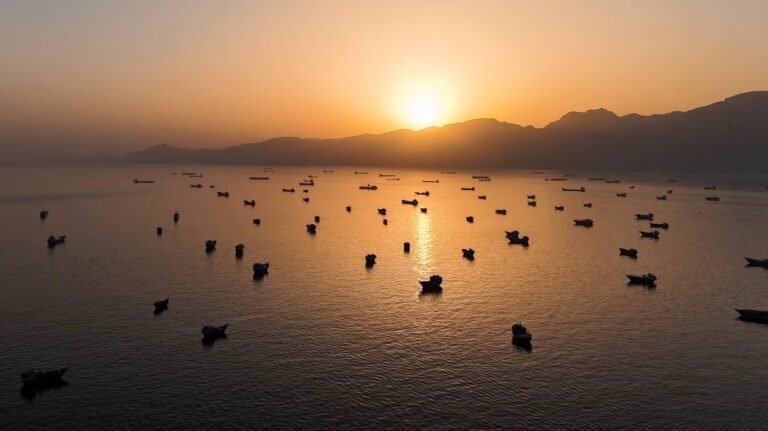
Egypt: Eni, Petroleum Minister Hold Talks On Oil And Gas Exploration Amid Rising Demand

Egypt’s Minister of Petroleum and Mineral Resources, Karim Badawi, met with Diego Portoghese, Eni’s Head of the North Africa and Levant Region, to review the company’s exploration and production activities in Egypt and explore avenues for strengthening bilateral cooperation, according to a statement from the ministry. During the meeting, Mr. Badawi commended the progress observed during his recent visit to the Meleiha fields in the Western Desert, where Eni is a key partner in the exploration, development, and production of hydrocarbons within the concession. He also praised ongoing intensive operations at the Abu Madi field in the Nile Delta, where Eni is a partner, noting tangible advances in the company’s exploration and production activities. Mr. Badawi stressed the importance of overcoming challenges and ensuring continuous coordination. Meanwhile, Mr. Portoghese highlighted the steady progress of exploration and drilling operations, noting that activities will be further intensified in the coming period. He emphasised that these efforts will be supported by advanced technical capabilities and skilled personnel, aimed at meeting rising domestic demand, particularly during the summer months. Eni also leads production from major assets such as the Zohr field offshore, as well as Nooros and Baltim West in the Mediterranean, alongside operations at the Damietta LNG plant. These initiatives contribute around 40% of Egypt’s natural gas output and support regional energy exports.  

Ghana: Eni, OCTP Partners Vitol & GNPC Sign MoU With Ghana Health Service To Expand Healthcare Access In Western Region

Eni Ghana, a subsidiary of an Italian oil and gas company, in collaboration with its OCTP partners — Vitol Upstream Ghana Ltd (Vitol) and the Ghana National Petroleum Corporation (GNPC) — has signed a Memorandum of Understanding (MoU) with the Ghana Health Service (GHS) to strengthen primary healthcare delivery and emergency response systems in the Western Region. The initiative aims to improve access to quality healthcare in remote communities, with a strong focus on women and children. It is expected to benefit about 180,000 people, with the potential to reach up to 380,000 residents across the region. Over the four-year period from 2026 to 2029, the initiative will focus on three key priority areas. These include improving access to primary healthcare through the upgrading of facilities, the provision of reliable electricity and safe water, and the enhancement of maternal, newborn and child health services. It will also support the capacity building of healthcare workers in critical areas such as Emergency Obstetric and Newborn Care (EmONC), clinical governance, safe surgery, and vaccine cold-chain management. The programme will further engage local communities through education initiatives aimed at promoting better practices in water, sanitation and hygiene (WASH), waste management, vector control, and nutrition. It will also place a strong emphasis on sustainability through community ownership, with strengthened community-based committees playing a crucial role in ensuring local participation and long-term impact. Eni Ghana’s longstanding commitment to strengthening community health is reflected in a series of initiatives spanning more than a decade, contributing to Ghana’s progress toward Universal Health Coverage. Eni has been present in Ghana since 2009, with offshore hydrocarbon exploration and production activities, and currently has an equity production of about 40,000 barrels of oil equivalent per day. The company is the operator of the OCTP project, holding a 44.4% share, in partnership with Vitol (35.6%) and the Ghana National Petroleum Corporation (20%). The joint venture’s portfolio also includes projects in the areas of training, economic diversification, access to water and sanitation, and access to energy.  

Trump Extends Iran Ceasefire While Maintaining Naval Blockade

As the clock ticked toward the end of a two-week cease-fire, US President Donald Trump announced he was unilaterally extending the truce to give a “fractured” Iranian leadership a chance to make a “unified” peace proposal, but said a blockade of Iranian ports that has angered Tehran will remain in place. “Based on the fact that the Government of Iran is seriously fractured, not unexpectedly so and, upon the request of Field Marshal Asim Munir, and Prime Minister Shehbaz Sharif, of Pakistan, we have been asked to hold our Attack on the Country of Iran until such time as their leaders and representatives can come up with a unified proposal,” Trump wrote on Truth Social on April 21. Trump added that he will “extend the Ceasefire until such time as their proposal is submitted, and discussions are concluded, one way or the other.” He gave no specific timeframe. It wasn’t immediately clear if Tehran would extend the cease-fire on its side. An adviser to Iran’s powerful parliament speaker called the cease-fire extension a “ploy to buy time for a surprise attack” and asserted that Tehran must take the initiative, without being specific. The spokesperson also said the current US blockade of Iranian ports is “no ‌different from bombardment and must be met with a military response.” Trump earlier said he did not want to extend the temporary cease-fire with Iran, which was due to expire on April 22, as Washington waited to see if talks with Tehran would proceed. The exact time of the expiration of the cease-fire was unclear. A White House official later confirmed that Vice President JD Vance’s trip to Islamabad for a second round of Pakistani-mediated negotiations would not take place on April 21 as planned. The official didn’t state whether a new date was being considered. Trump added in his post that the US will continue its blockade of Iranian ports that has so far led to at least two ships being seized by the US Navy. Tehran has said it will not resume negotiations as long as the blockade is in effect, while the US has said it will not end the action until a peace deal is signed. Pakistan, the mediator in the peace process, urged both the ‌US and Iran to extend their truce, but multiple reports said Tehran was weighing its options and waiting to see if its conditions, including an end to the blockade and a recognition of its right to enrich uranium, would be met. Iranian Foreign Ministry spokesman Esmail Baqaei denounced the boarding of an Iranian tanker by US forces late on April 20, as well as the seizure of a separate cargo ship a day earlier, as “piracy at sea and state terrorism” and said the actions raised questions about Washington’s commitment to serious negotiations. Iran has blocked access to the Strait of Hormuz, which controls access to the Persian Gulf to all ships but its ‌own or those Tehran approves for transit. Iranian parliamentary speaker Mohammad Baqer Qalibaf, who is also Iran’s lead negotiator, wrote on X late on April 20 that Tehran is “prepared to reveal new cards” in the war with the United States and Israel, accusing Trump of “imposing a siege and violating the cease-fire” as he tries to turn the negotiations into a “surrender or to justify renewed warmongering.” Trump has threatened to restart the war and attack Iranian civilian infrastructure such as bridges and power plants unless Tehran accepts his terms. The first round of talks in Islamabad on April 11-12 failed to produce an agreement for a full end to the war, which began on February 28 when US and Israeli air strikes pummeled targets across Iran. Tensions in the region remain high while cargo ships pile up in the Gulf due to the blockade. While shipping traffic has ground more or less to a halt, some ships have reportedly passed through the Strait of Hormuz. Data from the MarineTraffic ship-tracking platform showed that a vessel named the Ean Spir, which had no known flag or known ownership, passed through the waterway on April 21 after previously docking at an Iraqi port. A second unflagged ship, the Lian Star, also appeared from the data to have sailed through the strait. The number of ships that usually pass through the strait, which handles about 20 percent of global oil and gas water transit, is around 140, according to shipping analysts.  

Nigeria: Power Minister Adelabu Adebayo Set To Resign To Pursue Governorship Ambition — Adviser Confirms

Nigeria’s Minister of Power, Chief Adelabu Adebayo, is set to resign his post in the coming days to pursue his governorship ambition. This was confirmed on Wednesday in a statement by Tunji Bolaji, Special Adviser on Strategic Communications and Media Relations to the minister. According to Mr. Bolaji, Mr. Adelabu met with President Bola Tinubu on Tuesday at the Presidential Villa, where he presented a comprehensive report on his stewardship of the power sector over the past two and a half years. Mr. Bolaji stated that the timing of the minister’s anticipated resignation reflects his commitment to addressing key sectoral challenges and ensuring continuity in ongoing reforms before exiting office. “President Tinubu commended the minister for his dedication and the progress recorded, particularly in laying a strong policy foundation for the transformation of the power sector,” he said. He added that the president granted his consent and blessing for the minister to pursue his governorship ambition. “In view of this development, Adelabu is expected to resign his position as Minister of Power in the coming days,” Mr. Bolaji said.
Chief Adelabu Adebayo (left) and President Bola Ahmed Tinubu(right)
Mr. Bolaji also noted that during the meeting, the minister outlined key milestones recorded under his leadership. These include efforts to stabilise electricity generation, strengthen transmission capacity, and implement reforms aimed at enhancing efficiency and service delivery across the power sector value chain. A central highlight of the engagement, he said, was the presentation of the National Integrated Electricity Policy (NIEP) and its accompanying Strategic Implementation Plan (SIP). He further explained that the Medium- to Long-Term Integrated Resource Plan for the Power Sector, designed to guide succession and sustainability, was also presented. “The NIEP is a comprehensive policy framework designed to guide the sustainable development of Nigeria’s electricity sector. It provides a long-term roadmap for achieving energy security, expanding electricity access, integrating renewable energy, and building a more resilient and efficient power sector. “The Strategic Implementation Plan (SIP) serves as the operational blueprint for the NIEP, detailing specific actions, timelines, and institutional responsibilities required to translate policy objectives into measurable outcomes,” he explained. Mr. Bolaji added that the SIP prioritises critical interventions across generation, transmission, and distribution, while also addressing regulatory reforms, investment mobilisation, human capacity, and local content development within the sector. “Notably, this includes efforts to stabilise the sector following recent declines in power generation due to gas supply constraints to power plants, ongoing pipeline repairs, and outstanding obligations to gas suppliers,” he said. He further noted that the minister expressed profound appreciation to the president for his steadfast support and reaffirmed his commitment to the advancement of Nigeria’s power sector and overall national development.  

Kenya: Police Arrest 11 #RejectFuelPriceProtesters

Eleven protesters were arrested in Nairobi’s central business district on Tuesday as police moved to disperse small pockets of demonstrations over rising fuel prices in the East African nation.

The arrests were made near the National Archives, where anti-riot officers broke up a gathering linked to the #RejectFuelPrice protests.

Nairobi Regional Police Commander Issa Mohamud confirmed the arrest and detention of 11 protesters.

Police presence was significantly heightened across the CBD, although business activity, as well as pedestrian and vehicular movement, remained largely normal.

Protest activity in the capital was limited and largely contained, with authorities maintaining a heavy and sustained deployment to deter further mobilization.

Elsewhere, isolated incidents were reported without major disruption. In Kirinyaga County, a bonfire was lit in Mwea Town, though normal operations continued. In Emali Town, Makueni County, increased police presence was observed, but no protests were reported.

A similar security posture was noted in Mlolongo, Machakos County, where the situation remained calm.

The protests come amid growing public frustration over high fuel costs, which have triggered periodic calls for demonstrations in recent weeks.


Ghana’s Nuclear Crossroads: Between Ambition And Stagnation (Opinion)

Ghana’s goal of a 24-hour economy is more than a labour policy; it is an industrial promise that requires an unbreakable energy spine. While the technical foundation for nuclear power has been laid, a growing gap between policy intent and executive execution threatens to turn a decade of progress into a cautionary tale of missed opportunity. The Crisis of Direction and Credibility The most pressing issue is a palpable lack of governmental direction. While Ghana was once seen as the frontrunner for nuclear energy in Sub-Saharan Africa, its credibility is now at risk. Newcomers like Kenya, Egypt, and Rwanda are accelerating their timelines, often drawing on Ghanaian expertise to do so. If the government fails to move from vague “support” to concrete implementation, Ghana risks losing the international goodwill of strategic partners (USA, South Korea, Japan) who may redirect their investments and technical cooperation to more decisive African neighbours. The GNPPO Bottleneck The Ghana Nuclear Power Programme Organisation (GNPPO), designed to be the high-level steering body for the country’s nuclear Programme, has become an emblem of the programme’s inertia. Under international IAEA standards, this body should provide the “national and  political muscle” to coordinate across ministries. Instead, its decision-making arm remains largely dormant. Without a functional GNPPO, critical policy actions—such as final vendor selection, technology type and financing structures—remain in a state of administrative limbo. The High Cost of Indecision Indecision at the highest level of government does more than delay a timeline; it causes technical rustiness. Ghana has a world-class team of nuclear scientists and engineers, but expertise is a perishable resource. Without active project milestones to work toward, these teams risk losing their “edge.” More dangerously, the country faces a “brain drain” as its highly trained professionals are sought after for opportunities in other newcomer African countries where their Nuclear Power Programmes/Projects are breaking ground A Vacuum of Ownership and Leadership There is a distinct lack of ownership of the country’s nuclear agenda at the Cabinet level. The Programme currently lacks a focal person—a high-influence champion with direct access to the President—who has the drive to push the agenda through the thicket of competing ministerial interests. Without this “Nuclear Czar” to navigate the bureaucracy, provide the needed expert opinions, and secure sustainable budgetary allocations for the final site studies, the project remains a peripheral concern rather than a national priority. The Stakes: What Ghana Stands to Gain vs. Lose
What We Stand to Gain What We Stand to Lose
Industrial Stability: 18-month refuelling cycles provide a “no-blink” grid for       24-hour manufacturing.  Economic Volatility: Permanent dependence on global oil price swings and fragile gas infrastructure.
Energy Sovereignty: Reduced reliance on imported fuels and external market shocks. Technological Flight: Loss of millions of dollars in human capital investment as experts migrate.
Climate Leadership: A massive leap toward Net Zero commitments and green industrialisation. Reputational Damage: Loss of status as a regional leader, making future infrastructure financing harder.
Job Creation: Thousands of high-tech jobs in welding, masonry, carpentry, food, engineering, safety, environment, and specialised construction. Stagnation Costs: Massive “restart costs” in the future if the current momentum is fully lost.
  The Bottom Line The technical studies are ready. The sites have been identified, initial site characterisations and seismic activities are underway, land mapping and acquisition are in progress, and the international partners are eagerly waiting. What remains is for the highest levels of government to stop viewing the nuclear power project as a “future luxury” and to start seeing it as the foundational requirement for the 24-hour economy vision they have promised the people. The question is no longer whether Ghana can build a nuclear plant, but whether it has the political will to lead, or whether it will be left behind in their name as a bad legacy. Ghana’s blueprint for a 24-hour economy—a bold plan to slash unemployment through round-the-clock industrial shifts—is hitting a hard physical limit: the power grid. While policy designers envision a nation that never sleeps, the current energy mix, tethered to volatile oil and gas, is prone to the very “blinks” that ruin continuous production. The Reliability Gap For industries like manufacturing and heavy agro-processing, “intermittent” is a dirty word. Bellona-Gerard Vittor-Quao, a lead voice at Nuclear Power Ghana (NPG), argues that you cannot build a 24-hour society on a 12-hour certainty.
Bellona-Gerard Vittor-Quao
“Nuclear plants can run for 12 months without refuelling,” Ms Vittor-Quao explains. “It provides the steady baseload that fuel-dependent thermal plants simply cannot guarantee.” Without this “always-on” backbone, the 24-hour economy risks becoming an expensive gamble. Businesses cannot optimise three-shift work cycles if they are constantly hedging against fuel price spikes or sudden gas supply disruptions. Technical Ready, Politically Blocked Ghana’s nuclear journey is not new; it has been meticulously mapped out since 2008 following IAEA standards. However, the programme is currently trapped in Phase 2, paralysed not by a lack of science, but by a lack of “Go” from the apex body with the mandate to assist the government in choosing the technology and vendor. The GNPPO, the strategic interministerial body tasked with coordinating this nuclear leap, remains largely absent since its establishment at the Executive level. This institutional “wait-and-see” approach creates a dangerous mismatch: a government pushing for hyper-productivity while the energy infrastructure required to power it remains stalled in a preparatory phase. The Cost of Stagnation The window for Ghana to lead the African nuclear renaissance is narrowing. As neighbours like Egypt and Kenya accelerate their programmes, Ghana faces three distinct risks:
  1. Investment Churn: Investors won’t commit to 24-hour facilities without guaranteed uptime.
  2. Expert Flight: The scientists and engineers trained for this nuclear mission are abandoning the country and are already looking toward more active programmes abroad.
  3. Compounded Costs: The longer the delay, the higher the eventual financing and “restart” costs of the nuclear power plant.
The Final Verdict A 24-hour economy is an industrial policy, but it is fueled by an energy reality. If Ghana intends to run a clock that never stops, it must eventually commit to a power source that doesn’t blink. The question is no longer about the technical “how,” but the  political “when.”

Botswana: President Boko Breaks Ground For 500MW Solar Project

Botswana has signed a Power Purchase Agreement (PPA) for the construction of a 500MW Maun Solar Photovoltaic (PV) Plant and a 500MWh Battery Energy Storage System (BESS), one of the most ambitious renewable energy initiatives in the country’s history. Speaking at the groundbreaking ceremony in Maun, President Duma Boko stated that the project represents Botswana’s decisive shift from planning to execution, as the nation accelerates its transition toward a secure, sustainable, and affordable energy future. The flagship development, implemented through a government-to-government partnership with the Sultanate of Oman and executed by Botswana Power Corporation in collaboration with Okavango Solar, will inject 500MW of clean and reliable energy into the national grid upon completion. A key component of the project is the 500MWh Battery Energy Storage System (BESS), which will enable the storage of solar-generated electricity during the day for deployment during peak demand periods in the evening and early morning. This will significantly enhance grid stability and overall energy security. President Boko emphasized that Botswana is firmly on track to increase the share of renewable energy in its national generation mix to 50 percent by 2030, up from the current baseline of approximately 8 percent, in line with the revised and accelerated Integrated Resource Plan. “This is not merely a project; it is a clear statement that Botswana is poised to become a regional energy hub,” the President remarked. With over 3,200 hours of sunshine annually and among the highest solar irradiation levels globally, Botswana is uniquely positioned to lead in solar energy generation and regional power exports. The Maun Solar Project builds on ongoing progress in Mmadinare and Jwaneng, where two 100MW utility-scale solar projects are advancing, with Mmadinare already operational and Jwaneng nearing full commissioning. According to David Kgoboko, the Maun plant will be developed under an Independent Power Producer (IPP) model and operated under a 30-year Power Purchase Agreement. The groundbreaking marks another bold step in Botswana’s commitment to climate action, sustainable development, and economic transformation.

Ghana: ZEN Petroleum Raises Gh¢640M In IPO, To List On GSE April 22

Ghanaian indigenous oil marketing company, ZEN Petroleum Holdings PLC, will on Wednesday, April 22, 2026, be officially listed on the Ghana Stock Exchange (GSE) after successfully raising GH¢640 million through an Initial Public Offering (IPO), a statement issued by the company has revealed.

The amount represents 20 percent of its issued share capital.

The IPO, which opened on March 25 and closed on March 31, 2026, attracted strong investor demand, with total bids reaching GH¢970.2 million—an oversubscription of 94 percent.

Institutional investors dominated the offer, accounting for 99.3 percent of total bids, underscoring strong confidence in ZEN Petroleum’s business model, operational track record, and long-term growth prospects.

Founded in 2010, ZEN Petroleum has grown into a fully integrated Ghanaian energy company, with operations spanning trading, storage, distribution, retail, and logistics within the downstream petroleum sector. The company currently employs approximately 1,500 people.

The listing is expected to enhance ZEN’s access to long-term capital, strengthen its corporate governance structures, and boost its visibility within Ghana’s capital markets.

Proceeds from the IPO are expected to support the company’s strategic expansion across its downstream operations.

The listing ceremony will be held in collaboration with key transaction partners, including the Ghana Stock Exchange, the Central Securities Depository (Ghana) Limited, and Stanbic Bank Ghana Limited.

Commenting on the upcoming listing, ZEN management stated:“Our upcoming listing is a defining moment for ZEN Petroleum and a testament to the trust our investors have placed in us. From our beginnings in 2010, we have built the business with a clear focus on quality, discipline, and long-term value creation. As a publicly listed company, we are committed to upholding the highest standards of governance and delivering sustainable value for our shareholders, while contributing meaningfully to Ghana’s energy sector and capital markets.”

ZEN also acknowledged the professional advisory teams whose expertise was instrumental in the successful execution of the transaction: Temple Investments as Issuing House and Lead Manager; SBG Securities Ghana Limited as Sponsoring Broker; Bentsi-Enchill, Letsa & Ankomah as Legal Adviser; PricewaterhouseCoopers as Reporting Accountant; Stanbic Bank Ghana Limited as Escrow Bank; and Central Securities Depository (Ghana) Limited as Registrar.

The company also expressed gratitude to the Securities and Exchange Commission and the Ghana Stock Exchange for their regulatory oversight and support throughout the process.

Liberia: LERC Approves Five-Year Electricity Import License For LEC

The Liberia Electricity Regulatory Commission (LERC) has issued a five-year electricity import license to the Liberia Electricity Corporation (LEC), following a public hearing held earlier last week at the David A. Day Memorial Lutheran Church in Harrisburg. The license authorizes LEC to import electricity and supply power to the Liberia Interconnected Transmission System (LITS) for a period spanning April 1, 2026, through March 31, 2031. This regulatory approval marks a significant step toward strengthening Liberia’s energy security and ensuring a more stable and reliable electricity supply across the national grid. The license is expected to support ongoing efforts to meet growing electricity demand, enhance service delivery, and improve access to affordable energy for customers nationwide. LERC emphasized that the decision aligns with its mandate to regulate and promote a robust and efficient electricity sector, while LEC reaffirmed its commitment to leveraging the license to optimize power supply and operational performance within the transmission system.  

Kenya: Thousands Of Young People To Protest Fuel Hikes In Nairobi

Kenyans are set to take to the streets of Nairobi today, Tuesday, to protest recent increases in petrol and diesel prices. Thousands of young people are expected to join the demonstrations under the hashtag #RejectFuelPrices. Meanwhile, Government Spokesperson Isaac Mwaura has cautioned organisers that the protests could impose significant economic costs on the country. Speaking during a press briefing on Monday, Mwaura urged organisers to reconsider the planned protests and instead engage the government through structured dialogue to address their concerns. “We want to strongly urge against the protests set for tomorrow. During the 2024 protests, we lost over KSh 6 billion, according to statistics from the Kenya Revenue Authority. Will it benefit Kenyans? Will it even lower the price of fuel?” he posed. He noted that while the government respects the right to peaceful assembly, large-scale protests often disrupt economic activity, strain public resources, and may lead to avoidable losses for businesses and citizens. “Such actions come with a cost to the economy and affect livelihoods. We encourage those behind the planned demonstrations to pursue dialogue rather than confrontation,” he said. The protests, largely mobilised through social media under the hashtag #RejectFuelPrices, are expected to draw participation from young Kenyans expressing dissatisfaction with rising fuel prices and the broader cost of living. Leaders have, in recent weeks, reiterated calls for calm, emphasising that the government is working on measures to stabilise fuel prices and cushion citizens from global market shocks. Former Deputy Leader Rigathi Gachagua has expressed support for Gen Z’s planned demonstrations over rising fuel costs, while signalling that the formal opposition will not directly participate. Speaking on Monday, Gachagua said Gen Z has the right to independently organise and express their dissatisfaction, describing their civic engagement as legitimate and necessary in a democratic society.

Ghana: World Liquid Gas Association Leadership Pays Visit To NPA

The World Liquid Gas Association (WLGA) leadership on Monday paid a courtesy call on the Chief Executive of the National Petroleum Authority (NPA), Ghana’s downstream petroleum regulator, Mr. Godwin Kudzo Tameklo, Esq., at the Authority’s head office in Accra, the capital of Ghana. The Association’s Chief Advocacy Officer and Deputy Managing Director, Mr. Michael Kelly, commended the NPA’s leadership and Ghana’s progress in gas sector regulation, describing the country as a leading model in Sub-Saharan Africa. He also praised the implementation of the Cylinder Recirculation Model and invited the Authority to the “Clean Cooking for Life Forum” in Accra. In response, Mr. Tameklo reaffirmed the NPA’s commitment to strengthening gas penetration, enhancing safety and regulatory standards, and expanding access to LPG nationwide. He emphasised the importance of strategic partnerships and assured that Ghana will sustain its position as a benchmark for effective gas industry management in the region.  

Nigeria: Energy Ministers Chart Course For West African Gas Pipeline

The West African Gas Pipeline (WAGP) Committee of Ministers on Friday met in Abuja, reaffirming the committee’s central role in West Africa’s regional energy agenda. The meeting brought together ministers and high-level representatives from Nigeria, Benin, Togo, and Ghana, alongside officials from ECOWAS, the West African Gas Pipeline Authority (WAGPA), and the West African Gas Pipeline Company Limited (WAPCo). Minister of State for Petroleum Resources (Gas), Rt. Hon. Ekperikpe Ekpo, who opened the meeting, reaffirmed Nigeria’s commitment to the long-term sustainability and expansion of the pipeline. He noted that since its inception, the WAGP has transported over 613 million MMBtu of natural gas, with Nigeria accounting for more than 68 percent of the total volumes supplied to Benin, Togo, and Ghana. On his part, NNPC Limited’s Executive Vice President for Gas, Power, and New Energy, Olalekan Ogunleye, emphasized the company’s active stewardship of Nigeria’s gas export commitments and its broader role in shaping regional energy cooperation across West Africa. With gas throughput reaching approximately 80 million MMBtu in 2025—a 22 percent increase over previous years—and discussions advancing on expanding pipeline capacity utilization by 45 percent in 2026, NNPC Limited  remains at the center of efforts to develop a credible and commercially viable regional gas market.

Zambia: Engineering Institution Honours President Hichilema For Renewable Energy Reforms

The Engineering Institution of Zambia (EIZ) has honoured President Hakainde Hichilema for his commitment to renewable energy and reforms in the energy sector amid the effects of climate change. Speaking during the 69th Annual General Meeting in Livingstone, EIZ President Wesley Kaluba commended President Hichilema for policy reforms that have opened up the energy sector to multiple independent power producers, reducing reliance on ZESCO, particularly following the 2023–2024 drought. Mr Kaluba also praised the Head of State for becoming the first Zambian president to officiate at an EIZ Annual General Meeting since the institution’s establishment. “As the EIZ, we are grateful that you have found time to be with us, even amid personal bereavement. In the 70 years of our existence, you are the first president to grace our AGM, which demonstrates the importance your government attaches to the engineering profession,” he said. He noted that EIZ membership has grown to over 100,000, positioning the institution as a key driver of development, given the critical role engineering plays across all sectors of the economy. Mr Kaluba further commended the president for approving the charging of rates for engineers, saying the move would enhance professionalism and promote the timely delivery of projects. He also lauded President Hichilema for appointing seven engineers to Cabinet, describing the move as a clear indication of the government’s recognition of the profession’s importance in national development and policy implementation.

South Africa: Eskom Workers To Get 7 Percent Pay Rise

South Africa’s power utility, Eskom, has announced a 7 percent salary increase for all employees, effective 1 July 2026, under a three-year agreement following the conclusion of the 2026 wage negotiation cycle within the Central Bargaining Forum (CBF). This follows the signing of a collective wage agreement by the National Union of Mineworkers (NUM) and Solidarity. The signatory unions represent more than seventy-five percent (75%) of employees in the Central Bargaining Forum. The agreement is binding on all employees within the bargaining unit, including those affiliated with the National Union of Metalworkers of South Africa (NUMSA). By maintaining a three-year framework, Eskom and organised labour have established a more predictable environment, reducing the volatility associated with annual bargaining cycles. “The conclusion of the wage process represents an important procedural milestone. It provides Eskom with the stability and predictability required to focus fully on delivering our business objectives and fulfilling our mandate to South Africa. We recognise that our people are central to driving sustainable growth and building an organisation that is resilient and attractive to future partners and investors,” said Eskom Group Chief Executive, Dan Marokane. “The work of transforming Eskom requires continued collaboration across the organisation. We value the contribution of labour partners to the bargaining forum and will continue to engage them on operational priorities, employee wellbeing, and the strategic evolution of the business. The conclusion of the wage agreement reflects a shared commitment to organisational stability, constructive labour relations, and the long-term sustainability of Eskom’s operations and the national power system,” Marokane added. “Most importantly, this agreement allows our people to remain focused on execution, accountability, and consistent delivery, while also enabling us to attract future talent to the organisation. The agreement reinforces Eskom’s disciplined approach to cost management and operational efficiency. This is underpinned by Eskom’s ongoing implementation of the Cost Optimisation and Revenue Enhancement (CORE) programme, which targets R112 billion in cost savings over five years,” said Eskom’s Chief People Officer, Dr Candice Hartley. Eskom said it remains committed to maintaining a constructive partnership with organised labour as a key driver of operational excellence and business sustainability. This collaborative approach ensures the utility remains focused on its primary mandate: the safe and reliable operation of the national power system for the benefit of all South Africans.