


Three More Vessels Hit By Projectiles In Strait Of Hormuz

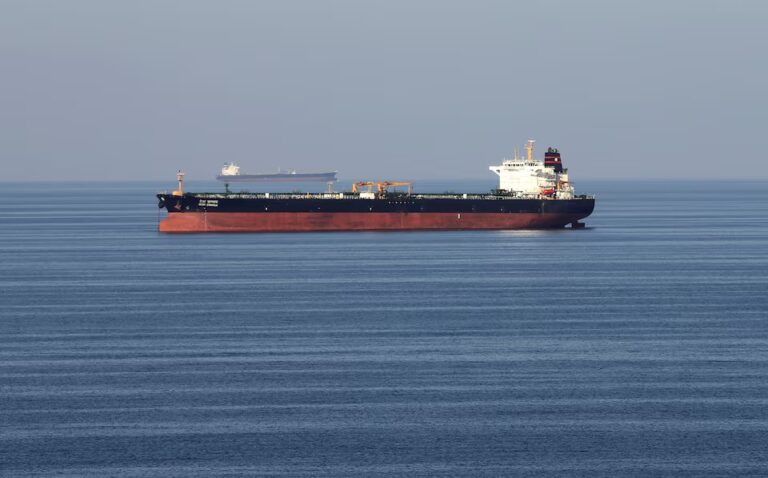
Three vessels have been hit by unknown projectiles in the Strait of Hormuz, maritime security and risk firms said on Wednesday, bringing the number of ships struck in the region since the Iran conflict began to at least 14. Shipping along the narrow strait has come to a near standstill since the United States and Israel began strikes on Iran on February 28, preventing exports of around a fifth of the world’s oil supply and sending global oil prices surging to highs not seen since 2022. Iran’s Revolutionary Guards have warned that any ship passing through the Strait will be targeted. U.S. President Donald Trump has threatened to ramp up U.S. attacks on Iran if it continues to obstruct the strait. The Thai-flagged Mayuree Naree dry bulk vessel was struck by “two projectiles of unknown origin” while sailing through the Strait on Wednesday, causing a fire and damaging the engine room, the ship’s Thai-listed operator Precious Shipping said in a statement. “Three crew members are reported missing and believed to be trapped in the engine room,” Precious Shipping said. “The company is working with the relevant authorities to rescue these three missing crew members,” it added, noting that the remaining 20 crew members had been safely evacuated and were ashore in Oman. Images provided by the Royal Thai Navy showed smoke pouring out from the back of the ship. The United States Navy has refused near-daily requests from the shipping industry for military escorts through the Strait of Hormuz since the start of the war on Iran, saying the risk of attacks is too high for now, sources familiar with the matter told Reuters. Trump has said the U.S. is prepared to provide naval escorts whenever needed. Earlier on Wednesday, the Japan-flagged container ship ONE Majesty sustained minor damage from an unknown projectile about 25 nautical miles (46 km) northwest of Ras Al Khaimah in the United Arab Emirates, two maritime security firms said. Its Japanese owner Mitsui O.S.K. Lines and a spokesperson for Ocean Network Express, its charterer, said the vessel was struck while at anchor in the Gulf. An inspection of the hull revealed minor damage above the waterline. All crew members are safe, they said, adding that the vessel remains fully operational and seaworthy. The owner said the cause of the incident remains unclear and is under investigation. A third vessel, a bulk carrier, was also hit by an unknown projectile approximately 50 miles northwest of Dubai, maritime security firms said. The projectile damaged the hull of the Marshall Islands-flagged Star Gwyneth, maritime risk management company Vanguard Tech said, adding that the vessel’s crew were safe. Owner Star Bulk Carriers said the ship was hit in the hold area while anchored. There were no crew injuries and no listing.      

Ghana Has Adequate Fuel Stocks; National Supply Remains Stable — NPA Assures

  Ghana’s downstream petroleum regulator, the National Petroleum Authority (NPA), has assured the public not to panic over any possible fuel shortages due to the Middle East conflict, stating that the country has adequate petroleum stocks that can last for several weeks. This portal understands that as of Tuesday, the country had six weeks and two days of diesel stock, five weeks and one day of petrol stock, five weeks and four days of Aviation Turbine Kerosene (ATK), and two weeks and one day of Liquefied Petroleum Gas (LPG) available. In a statement issued on Wednesday, March 11, the NPA said the national fuel supply situation remains stable despite concerns about possible impacts from developments in the global energy market. According to the Authority, a review of national petroleum stock levels conducted in collaboration with the Ministry of Energy and Green Transition and other industry stakeholders confirmed that Ghana has sufficient supplies of key petroleum products, including petrol (PMS), diesel (AGO), Aviation Turbine Kerosene (ATK), and Liquefied Petroleum Gas (LPG), to meet current and projected demand. The NPA added that it continues to closely monitor stock levels and work with industry players to ensure a steady fuel supply, while strengthening strategic supply planning and price monitoring mechanisms to address any potential disruptions or price volatility linked to global market developments. Meanwhile, the U.S.–Israel war against Iran has disrupted global oil supply, triggering a sharp surge in crude oil prices. Crude oil prices hit $119 per barrel on Tuesday morning, but later dropped sharply to about $100 per barrel and subsequently fell below $90 per barrel. However, as of Wednesday morning, Brent crude had risen again to around $90 per barrel as tensions continued to escalate

IEA Mulls Emergency Action To Unleash Oil Reserves
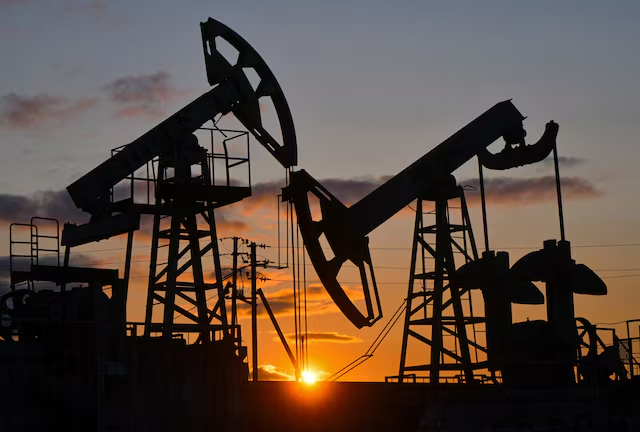
Global energy leaders are gathering to decide whether to release emergency oil reserves as production and export disruptions tied to the Middle East conflict continue to strain global markets. The International Energy Agency hosted G7 energy ministers at its Paris headquarters on Tuesday, where Executive Director Fatih Birol warned that conditions in oil markets have deteriorated in recent days. Shipments through the Strait of Hormuz have been disrupted, forcing some producers in the region to curtail output, creating what the agency described as “significant and growing risks” to global supply. Birol said in a Tuesday statement that the group discussed all available options to stabilize the market, including the possible release of emergency stockpiles held by IEA member countries. Those reserves are substantial. According to the agency, member governments collectively hold more than 1.2 billion barrels of public emergency oil stocks, in addition to roughly 600 million barrels of industry inventories maintained under government obligations. Birol convened an extraordinary meeting of member governments later today to assess supply security and determine whether those emergency stocks should be made available to the market. The discussion comes as oil markets react to one of the most severe disruptions to global energy trade in decades. Tanker traffic through the Strait of Hormuz—the world’s most critical oil chokepoint—has slowed dramatically amid security concerns, effectively trapping large volumes of crude within the Persian Gulf and forcing some producers to shut in output due to storage constraints. The supply shock has already pushed oil prices sharply higher. Brent crude recently surged toward the mid-$90 per barrel range, marking a dramatic rally since the start of the year. And prices are expected to remain elevated for the time being. In its latest Short-Term Energy Outlook, the Energy Information Administration raised its oil price outlook significantly, citing the same disruptions to Middle East production and exports. Global policymakers are hoping to prevent a full-blown supply crisis, and deploying emergency stockpiles could become one of the most important decisions shaping oil markets in the weeks ahead.  

Namibia’s Fuel Stock Can Last Three Months-Namcor Confirms
Namibia’s national oil company, National Petroleum Corporation of Namibia (NAMCOR), says the country currently has enough fuel reserves to cover about three months of national demand, even as the U.S.–Iran conflict continues to disrupt global oil markets. Despite the three-month fuel cover, officials at NAMCOR say a shipment of fuel is already on its way to the country, according to a report by The Namibian Sun. NAMCOR spokesperson Paulo Coelho told The Sun that the reserves provide a short-term buffer despite growing global uncertainty following intensified hostilities between the United States, Israel and Iran. The crisis escalated after joint U.S. and Israeli airstrikes reportedly killed Iran’s supreme leader, Ali Khamenei, triggering retaliatory missile strikes by Iran on U.S. military installations across the region. Donald Trump, President of the United States, has vowed that bombing raids would continue “as long as necessary,” while Iran’s president, Masoud Pezeshkian, warned that retaliation was the country’s “legitimate right and duty.” The conflict has raised fears of disruptions in the Strait of Hormuz, one of the world’s most critical oil shipping routes, through which a significant share of global crude oil exports passes. Benchmark crude, Brent Crude, surged to $119 per barrel on Monday during early Asian trading, while West Texas Intermediate (WTI) also rose above $100 per barrel for the first time since 2022. Oil prices, however, eased following a statement by President Trump indicating that he foresees the conflict ending soon. Despite the current buffer, officials warned that geopolitical shocks highlight the vulnerability of African economies that rely heavily on imported refined petroleum products. As of Tuesday evening, Brent was trading at around $91 per barrel, while WTI was trading at about $86 per barrel.

Kenya: KenGen, NuPEA Intensify Stakeholder Engagements In Kisumu As Kenya Advances Nuclear Power Programme

Kenya’s journey toward developing its first nuclear power plant gained fresh momentum on Monday as senior leaders from the country’s energy sector held high-level consultations in Kisumu aimed at strengthening collaboration with regional leadership and key stakeholders. The Managing Director and Chief Executive Officer of Kenya Electricity Generating Company (KenGen), Eng. Peter Njenga, led a delegation to Kisumu for strategic engagements with leaders from the Nuclear Power and Energy Agency (NuPEA) and county government officials. The mission underscored Kenya’s commitment to advancing its Nuclear Power Programme as part of broader efforts to secure long-term, reliable, and clean energy for the country. The KenGen delegation included Board Director Umuro Wario and joined NuPEA Chairman Prof. Larry Gumbe and NuPEA Chief Executive Officer Justus Wabuyabo in a series of consultative meetings with regional leadership. The engagements began with a courtesy call on Peter Anyang’ Nyong’o, Governor of Kisumu County, where discussions focused on the transformative role nuclear energy could play in Kenya’s future. Leaders explored how nuclear power could support long-term energy security, drive industrial growth, and provide reliable baseload electricity needed to sustain the country’s rapidly expanding economy. As Kenya continues to position itself as a regional economic hub, the demand for stable and affordable energy remains a critical priority. Nuclear power is expected to complement existing renewable energy sources such as geothermal, hydro, wind, and solar by providing consistent power generation regardless of weather conditions. Beyond the governor’s office, the delegation also held consultations with the Kisumu County Commissioner and members of the Kisumu County Assembly, including the Speaker. These engagements provided an opportunity to brief local leadership on the progress of Kenya’s Nuclear Power Programme and discuss the importance of coordinated planning between national and county governments. Participants emphasised that transparency, public participation, and continuous engagement with communities will be essential as the programme moves into the next stages of development. Ensuring that citizens are well informed about both the opportunities and safety considerations associated with nuclear power remains a key priority for the implementing agencies. Kenya Electricity Generating Company (KenGen), as the designated nuclear power owner-operator for Kenya’s first nuclear power plant, continues to work closely with Nuclear Power and Energy Agency (NuPEA) and other stakeholders to advance the programme as part of Kenya’s broader clean energy transition and long-term energy security strategy.  

Nigeria: Dangote Refinery Cuts Petrol Price By N100, Diesel By N190, Citing Slump In Crude Oil Prices

Africa’s largest petroleum refinery, the Dangote Refinery, has cut the gantry price of petrol by N100 per litre and diesel by N190 per litre, citing a slump in global crude oil prices. According to a report by The Punch, the refinery is now selling petrol at N1,075 per litre, down from N1,175, while diesel is now priced at N1,430 per litre, reduced from the earlier price of N1,620 per litre. The move follows a decline in global oil prices, with Brent Crude dropping to around $89 per barrel from over $100 per barrel on Monday. The Punch reported the latest development, citing officials of the refinery. According to Oilprice.com, Brent crude prices witnessed a dramatic reversal on Tuesday, plunging nearly 27 percent from the previous day’s high of $119 per barrel to as low as $87 per barrel. The Dangote Refinery reportedly attributed the earlier price hikes to volatility in global crude markets, citing tensions arising from the U.S.–Iran conflict.

Ghana: CBOD Denies Claims Members Are Hoarding Fuel To Sell Later At Higher Prices

The Chamber of Bulk Oil Distributors (CBOD) has described as false and mischievous claims that Bulk Import, Distribution and Export Companies (BIDECs) are hoarding fuel in anticipation of a price increase at the next pricing window, which commences on March 16, 2026. According to the Chamber, BIDECs have been supplying petroleum products at various fuel depots across Ghana since the first pricing window began on March 1, 2026. The Chamber said its members continue to honour supply commitments to Oil Marketing Companies (OMCs) based on existing contracts, expressing surprise that some individuals would claim they are hoarding fuel to sell at higher prices during the next pricing window. According to the Chamber, data from the National Petroleum Authority (NPA)’s Enterprise Relational Database Management System (ERDMS) shows that product distribution is ongoing, with loading patterns consistent with past trends. In a statement issued and signed by Dr. Patrick Ofori, Chief Executive Officer of the Chamber, CBOD said the claim that “we are placing commercial profit interests above our patriotic responsibility is most unfortunate.” CBOD said it is engaging with all stakeholders, including the Ministry of Energy and Green Transition (MoEGT), to mitigate the impact of the current surge in global market prices on consumers. “As key players in the downstream petroleum sector, we would like to assure all stakeholders, especially consumers, that we will continue to conduct business in a fair and responsible manner,” the statement said. It would be recalled that on Monday, two leading oil marketing companies, Star Oil and GOIL PLC, separately complained that they were unable to lift petroleum products, blaming the situation on an outage of the Integrated Customs Management System (ICUMS) operated by the Ghana Revenue Authority. However, the claim was later refuted by Ghana Link Network Services, the operator of ICUMS, which insisted in a statement that its platform was functional and operating normally. The Chamber of Oil Marketing Companies (COMAC), in a separate statement, revealed that the issue was traced to the Enterprise Relational Database Management System (ERDMS) hosted by the National Petroleum Authority, the regulator of the downstream petroleum sector. COMAC said that, as part of the agreed remedial measures, ICUMS was initially decoupled from the ERDMS platform to allow manual loading. “During this process, it was conclusively identified that the challenge was originating from the ERDMS system itself. The issue was swiftly rectified, and orders began processing successfully by 12:23 p.m.” The Chamber assured all stakeholders that the challenge has now been fully resolved and that normal loading activities have resumed across the industry.    

Nigeria: Dangote Refinery Raises Petrol Price To N1,175 Per Litre, Diesel To N1,620 Per Litre

The Dangote Petroleum Refinery, Africa’s largest petroleum refinery based in Lagos, Nigeria, has increased the gantry price of Premium Motor Spirit (PMS), commonly known as petrol, and Automotive Gas Oil (diesel), citing rising crude oil landing costs. The refinery raised the petrol price to N1,175 per litre, marking the third price hike within one week, while the gantry price of diesel was increased to N1,620 per litre, further heightening concerns among businesses already struggling with rising operating costs. The latest increase represents the third surge in petrol prices within a week, following earlier adjustments that pushed the refinery’s gantry price from N774 to N874, and subsequently to N995 per litre, before the latest hike to N1,175 per litre. As a result, retail pump prices in several parts of Nigeria have already crossed the N1,000 per litre mark, with some filling stations selling petrol at around N1,200 per litre, intensifying the cost-of-living pressures facing citizens. Industry operators warn that the latest development will likely trigger another round of price increases at filling stations nationwide, as higher fuel costs typically translate into increased transportation fares, logistics expenses, and production costs, ultimately pushing up the prices of goods and services. The development also comes amid efforts by the Federal Government, through the Nigerian National Petroleum Company Limited, to secure crude oil supply for the refinery via third-party international traders in order to sustain domestic refining operations. However, officials familiar with the arrangement have cautioned that the intervention may not immediately lead to lower petrol prices for consumers, as global crude oil prices, foreign exchange volatility, and operational costs continue to influence domestic fuel pricing.

Tanzania: Energy Minister Orders Contractor To Resume Songea–Mahumbika Power Project Within 14 Days

Tanzania’s Minister for Energy, Hon. Deogratius Ndejembi, has given a 14-day ultimatum to the contractor responsible for the 220kV transmission line project from Songea to Mahumbika via Tunduru and Masasi to return to the project site and resume work immediately. Ndejembi said the contractor should not be awarded any other government projects until the current project—whose implementation has been delayed in violation of the contract terms—is completed. The minister has also ordered the Permanent Secretary of the Ministry of Energy to issue a formal warning letter to the contractor. He explained that the ministry had previously met with the company’s leadership in Dodoma, where they agreed that work would resume within 25 days after the contractor received the payment they had been demanding since December 2025. However, he noted that the contractor has not yet returned to the project site or resumed work.  

Nigeria: NNPC Records N385bn Profit As Oil Output Rises To 1.64mbpd

The Nigerian National Petroleum Company Limited (NNPC Ltd.) posted a profit after tax of N385 billion (equivalent of $278,176,816.91) in January 2026, as Nigeria’s crude oil and condensate production rose to 1.64 million barrels per day, up from 1.55 million barrels per day in December 2025, according to the company’s latest monthly operational report.

The state-owned oil firm generated N2.571 trillion in revenue during the month while remitting N726 billion as statutory payments to the Federation.

Despite the profit, monthly revenue declined 47 percent, falling from N4.82 trillion in December 2025 to N2.57 trillion in January 2026.

According to the report, the increase in production was largely driven by the completion of maintenance activities at key offshore assets, particularly the Agbami Field, alongside operational improvements across other upstream facilities.

However, the company noted that operational challenges still affected crude delivery volumes. “Despite the improved production profile, planned deliveries for January were reduced due to adverse weather conditions, evacuation constraints, and asset integrity challenges across some production corridors,” the report said. Natural gas production also rebounded to 7,283 million standard cubic feet per day, up from 6,914 mmscf/d in December, reflecting improved upstream performance.

The company reported 24.75 million barrels of combined crude and condensate sales during the month, compared with 22.79 million barrels recorded in December 2025.

Nigeria continues to push to stabilise crude output above 1.5 million barrels per day amid ongoing challenges including oil theft, pipeline vandalism and infrastructure constraints.


G7 Nations Delay Strategic Oil Reserve Release Decision

Finance Ministers from the Group of Seven (G7) countries reached a broad agreement on Monday to hold off the release of oil from their respective strategic reserves, for now. The ministers held a teleconference on Monday after oil prices spiked to levels last seen during the global energy crisis triggered by Russia’s invasion of Ukraine in 2022. The G7 is an informal, intergovernmental economic and political forum comprising seven of the world’s most advanced industrialized economies including Canada, France, Germany, Italy, Japan, the United Kingdom and the United States. “There was broad consensus on this,” one G7 official told Reuters. “It was not that someone was against it, it’s just about timing. More analysis is needed,” the official said, adding that the final decision will be made by the leaders. Oil prices retreated in Monday’s mid-day session amid reports that G7 leaders were considering releasing up to 400 million barrels of crude from their strategic reserves. That volume is considerably higher than the 240 million barrels that the Biden administration released from the United States’s Strategic Petroleum Reserve during the previous global energy crisis. Brent crude for April delivery pulled back from a multi-year high of $116.23 per barrel in the early hours of Monday morning to trade at $99.63 per barrel at 12.30 pm ET while WTI crude for April delivery fell from $115.29 per barrel to $95.81. The big release could impact oil balances in global markets negatively, with the experts still reporting surpluses. The IEA’s Fatih Birol announced on Friday that there are no plans for emergency releases of oil from joint stocks because,“There is plenty of oil, we have no oil shortage,” Birol said after meeting European Commission president Ursula von der Leyen “There is a huge surplus in the market,” he added. Last week, JPMorgan Chase warned that Brent crude oil prices could spike to $120 per barrel if a full-scale conflict in the Middle East leads to a sustained disruption of oil flows through the Strait of Hormuz, with Gulf producers only able to sustain normal production for roughly 25days if the Strait is completely blocked.

Ghana: Fuel Lifting Challenge Faced By OMCs Resolved; Normal Loading Resumed- COMAC

The Chamber of Oil Marketing Companies (COMAC) says a challenge that disrupted the lifting of petroleum products from fuel depots to retail outlets has been resolved, with normal loading now resumed. This portal understands that loading time had been extended to ensure that more trucks are loaded. Earlier on Monday, two leading Oil Marketing Companies — Goil and Star Oil — issued a statement blaming the Ghana Revenue Authority’s ICUMS system outage for their inability to lift petroleum products to their retail outlets, resulting in fuel running out at some of their stations. Following the complaint by Star Oil and Goil PLC, Ghana Link Network Services, the operator of the ICUMS, issued a statement denying the claim and stating that their system was fully operational and working perfectly. However, a statement issued by the Chamber of Oil Marketing Companies (COMAC) revealed that the problem was traced to the Enterprise Relational Database and Management System (ERDMS). The statement said this was detected during COMAC’s engagement with the National Petroleum Authority (NPA), the Ghana Revenue Authority (GRA), and their respective service providers to urgently address the matter. COMAC said that, as part of the agreed remedial measures, ICUMS was initially decoupled from the ERDMS platform to allow manual loading. “During this process, it was conclusively identified that the challenge was in fact originating from the ERDMS system itself. The issue was swiftly rectified, and orders began processing successfully by 12:23 pm.” The Chamber assured all stakeholders that the challenge has now been fully resolved and that normal loading activities have resumed across the industry. “COMAC remains firmly committed to safeguarding the integrity of the downstream petroleum sector. We will continue to collaborate closely with regulators and service providers to ensure uninterrupted operations for our members and to protect consumers from unnecessary disruptions,” the statement concluded.  

Ghana: Police Arrest 8 Chinese Nationals, 2 Ghanaians Over Alleged ECG Cable Theft

The Ghana Police Service has arrested eight Chinese nationals holding managerial roles at Sentuo  Steel Limited and two Ghanaians over their alleged involvement in a cable theft and metal export syndicate involving cables belonging to the Electricity Company of Ghana (ECG).

The suspects are Yuxiaoting, He Jing, Xu Changjiu, Li Lei, Chen Jin, Zheng Ma, Wang Jian, and Bin Bin — all Chinese nationals — while the Ghanaian nationals are Samuel Ekpe and Priscilla Padu.

The arrests followed a police intelligence operation at the Kpone Industrial Area near Tema on Wednesday, March 4, 2026, at about 3:30 p.m. The operation was carried out by the Criminal Investigation Department (CID) in collaboration with officials from the Ministry of Energy and Green Transition.

Addressing a section of journalists in Accra on Monday, March 9, 2026, the Director-General of the CID, Lydia Yaako Donkor, said that upon arrival at Sentuo, the team found about 70 employees allegedly cutting ECG service cables into pieces and stripping metal components from the insulation.

She said the extracted bare wires were being compressed into metal blocks believed to be intended for export.

“The Criminal Investigation Department (CID) Headquarters Operations Unit, in collaboration with officials of the Ministry of Energy, has uncovered a large cache of stolen Electricity Company of Ghana (ECG) service cables and arrested 10 suspects in connection with an organised cable theft and metal export syndicate,” she said.

“During the operation, more than 100 drums of service cables suspected to belong to the Electricity Company of Ghana were discovered on the premises,” she added.

According to her, the quantity and condition of the cables suggest a sustained and organised operation targeting ECG infrastructure.

Police said a 24-hour guard has been placed at the premises to prevent the removal of any materials while investigations continue.

The Ghana Police Service described the operation as a major step in the fight against the theft of critical national infrastructure.

According to the Service, the stealing and illegal export of ECG cables has had a severe impact on electricity supply to communities, businesses, and public institutions across the country.

Police reaffirmed their commitment to working with other state agencies to protect national assets and ensure that those responsible are brought to justice.

Ghana: Star Oil, GOIL Report Fuel Shortages At Some Retail Stations, Blame GRA ICUMS System Outage

Two major oil marketing companies in Ghana—Star Oil and GOIL PLC—have reported fuel shortages at some of their retail outlets. In separate statements issued on Monday, the firms blamed the Ghana Revenue Authority’s Integrated Customs Management System (ICUMS) outage. Star Oil noted that Friday was a holiday, and it had planned to lift petroleum products on Saturday, but the outage prevented all oil marketing companies (OMCs) from processing the documentation needed to load products. The company said it had hoped the issue would be resolved by Monday, 9 March 2026; however, technical challenges with ICUMS are still ongoing. “Because Star Oil stations record some of the highest sales per location relative to underground tank capacity, situations like this tend to affect us more quickly than others. We are closely monitoring the situation, and once ICUMS is restored, we will immediately resume lifting and restocking all affected stations,” Star Oil said. GOIL PLC, on the other hand, said the unfortunate situation has affected its operations, with some stations across the country temporarily running low on products. GOIL expressed deep regret over the inconvenience this may cause its valued customers. “At GOIL, we fully appreciate the disruption this creates and sincerely empathize with our customers and transport operators who depend on our products daily,” the company said. GOIL assured customers that it is actively engaging the relevant authorities to help resolve the issue as quickly as possible so normal supply can resume.